
While driving, have you ever noticed that your automobile begins to hum? Your tires may need to be rotated soon if this is the case. Car weight distribution, braking, and unintentional contact with the curb are all factors that contribute to tire wear. Re-balancing your tires can help you avoid an emergency tire repair, increase the lifetime of your tires, and enhance traction.
Tire sounds may be caused by a variety of circumstances when driving. When you hear noise from your tires, it’s most likely air being squeezed in the treads. The amount of noise produced by various tread designs will be variable.
Heavy-duty towing and off-road tires, for example, produce more noise than normal tires due to the fact that they have a deeper tread pattern. Noises produced by treads are typical and should not be seen as a reason for concern.
When tire sounds get louder over time or when they appear out of nowhere, it is possible that there is a problem with your tires and wheels. Consider the following scenarios in which tire sounds may occur.
Tire sounds are often caused by uneven wear on the tires, which occurs because the contact between the road and unequal tires is not consistent. Tires that have uneven tread depths make loud sounds when driving due to the imbalanced tread depths. Typically, noises produced by uneven wear will emanate from one tire and be heard by everyone else.
Tire sounds might also be caused by the misalignment of your wheels. You might hear a buzzing sound or thumping coming from the wheel wells. In the event that your car’s wheels are out of alignment, you may notice a bumpier ride in the near future.
This will result in erratic tire movement and an increase in the volume of the noises emanating from the tires’ air chambers.
An unreliable wheel bearing is also one of the more critical concerns that might result in tire noise being produced. While changing lanes, you may hear a quiet, humming or grinding noise from your tires if the wheel bearing in your tires is broken or degrading.
Replacement of the wheel bearings as soon as feasible is recommended to avoid significant damage and accidents with other vehicles.
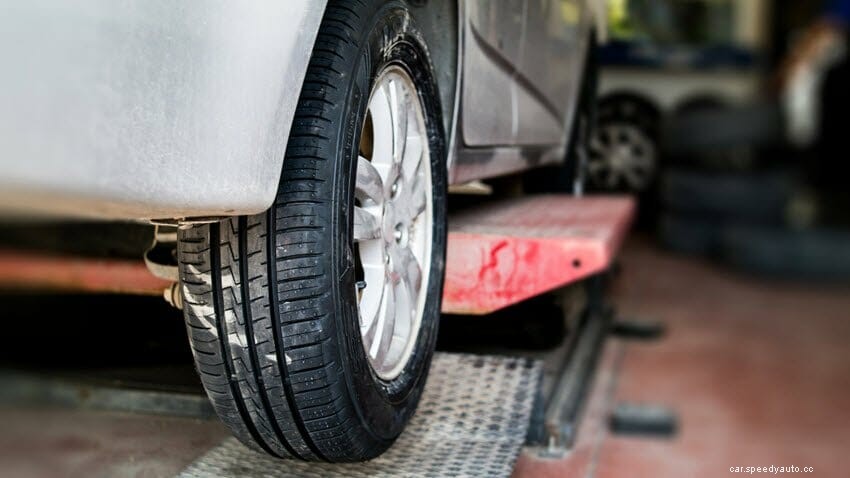
Tire sounds are ubiquitous, but there are techniques to minimize or eliminate them. If the design of the tire treads is to blame for the sounds, you may replace your present tires with a new set that provides a quieter performance than your current set.
Those who are experiencing noises as a result of tire troubles might take a number of steps to mitigate the situation. Preventing uneven tire wear, for example, maybe accomplished by making sure your tires have the proper amount of air pressure and doing frequent wheel alignments.
On top of that, you’ll want to make sure that you plan tire maintenance appointments on a regular basis.
Most essential, you should have a professional inspect your tires and wheels as soon as you discover tire noises or when the volume of normal tire sounds increases. Their precise evaluation of the problem and determination of the best solution to address the issue and decrease tire sounds will be of great assistance.
Tires that are humming might be caused by defective wheel bearings or uneven tire wear, among other things. You can solve this puzzle by doing the following:
A qualified technician inspecting and servicing the wheel bearings on your car is highly recommended.
Tire rotations performed in accordance with manufacturer’s instructions
During a tire check or rotation, you may discover that your tires are too worn to be able to drive safely on them any longer. The United States Department of Transportation advises that tires be changed when they reach 2/32″ of tread depth, and several states have laws requiring tires to be replaced when they reach this level. Inquire with your technician about measuring your tread depth, and consider purchasing tires from a website. A new set is often cheaper than you may expect!
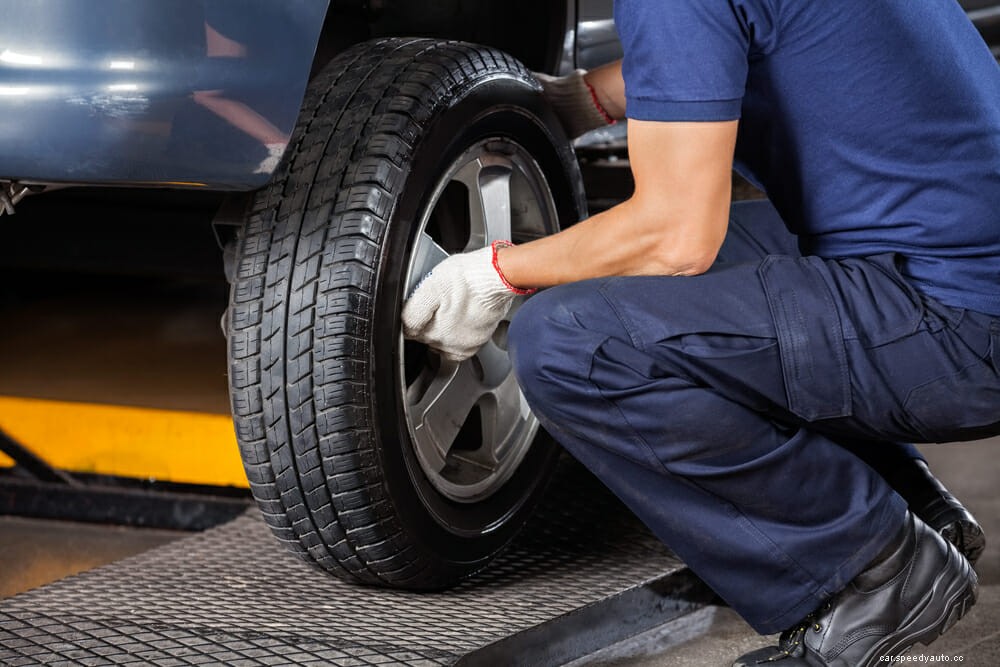
The cost of a single ordinary tire replacement ranges from $50 to $200, depending on the brand and grade of the tire. SUVs and other big cars may cost upwards of $350 per tire to purchase. Large vehicles, such as pickups, are often priced at a similar level. Generally speaking, it’s a good idea to change all of your tires at the same time.
Bridgestone is presently the world’s biggest tire maker, with annual sales exceeding $1 billion. This brand has more than 100 different tire types to choose from, ensuring that there is something for every style of the motorist.
It is advised that you check your tire pressure once a month. Keep in mind that your tires lose around one PSI every month after you fill them, so checking your tires once a month may assist you to guarantee that they are always filled to the right pressure.
The amount of time it takes to replace a tire will vary depending on the circumstances. Changing a tire by a professional will take between 5 and 15 minutes. The time it takes to change a tire at an auto service shop ranges from 45 minutes to 5 hours. It takes less than an hour to change a tire with the aid of roadside assistance.
Generally speaking, the National Highway Traffic Safety Administration (NHTSA) suggests that drivers replace the tires on their cars once every six years as a best practice. The reality is that there are a variety of things that may cause increased wear and tear on tires, resulting in drivers having to replace them more regularly.
You will notice that your tires will wear considerably faster if you drive more aggressively, such as by braking and accelerating violently, than if you drive more responsibly. Additionally, if you are driving on badly maintained roads on a regular basis, your tires may see increased wear and tear.
Tires are just four of the many moving elements of your car, but they are critical for its usability, comfort, and safety, as well as its performance. If you are experiencing excessive tire noise after upgrading your tires, it is possible that this is due to your tire selection.
You may need the services of a professional to evaluate and repair your car if your tire noise increases suddenly or gradually. Tire noise should always be addressed as soon as possible to ensure that it is not a safety hazard or an indicator of a greater issue.
Read more articles about car tires below:
Should I Balance My Tires Before Having My Alignment Done?
Why Does My Car Feel Bumpy When Driving?
Who Makes Douglas Tires From Walmart And Are They Any Good?
