
Your car’s AC is one of the most important features during the summer. It keeps you cool and comfortable while you’re driving. But what happens when your AC starts to overheat? We’ll discuss the causes of this issue and how to fix it!
When your car’s AC is on, the compressor turns on and pulls in the refrigerant. This liquid is then compressed and turned into a gas. The gas is then sent through the condenser, which cools it down. The cooled gas is then sent to the evaporator, where it removes heat from the air inside of your car.
Your car’s air conditioning system is working overtime to keep your vehicle cool this summer. If the AC unit goes out, you’re in for a truly miserable ride.
There are tell-tale signs that something may be wrong with your AC system, like trouble turning on or driving performance issues. These can also serve as warning signs before you an overheating AC unit occurs:
Water leaks commonly occur around the condenser and evaporator drain hoses if this part of the AC system becomes damaged. A leaking drain hose or fluid line should never take precedence over other vehicle maintenance concerns.
However, an overheated air conditioner could be one result of neglecting these problems.
If you notice water dripping from your car’s air vents, the problem is likely that condensation has built up inside the system. This can happen when there’s a leak or other drainage malfunction in the lines. Bugs and dirt could be blocking airflow somewhere in your AC system.
Replacing an old refrigerant may also solve moisture build-up issues. These are all coinciding possibilities that should be ruled out if your vehicle is experiencing this condition.
Hissing, bubbling or rattling noises are probably bad news which indicates that something isn’t right with your air conditioning unit.
A hissing noise may mean you have dirty evaporator coils, while unnatural gurgling may mean there’s a leak in the system. There could also be a loose belt or another issue if your AC unit is making odd sounds.
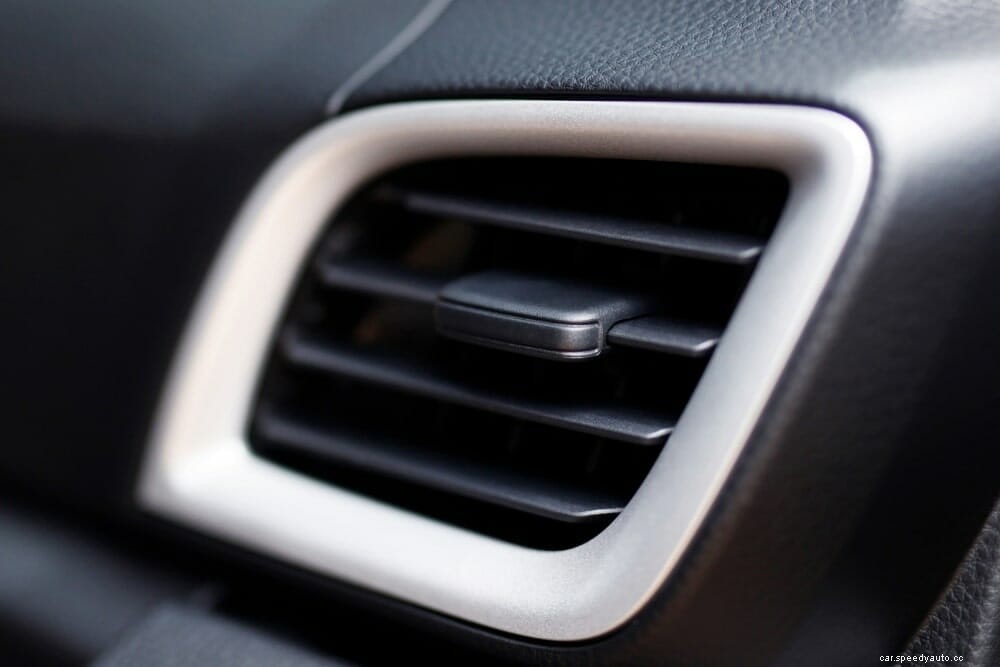
If your vehicle cools inconsistently or isn’t as cool as it used to be, it may be that you need a refrigerant recharge. Low refrigerant levels can spell trouble for an air conditioner and leave you with a very expensive repair bill.
If this is the case, simply recharging your car’s AC will no longer work and full maintenance might need to take place. This type of situation should always be handled right away; neglecting to address these signs could lead to an overheating AC unit that must be replaced completely.
An air conditioner that makes rattling, knocking, or buzzing sounds may also indicate low refrigerant levels or another system malfunction. Take your vehicle into the shop ASAP if you hear any unusual noises coming from your car’s air conditioning unit.
An air conditioning unit is a complicated machine with many parts, and you should never let a non-professional repair it. You can do a lot of little things yourself to keep your system running smoothly though.
If there’s one thing that almost every air conditioner owner notices at some point in time, it’s that their unit tends to overheat from time to time. Here are the possible causes of an AC unit overheating:
Your central AC runs on refrigerants, and when they go low or empty, you will have problems. R410a and R22 (which used to be common) aren’t produced anymore because they were found out to be bad for the environment so most units use R410a, which is much more efficient.
This is very important. It’s best if you can get a professional to come and calibrate your air conditioner’s thermostat so that it stops swinging so widely and keeps your home at the temperature you want. If you do this yourself, be careful not to break anything inside the machine.
Your AC cleans the air before blowing it into your house but collects dust on its internal components as well as its filter. Changing this filter regularly means that less dust will build up in your system, making sure there’s nothing restricting airflow or preventing coolant from doing its job.
When cool air goes through narrow spaces, it speeds up and can get hot. If you have any clogs in your ductwork, they will cause the cool air to overheat as it travels through them.
A refrigerant leak is a bad problem that causes lots of problems for an air conditioner unit. It will lose efficiency, overheat, possibly freeze up solid, and may even damage its surroundings or give off toxic fumes if left unfixed long enough.
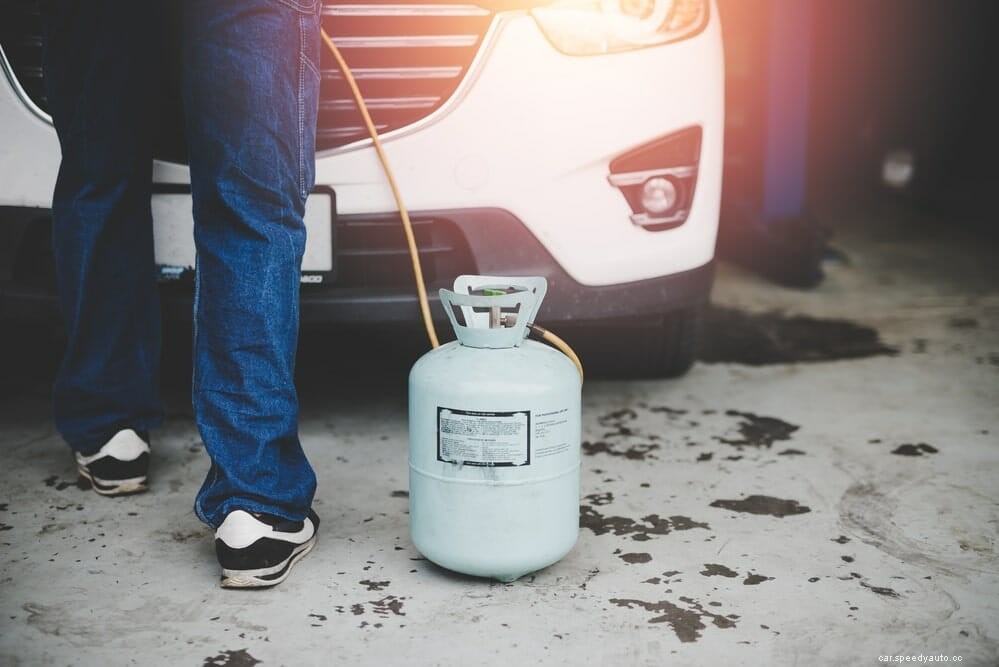
The only solution is often to replace the entire system because there are few companies that work on it anymore. Costs can be high unless you find them yourself with infrared cam repairs, we know what it takes to keep the equipment running smoothly.
This one is hard to fix yourself, but you can try. If your power goes out frequently due to faulty wiring or storms, it may cause your AC unit to overheat and shut down once the voltage drops below a certain level. You can check with an electrician if that might be the problem.
If you notice any of these problems, make sure they get fixed as soon as possible. It’s even more important if you see your home cooling system starting to fail because what may seem like a small problem now could become an expensive new unit installation later.
One last thing: if you live in a humid or moist area where mildew is common or you have pets that shed a lot, you may need to replace the air filter frequently and keep the system in your home well cleaned and maintained.
The AC compressor overload is a fairly common reason for increased engine RPM and overheating issues. When manufacturers design the cooling system on a vehicle, they do so that it won’t cause running issues.
Problems start to surface when the compressor ends up seizing and no longer being allowed to turn by the accessory belt. The car not knowing that will still try to turn that compressor, therefore, overheating the engine due to the additional strain put on it.
Another reason that you might experience this issue is if there is any dirt or ice in the throttle body restricting airflow which causes heating and overloading of your A/C system when turning on the A/C while idling.
This can be fixed by having your intake cleaned out by a certified shop or if you have experience in this area you can clean it yourself. A refrigerant leak may also be present, causing the system to not work properly, requiring a recharge or repair.
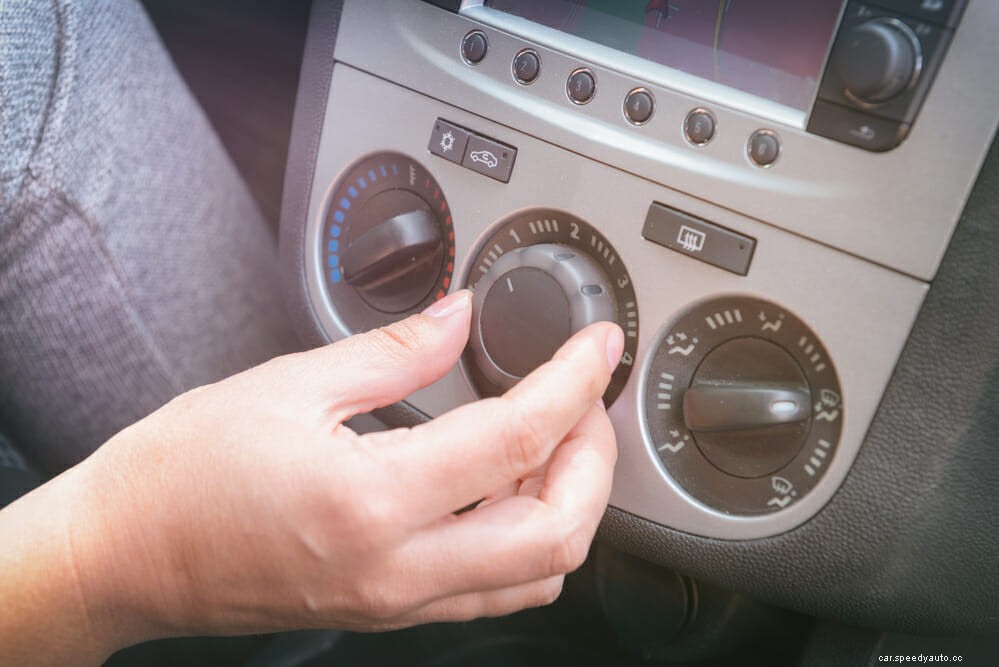
Some common symptoms of an AC compressor overload are:
Now, when you turn on the AC and there is a bad compressor clutch or faulty wiring, the A/C will have trouble turning off when you stop idling so it keeps running even if your car isn’t moving.
In addition to overheating the engine, this puts an additional strain on other vehicle parts such as the battery and alternator due to the increased electrical load being put on them.
The fan speed sensor that controls the AC blower motor may not function properly resulting in the air blowing from your vents at a slow speed which can also cause overheating issues.
This issue may be intermittent because it’s not always going to happen but only when the temperatures are around 80 degrees plus. If this happens at any time other than what’s described you should immediately take your car to a certified mechanic for further inspection and repair.
There are many reasons that can cause an AC compressor overload and these include faulty wiring (connections), bad compressor clutch, fan speed sensor malfunctions, blower motor resistor failure/malfunction, etc.
Your best bet is to have the codes read by a qualified technician in order to diagnose the exact problem or issues with your air conditioning system.
The service advisor can also inspect the throttle body since dirt and ice may be restricting airflow which will cause overheating when turning on the A/C while idling. There might even be refrigerant leaking out so the system is not operating properly.
Time for a recharge or repair, either way having it looked at by a quality shop with experience in the A/C field will be worth your time and money.
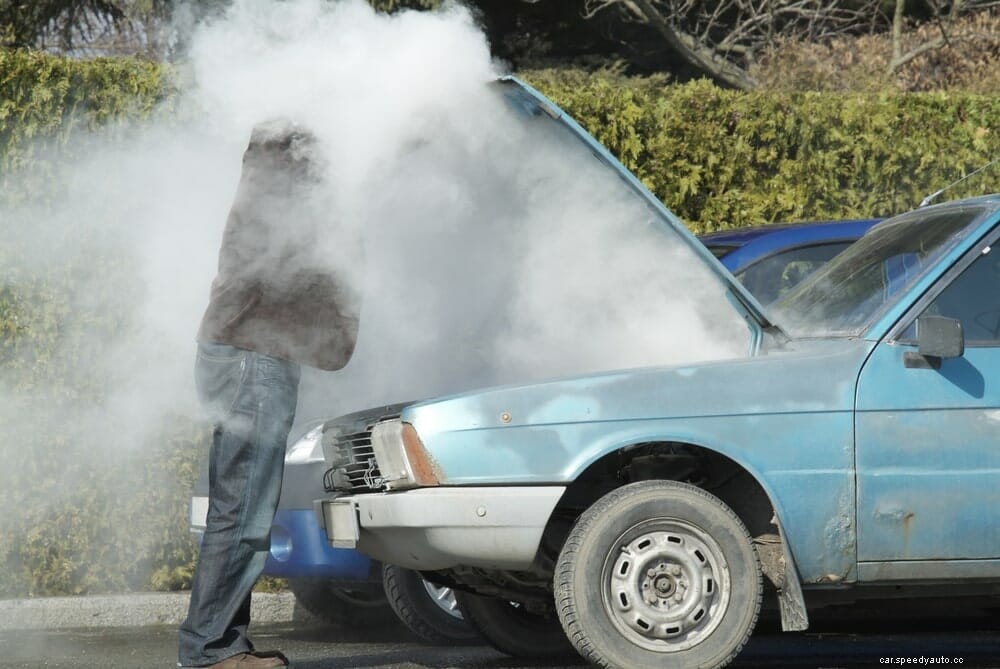
If your car overheats while idling with the AC on, you should turn off the engine and check the coolant level. The most common causes of this problem are a low coolant level or a clogged radiator. You can also check to see if the fan is working properly.
If it is not, you may need to replace the fan belt or cooling fan. You can also try adding a water-soluble lubricant to the AC system to help reduce friction. If none of these solutions works, you will need to take your vehicle in for repairs.
It’s recommended that you have your air conditioning system checked once every two years for leaks and performance. If you notice any odd noises when turning on the A/C, such as chirping or squeaking then this may mean the system needs some attention from a certified mechanic.
If you want to disinfect your car’s AC unit, then there are a few things that should be done first. You can clean the coils with a solution of water and dish soap or degreaser spray. If there is mold on them, use bleach diluted in hot water.
You also need to remove any leaves or dirt from around where they sit outside of your vehicle so that no one inhales these contaminants when using their cars again later down the line!
The next step would be replacing all filters inside the cabin including those for heating/cooling systems as well as those out in front underhood like those used by power steering pumps, etc… Once everything has been cleaned up it’s ready again not just back into service but into its next life cycle!
You can use your car’s air conditioning system without refrigerant, but it will not work as well.
The compressor is designed to circulate coolant through the evaporator so that warm air from outside gets compressed inside of it and then cooled by this process before being released back into the cabin or out onto passengers’ faces (depending on which type of AC unit you have).
When there isn’t any refrigeration fluid present inside an A/C assembly, hot gasses will pass through much more quickly than they should, causing condensation buildup around these parts due to a lack of evaporation occurring in their absence, which eventually leads up until all of the moisture has left and it will just be blowing hot air into your car.
Not really ideal, so best to refill/repair as needed!
The windshield can get foggy while using AC. This is due to humidity in the air.
When your car’s windows are closed, it creates an environment that allows moisture from outside raindrops or even just ambient water vapor (humidity) inside of them by condensing on their cold surfaces because these temperatures cause evaporation which then causes fogging up as well!
Luckily there are some ways we can fix this issue such as opening up all of our vents and turning off any fan options within reach so they don’t blow hot air into our faces while driving around town trying not too much to enjoy ourselves but still have fun nonetheless.
This will help keep things clearer for those who need better vision during nighttime hours especially when traveling long distances.
The AC compressor overload is a common problem that can happen to any car. It’s important to have it looked at by an expert so they can diagnose the exact issue and make repairs as needed.
Make sure you take your vehicle in for regular maintenance such as oil changes, tune-ups, etc., keeping on top of these things will ensure proper cooling system performance when idling with the air conditioning turned on.
If something doesn’t feel right then bring it into a shop where certified mechanics will be able to diagnose what might be causing this issue (or others). If there are any questions please leave them below!
