
There are 2 types of cooling systems that can be used in modern vehicles. One is the air cooling system and the other is the liquid cooling system. Since the liquid cooling system is more effective, many vehicles tend to have a liquid cooling system.
A liquid cooling system is not meant to have air bubbles in it. But sometimes air finds its way into the cooling system. What does it mean if there are bubbles in the coolant reservoir?
First to understand how these bubbles appear you must first understand how the cooling system works. There are quite a few components in a modern car cooling system. First of all the water pump, pumps the coolant to the engine and its components.
This is the heart of the cooling system. And then there is a thermostat that controls the temperature of the coolant so it doesn’t boil or freeze.
Next, we have the radiator. This brings the temperature of the coolant down to base temperature, after the coolant runs a lap around the engine, thus making it suitable to cool the engine again.
The radiator cap keeps the pressure inside the cooling system, because if the pressure inside the cooling system is lost the boiling point and the freezing point of the coolant is greatly affected.
These components send the coolant in an endless cycle sending it to the engine to pick up heat and then passing it along the radiator to cool it down then sending it off to the engine to pick up heat. This is a cycle that goes on every time your drive your car.
Air bubbles rise into the coolant reservoir. Many automotive cooling systems are pressurized and use closed hose systems that allow coolant to flow around the engine. When air enters this closed system, air sacs are formed.
Air pockets block the fluid flow, causing the temperature to rise. Thus causing the coolant in the tank to boil.
Foam in the tank can be serious and sometimes nothing to worry about. Because some behavior naturally causes air to enter the cooling system. In other cases, the air in the cooling system may require the removal of a failed component.
The air pressure inside the reservoir tank and the tubes are kept in such a way that it raises the boiling point of the coolant.
So, if there is a crack in the engine gasket or any of the tubes, the air pressure will seep out, meaning the boiling point of the coolant will be greatly reduced. If this happens while you’re driving you will see the effect immediately with white smoke pouring from the engine.
Whether it’s a faulty pressure cap or a crack in the engine gasket or any other cause, the results could be fatal. If the pressure inside the coolant reservoir and tubes leaks out, this will cause the coolant to boil and will cause the engine to overheat rapidly.
There are different types of bubbles that you might see in your coolant reservoir. While none of them are necessarily good news, if you are able to distinguish them from one another, it will get you one step closer to the cause.
Let us look at a few types of air bubbles that you might see in your coolant.
Usually, air bubbles are found in the expansion tank. In fact, one of the functions of the expansion tank is to remove air bubbles from the cooling system.
Automotive coolers tend to work much more efficiently without air bubbles because bubble-free coolant absorbs heat faster than coolants containing air bubbles, which is a more effective way to protect the engine from overheating.
It’s perfectly normal to have bubbles in the expansion tank when the engine is not very hot, but if they appear in the coolant, it could be a sign that the head gasket is leaking. To check for a head gasket problem, test each cylinder in your vehicle with a cylinder leak tester with the engine off.
If air bubbles appear during the test, they must be eliminated as the combustion products enter the cooling system. If left untreated, the head gasket can rupture and leave you stranded.
If you are trying to identify whether you have a leak and if you are having a hard time at it, you should check for a sweet smell in the air though. The smell has various explanations.
Some people say it has a smell somewhat similar to maple syrup, some say it smells like butterscotch this is actually the antifreeze which has a sweet odor and taste that is why it is so important to keep it out of the reach of animals or small children.
If you do smell this from the engine, this could be an indicator that antifreeze from the coolant has leaked.
If you are unsure about what it means if there are bubbles in the coolant, there could be many reasons, why the bubbles are there in the first place. Below are a few components that have a tendency to let air leak out due to fault.
When a head gasket blows air pressure from the coolant tubes and reservoir tank will flood out resulting in a quick decrease in boiling point. Thus it will lead the coolant to boil. A few moments later the engine will overheat.
If the head gasket blows, you should bring the car to a stop immediately before things get worse and there is any permanent engine damage.
There are a few symptoms to look out for when this is about to happen. Obviously, the engine overheats which is hard to spot, but is still a symptom.
Next, you should be able to see bubbles in the coolant. You should be able to check for this once you bring the car for a stop. And you should be able to see smoke billowing from the exhaust and smoke rising from the engine through the edges of the bonnet.
Since combustion gas enters the cooling system through a leaky cylinder head gasket, the leak must be repaired. To do this, take your car to a professional mechanic to fix the leak. If you’re looking to save a few bucks, you can fix it with some leak repair fluid.
However, if the leak does not close, the best option is to replace the cylinder head gasket. The cylinder head gasket is fixed in a place where you have to take it almost halfway apart to get to the engine, which is quite expensive to replace.
And if you choose not to fix it, you could end up with permanent engine damage. This would eventually lead to complete engine failure.
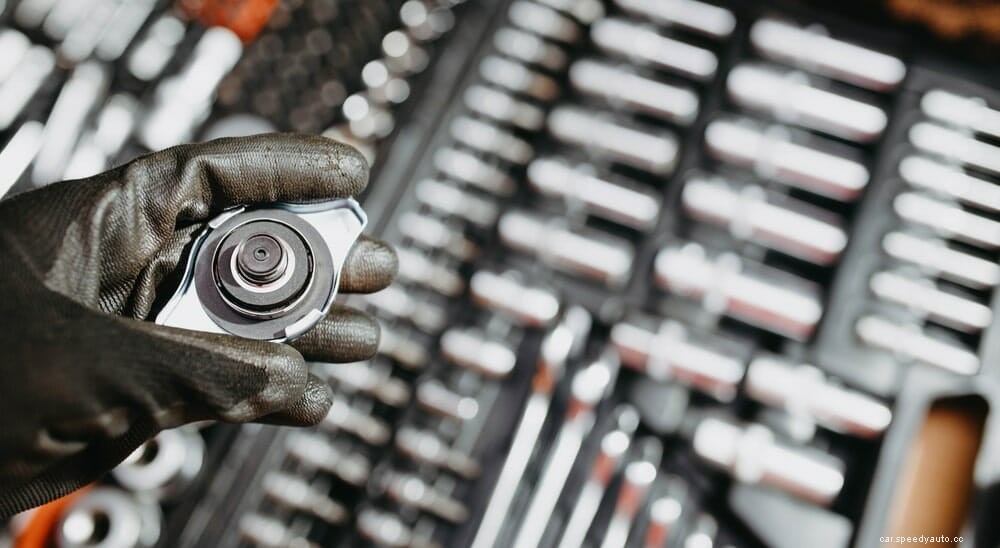
A pressure cap is fitted to the cooling system after it is pressurized. Cooling systems depend on the pressure cap to maintain pressure and let the coolant flow to the expansion reservoir. If the cap has a fault or is replaced with an incompatible cap for your vehicle, it might cause air to leak and thus leading to the catastrophic events mentioned above.
You may be able to spot a few symptoms to make sure that this is the cause of the leak. First, check for bubbles forming around the pressure cap. This would be common if there is a leak in the pressure cap. Again, overheating would be a symptom.
The fix is pretty easy if the fault is on your vehicle’s pressure cap. A simple replacement would do, but you should make sure that you replace it with the same pressure cap produced by your vehicle’s manufacturer or a pressure cap that is recommended directly by your manufacturer.
Air pockets on the radiator can become clogged when coolant or antifreeze circulates in the engine. This tends to happen after a coolant flush. When coolant is added to the system, but not enough to remove any remaining air, you might end up with air pockets.
Symptoms for this include bubbling inside the radiator at a higher operating temperature which would lead to overheating and there is a potential threat of radiator damage.
This is another easy problem to fix. All you have to do is run your engine for fifteen minutes until any air left in the radiator bleeds out and then you put the pressure cap on. You should also remember to do this when you refill your radiator in which case it is much more convenient.
The thermostat controls the flow of coolant into and out of the radiator. Here the thermostat must open and close at a certain time. It must be opened to drain the hot coolant from the engine into the radiator for cooling.
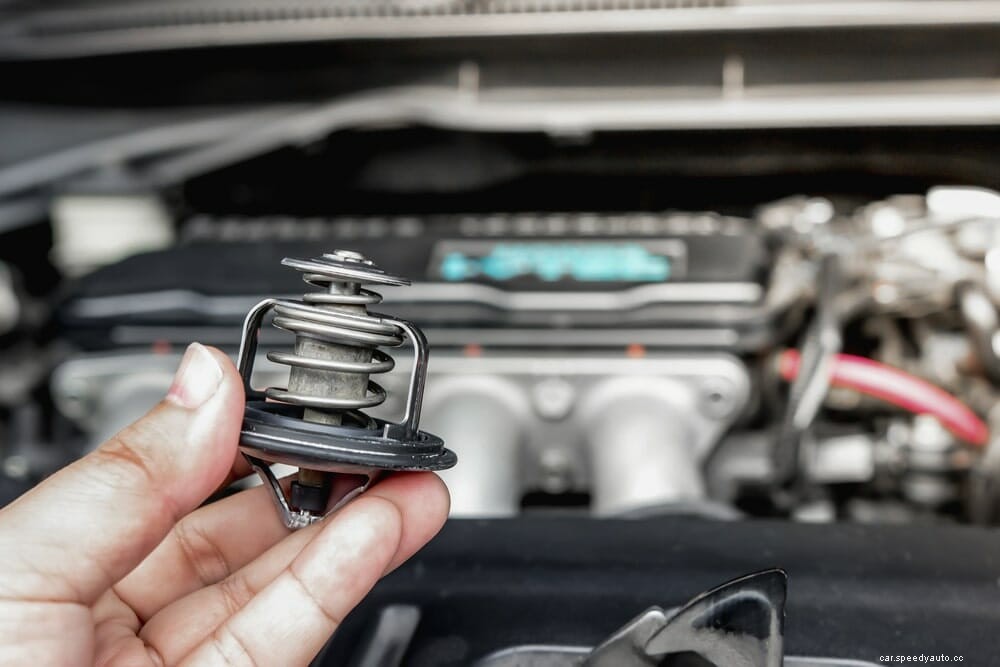
Then bring it closer so the engine can heat up the coolant to start the car. If the thermostat is defective, it will not open and close at the right time. Consequently, a bubbling effect occurs in the coolant tank or radiator due to the presence of uncontrolled airflow.
The symptoms here would be the same as before since the air flowing through is uncontrolled the whole system overheats and that causes everything to go haywire.
As usual, if you see any smoke coming from your engine or unusual white smoke billowing from your exhaust, you should stop immediately. Even if this is not the issue, if you see these signs it indicates a major problem.
If the thermostat fails, the coolant will not flow properly, causing the coolant to boil. The best way to avoid this is to replace the thermostat with an original or compatible auxiliary thermostat.
As long as the thermostat is working properly, the movement of the coolant is regulated and no air bubbles occur.
The heater control valve works by letting the hot coolant go through the passenger area keeping it warm and not letting the hot coolant stay in the engine core for too long. A faulty heater valve or hose could let air seep in resulting in the coolant boiling and the engine overheating.
If you see any signs that this has happened, stop the car immediately and visit the closest mechanic. Should this happen, you should quickly get to a mechanic because there is no easy fix to this problem.
Besides air slipping out, the passengers will also suffer from this, because the car’s heating function will no longer be working. If the hose is loose you should tighten it or if it’s worn you should replace the heater valve.
The hose connecting the radiator to the coolant reservoir must always be tightened. Damaged or worn radiator hoses can cause air to enter through the hoses and cause the coolant tank to boil.
When the reservoir hose leaks, the air gets in and the coolant comes out. A quick hose change would be helpful. As a result, the coolant level may still be low and the engine may overheat.
The water pump circulates the antifreeze or coolant through the coolant pipes and flows through the engine channels and pipes to the engine parts. If the water pump is damaged, air enters the pump inlet. When trapped air reaches the radiator inlet or coolant valve, air bubbles form.
The water pump is supposed to be closed. However, a bad cap could trap air at the pump inlet. It is best to replace this cover. When the cover is closed, no air remains inside the water pump.
Radiators, like other metal parts, can rust over time. Even if the radiator is not cleaned regularly and the correct coolant is not supplied, dust will also accumulate in it. This is where rust, dirt, and other debris can clog the radiator tubes and prevent the thermostat and water pump from working properly.
Excessive heat boils the coolant and creates the quick bubbles you see in the coolant tank.
If the coolant works long enough, it becomes contaminated and forms sludge, dust, and other particles. This will clog the radiator and other connected components will not work properly. Therefore, regularly flush the radiator or coolant reservoir and fill it with new coolant.
So what does it mean if there are bubbles in the coolant reservoir? What to do next when you notice them?
Even though problems arrive at times, sometimes bubbles in the radiator could be just normal, especially if you have parked your vehicle and there are bubbles. It could be because the coolant doesn’t circulate after the car stops because the thermostat and other functions stop.
This may cause the coolant to boil for a bit but you don’t need to worry because it will not cause any harm to your vehicle. If your coolant is boiling but your vehicle is not overheating, it is normal and nothing to worry about. All the car needs here are minor repairs.
This could be due to dirty coolant, low coolant, or bad radiator caps. Appropriate diagnostics may be required to determine the cause. Try replacing the radiator cap. You can also add coolant or flush the coolant completely before changing it.
Then drive the car. If the air bubbles have stopped, the cause is a faulty radiator, contamination, or lack of coolant. If bubbles still appear, see a mechanic.
Apart from the bubbles, look out for an overheating engine and smoke. These are indicators that there is something wrong with your engine, that needs to be dealt with immediately.
Here are some of the most common questions regarding what is meant by bubbles in the coolant.
A faulty water pump can cause the coolant to foam. The water pump helps circulate the coolant through the radiator tube where the coolant is cooled. The cooled coolant is distributed to engine parts through pipes or engine lines.
If the pump is damaged, the coolant cannot circulate to the radiator. First, engine components do not receive enough coolant to function properly. Secondly, due to the fact that the circulating coolant is not cooled, the engine overheats, and bubbles appear in the tank.
A faulty thermostat can cause bubbles to form in the coolant reservoir. The thermostat keeps the coolant where it is needed and allows it to flow back when needed. However, in the event of a breakdown, the coolant flows chaotically and bubbles in the reservoir.
Overflow tanks are also commonly referred to as expansion tanks, coolant reservoirs, or overflow tanks. Whatever they are called, they are part of any automotive cooling system. The overflow tank is connected to the overflow tube coming out of the radiator.
This tank provides additional storage space for coolant that expands as the engine warms up. Without this extra overflow storage space, the coolant will expand and there is a possibility that it might explode.
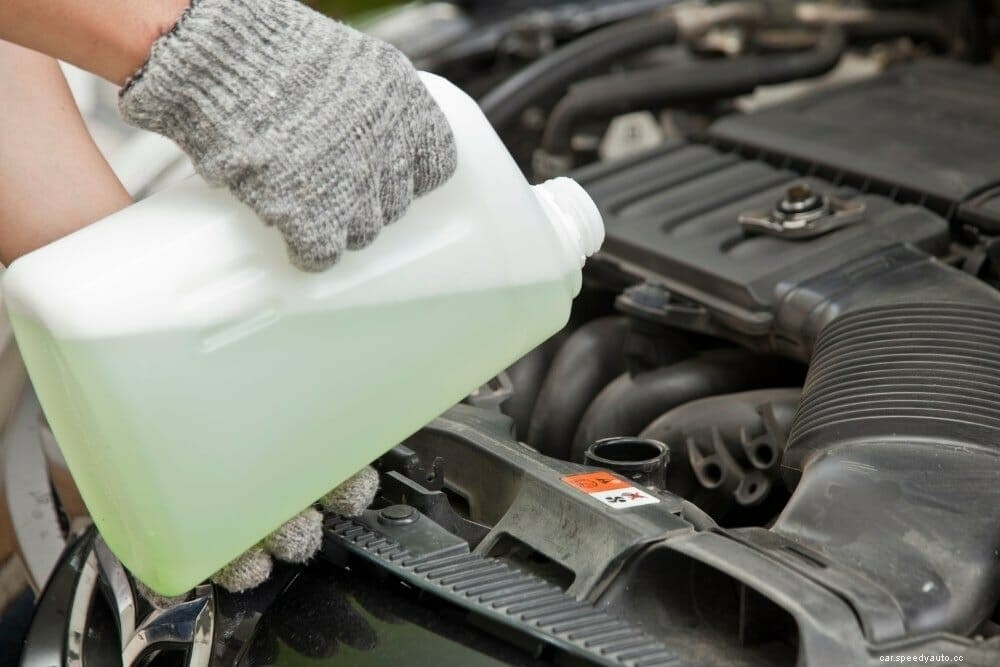
The boiling point of the antifreeze or coolant depends on the quality of the product itself and the pressure maintained in the cooling system. At normal operating pressure, good quality coolant/antifreeze has a boiling point of 129°C or 264°F and a freezing point of -37°C or -34.5°F.
However, if the pressure in the cooling system is reduced due to a defective part, such as a leak in the cooling system or a blown cylinder head gasket, the pressure in the system will drop and the boiling point of the coolant will drop.
So if your car breaks down or leaks, it can overheat and boil the coolant in the system.
Coolant flush prices mainly depend on the type of coolant used. But most modern cars use the same type of coolant.
If you are doing the coolant flush yourself, you should expect to pay less than $50. But if you seek professional help, the cost is a little bit higher. Even if you do higher a mechanic, it will only cost around $100 for a coolant flush.
A lot of people tend to say flushing the coolant is not necessary. In fact, they might even add that you should never flush your coolant. But this is false.
Just like every other fluid, the coolant becomes dirty and wears off with time. To make sure that the coolant functions properly, you should flush it when necessary. As we looked at in this article, coolant flushing will also make sure that bubbles or air pockets aren’t present in your coolant.
It is best if you flush your coolant every 30,000 miles or every 3 to 5 years.
If you are wondering what does it mean if there are bubbles in the coolant reservoir, the range of possibilities is drastic. It could be a minor issue like a loose cap. Or it could be something as catastrophic as a blown head gasket.
The coolant tank may boil after leaving the car. This will appear as there are bubbles in the coolant. This is a common mistake made among car owners.
So before you conclude that there is something wrong with your cooling system, you need to understand this is completely normal. When you do your diagnosis, make sure to wait until your car cools down.
If that is not the case, a flush is something to consider next. This will hopefully get rid of any air bubbles.
If you are yet to solve the issue, this could indicate that a component in your cooling system has failed. Thus you would need to visit a mechanic and get your car diagnosed and repaired if necessary.
As with every other repair in your car, when you start seeing symptoms, do not ignore them. You could end up turning a $100 repair to a bill that reads thousands of dollars.
