
You’ve probably heard about a head gasket failure at least once in your life. It’s a problem that many drivers face. Maybe you have a blown head gasket in your vehicle now? If you do, then you’re probably asking, “Can you drive with a blown head gasket?”
That question doesn’t have a simple answer. You will have to examine several things to determine whether you can keep driving your car if you have a damaged head gasket. Here’s some information about head gaskets for you to read.
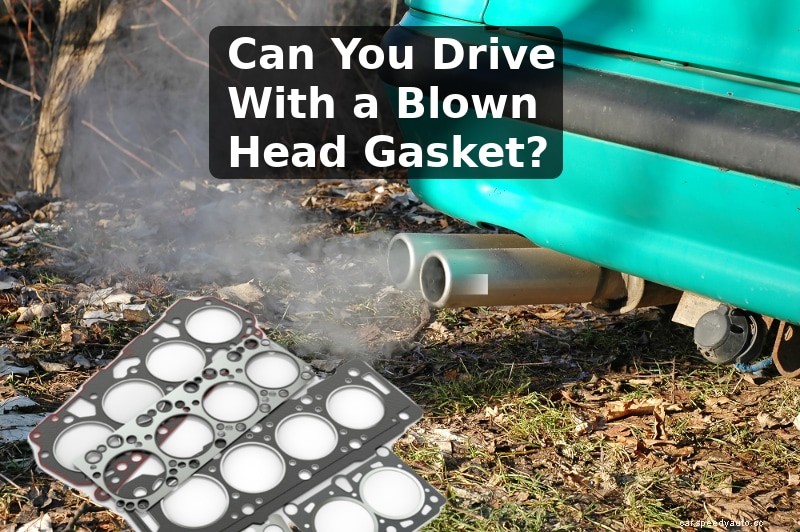
The head gasket is one of many sealing materials that go inside the engine. It sits directly between the cylinder head and block of your motor. Manufacturers use steel, copper, or alternative components to create the gasket. A typical head gasket has a rectangular border with circular holes on the inside for each cylinder. V6 and V8 model vehicles have two head gaskets.
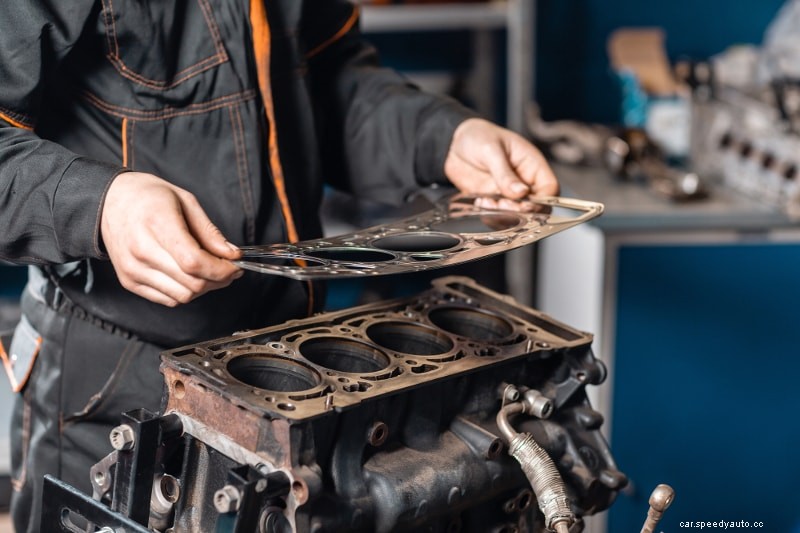
The head gasket the most crucial component in the vehicle because it seals oil, coolant, and compression. It keeps the water and oil in their appropriate compartments, and it keeps the compression inside the motor where it belongs. A lot of damage can occur when the gasket fails. Even a small tear in the gasket can cause the air/fuel mixture to leak out of your car. It can also cause substances such as oil, water, and antifreeze to intermix. The loss of compression will cause your vehicle to lose massive amounts of power. Oil and coolant contamination can break down the intricate parts of your motor. Therefore, head gasket failure is a severe issue. You could end up blowing the engine if you do not fix the problem quickly.
Your head gasket can fail for a variety of reasons.
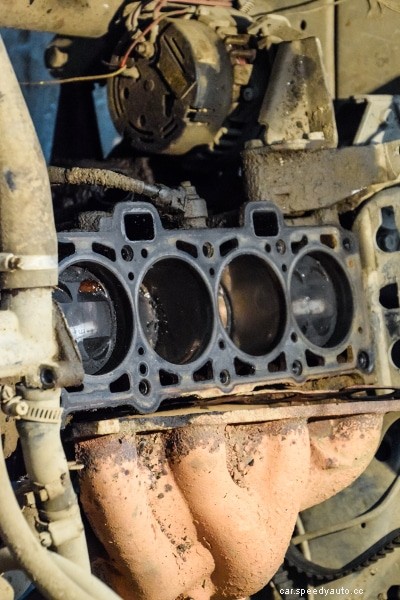
A variety of symptoms can give you a clue about a head gasket problem. Here’s the common symptoms to watch for:
One of the most common signs of a blown head gasket is the infamous white smoke from the exhaust pipe. Coolant leaks into the combustion chamber as the intake strokes. It then burns during the combustion process, and that causes the white smoke to appear. The cloud of smoke is usually very thick and consistent.
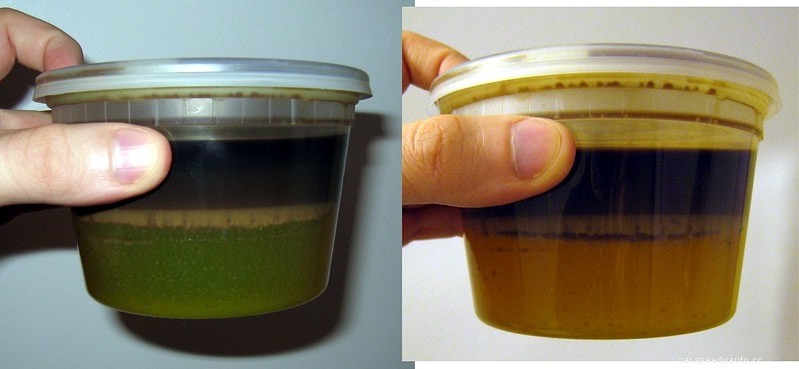
You might also find that your antifreeze has mixed with the oil if you have a blown head gasket.
To check this, remove the radiator cap and peak into the coolant reservoir (a flashlight might be helpful). The fluid will present itself as a thick, brown milkshake-like substance. If you have green coolant, you’ll see dark specs of oil show up.
Your oil dipstick may also show the same milky substance.
Constant overheating is a common symptom of a blown head gasket. You’re likely to experience overheating as your car loses coolant continually.
Surely you’ve seen a Check Engine Light (CEL) illuminate on your dashboard. When your temps get too high, your ECT sensor is going to start sending errors to your car’s ECM which is going to light up that MIL (Malfunction Indicator Lamp). The usual code I see for this is: P0128
If your engine keeps running, you might also notice extremely poor gas mileage. That occurs because you are losing the air-fuel mixture. Coolant may also be leaking into one of the cylinders, and that could be interfering with the combustion process. Both of those situations could easily affect the amount of fuel you need.
You may be interested: Signs of a blown head gasket
These gaskets take a lot of labor to replace. That means an expensive mechanic bill!
Before taking your ride to the mechanic, here’s how you can make sure the head gasket is failing.
2CarPros did a great video overview.
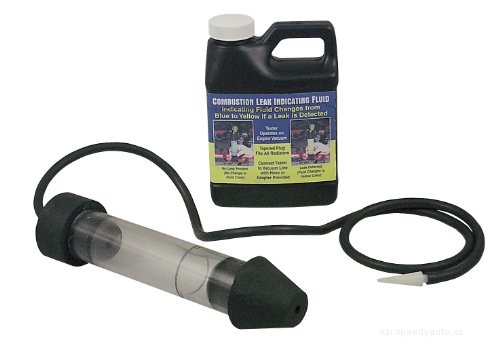 Lisle 75500 Combustion Leak Detector
It’s hard to say how long you can operate your car with a blown head gasket. The remaining drive time will depend on where the crack or tear is and the symptoms the vehicle manifests. Some engines will stop operating altogether within one day. You might be able to drive the car for a week, or it may last for a few months if you use a temporary fix on it.
This is box title As a rule of thumb, it’s best to NOT drive if you suspect a head gasket issue.One thing is for sure: You will have to get repairs sooner than later.
A blown head gasket is a problem that you need to address immediately. You can do this by using a temporary fix or a permanent fix.
Manufacturers sell head gasket sealers that may seal the gasket temporarily. They are generally easy to use. You can pour most of them into your radiator and then warm the car up for a specific amount of time. Bars Leaks, BlueDevil, and K-Seal re examples of companies that manufacture such products. They are designed only for temporary use. You should still take your car to a mechanic for assistance.
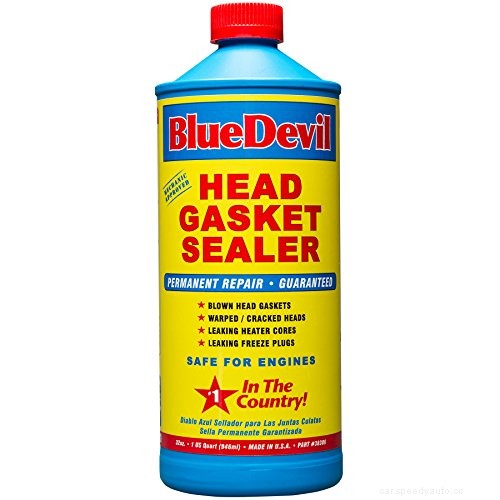 BlueDevil Head Gasket Sealer (38386)
$57.99
Buy on Amazon
BlueDevil Head Gasket Sealer (38386)
$57.99
Buy on Amazon
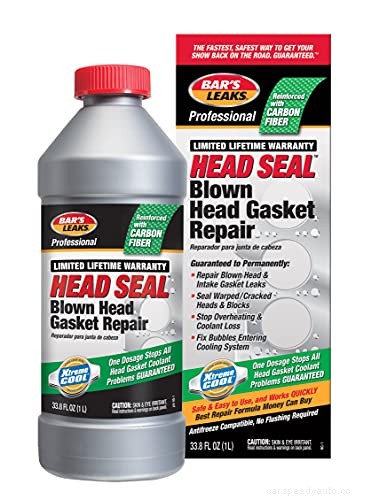 Bar's Leak HG-1 HEAD SEAL Blown Head Gasket Repair
$36.54
Buy on Amazon
Bar's Leak HG-1 HEAD SEAL Blown Head Gasket Repair
$36.54
Buy on Amazon
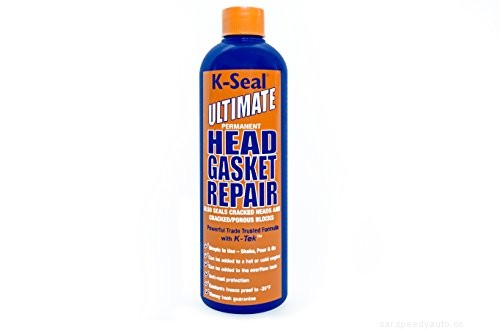 K-Seal ST3501 Pour and Go Permanent Head Gasket...
$20.86
Buy on Amazon
K-Seal ST3501 Pour and Go Permanent Head Gasket...
$20.86
Buy on Amazon
There are two permanent fixes to head gasket failure.
The method you choose to fix your gasket will depend on your budget and the age of your vehicle. The older your car, pickup, or SUV is, the more you may want to consider having someone rebuild your motor. We say this because other engine seals and components may wear after you replace your head gasket if your vehicle is aged. A head gasket replacement job requires the mechanic to remove the entire top end of the motor. This person could give you an overhaul while he or she has the engine exposed.
The cost of a head gasket replacement can vary according to the shop location, labor, parts, and so on. As we mentioned before, the mechanic will have to remove the top half of the motor to perform the repairs. Then the individual may have to have the head shaved or resurfaced. After replacing the head gasket, the mechanic will have to put the top end of the motor back together.
You’ll spend at least $1,200 at a shop that has a labor rate of $100 to replace a blown head gasket. Some shops charge more, and some shops cost less.
Long block engine replacement is roughly $1,000, and short block replacement can be as high as $2,500. You might be able to buy a rebuilt engine for a reasonable price and have someone swap it for the one you have. As we said, it depends on the age of your car and other factors such as the repair shop’s pricing grid.
You can replace your head gasket yourself if you have the tools and the patience to do so. The labor may take you several days or weeks if this is your first time changing it.
You can prevent head gasket failure by using the following smart tips:
That’s all you need to know about head gasket failure, prevention, and repairs. Can you drive with a blown head gasket? Yes, but you should only drive if it’s an emergency, and you have no other way to get to your destination. You should keep your eye on the temperature gauge when you drive and pull over immediately if you notice the signs of overheating. Take it slow, and keep your coolants full while you’re operating the vehicle. Please take the car to a mechanic to have that person perform the necessary repairs if you don’t feel comfortable doing it yourself. If you treat the problem quickly, you can save your car’s motor and keep the vehicle for many more years.
Sources:
https://www.carthrottle.com/post/head-gasket-failure-check-yourself-before-you-wreck-yourself/
https://www.thomasnet.com/articles/hardware/prevent-gasket-failure/
https://haynes.com/en-gb/tips-tutorials/what-is-head-gasket
https://automobileremedy.com/blog/how-to-test-for-a-blown-head-gasket/
https://gobdp.com/blog/what-are-the-symptoms-of-a-blown-head-gasket/
