One of the most unnerving things that can happen in motoring is that you brake and one or more of the wheels locks up. This has two possible effects. It can make the car slew to one side or, if the car happens to skid in a straight line, the steering becomes useless and you lose all directional control.
Electronic anti-lock braking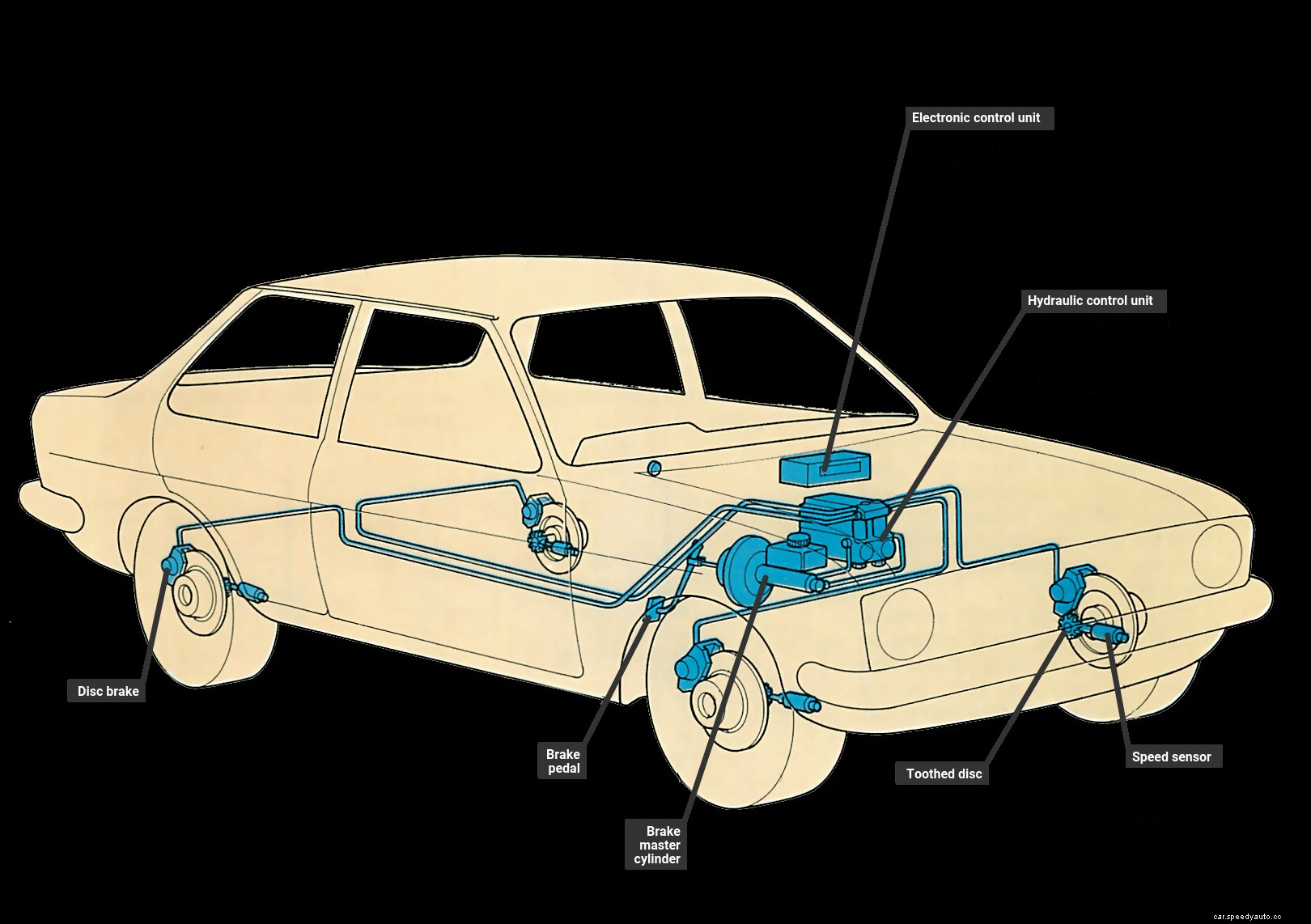
The best way to prevent skidding is to apply a form of braking called cadence braking. A driver who is skilled at this can usually avoid wheel lockup, but an anti-lock braking system does the job automatically and usually more efficiently. More and more cars are now being fitted with such a system.
An anti-lock system automatically applies a form of cadence braking by detecting when a wheel is about to lock, releasing the brake at that wheel and then immediately reapplying it. The system, therefore, needs three main parts: a means of telling when a wheel is about to lock; a means of releasing its brake; and a means of restoring the pressure to the brake line after release.
The third feature is necessary because the anti-lock system has to work without the driver releasing and reapplying pressure on the brake pedal, and without the pedal sinking to the floor.
A car tyre provides its best grip just before it gives up altogether and slides. Any method of detecting a wheel about to lock must therefore allow for its speed falling slightly below the free-running speed - the system must not react too eagerly, but must still work quickly once the point of best grip has been passed.
In practice, there are two ways of detecting that a wheel is about to lock. Its speed can be compared with that of the other wheels, or the rate at which it is slowing down can be measured. In either case the hydraulic pressure at the brake can be released if the deceleration is too great.
Computer-based electronic systems work by speed-checking the wheels against each other, but usually run a double-check by keeping track of the rate of deceleration too. These systems are complex and relatively expensive. Some anti-lock systems use mechanical sensors that detect when a wheel is slowing too quickly.
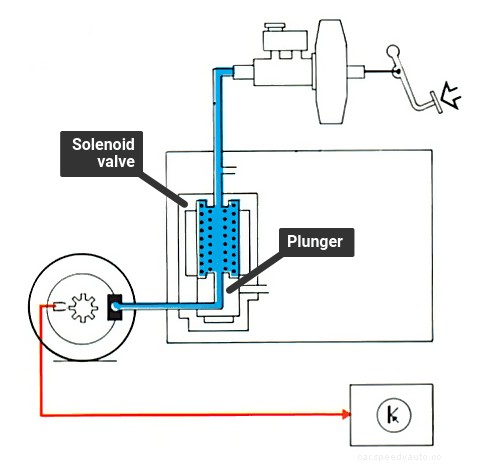
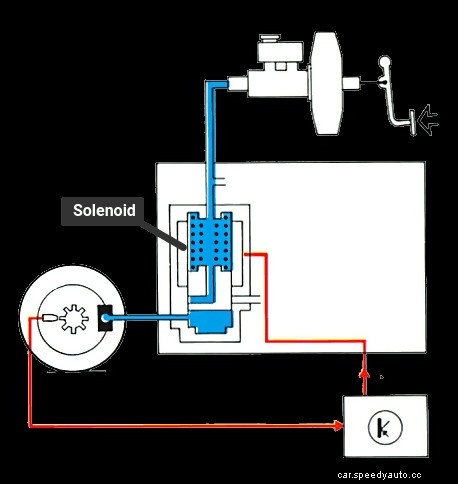
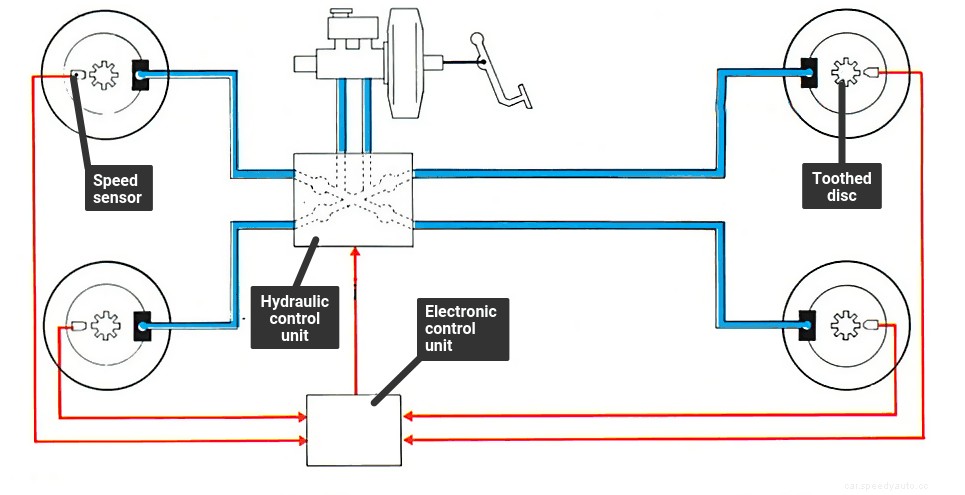 In the Bosch system, wheel speeds are read by toothed discs running
through sensors. The
data-term-id="1915">microprocessor
In the Bosch system, wheel speeds are read by toothed discs running
through sensors. The
data-term-id="1915">microprocessor
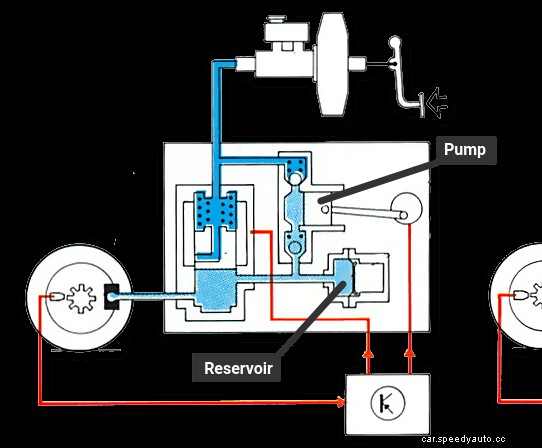
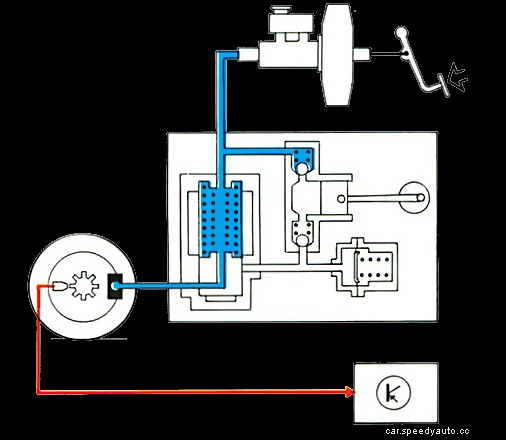
Hydraulic pressure to the brakes is cut by electronic solenoid valves . The hydraulic unit also contains a pump and accumulator to maintain pressure to reapply the brakes.