
When was the last time you asked a mechanic to ‘be sure and check the belts and hoses…”?
Probably never? Maybe that one time your dad told you to?
Why do you need to check them? Do you really need to change them out early? How long do they last?
From the serpentine belt to the timing belt, to radiator hoses and fuel lines, we understand how to prevent car trouble related to rubber parts. Today we’ll share that knowledge with you! First, it is important to understand the specific type of rubber used on today’s cars and trucks. Modern vehicles use a rubber called EPDM (ethylene propylene diene monomer, what a mouthful) and they have been since the early 2000’s. Before then, most rubber hoses, belts, and other items, were made of a rubber called neoprene.
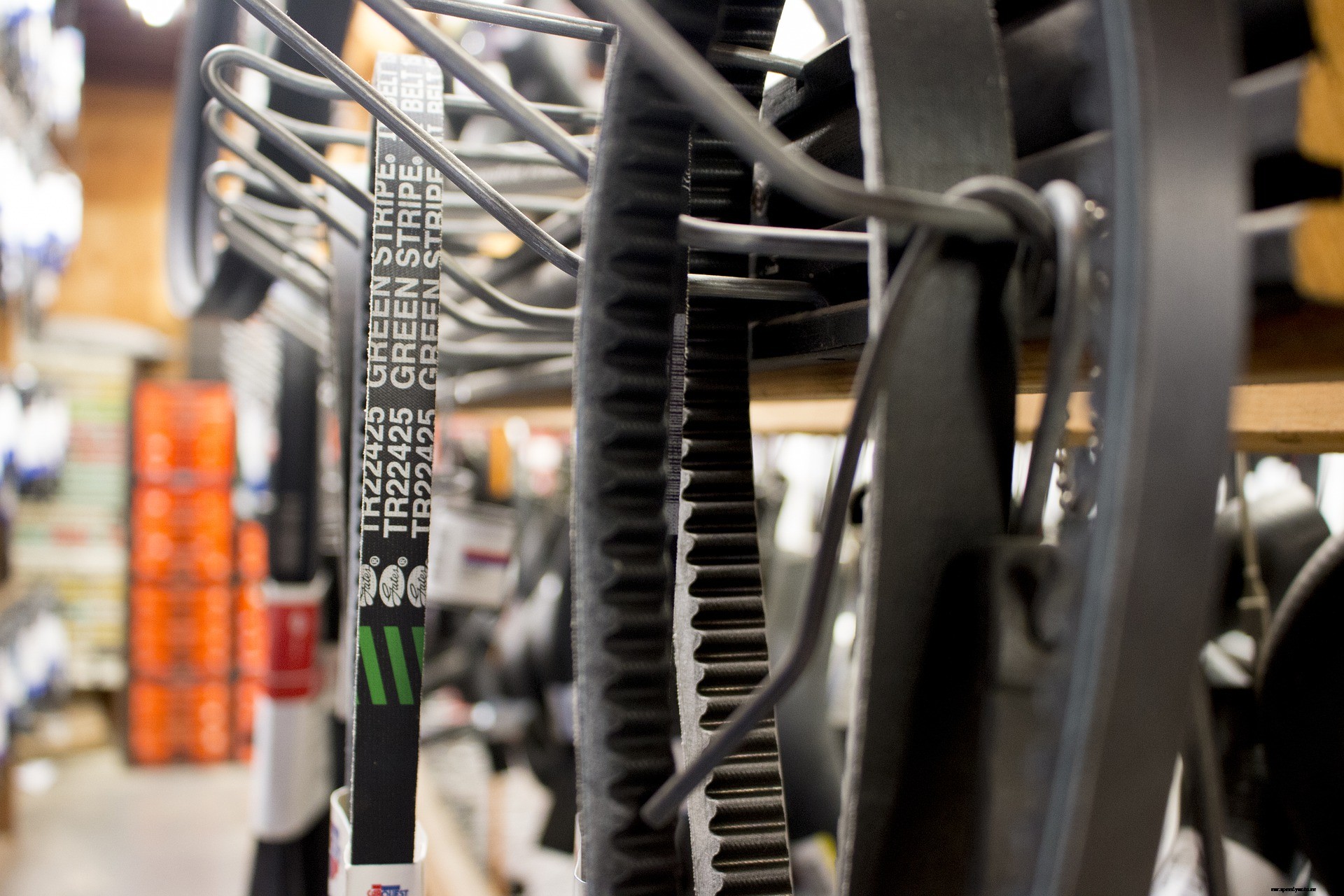 Neoprene is really good at staying flexible in a lot of different temperatures. However, neoprene is not very long lasting. For most cars, it was found that belts and hoses and other rubber things exposed to nature, would only last about 40,000 to 60,000 miles. After that, the rubber would start to flake, crack, and come apart.
This is why your dad, or grandpa used to always talk about ‘being sure to check that belt.’
Old style belts and hoses would start to show visible wear, and timing belts would lose teeth, serpentine belts would show missing ribs; hoses would crack and split. It was obvious when something bad was going to happen, if you’d only inspect these items before they failed.
Fast forward to modern times, where most rubber components (hoses, lines, seals, belts, etc) on a car or truck, are made of EPDM rubber.
EPDM rubber doesn’t crack and flake when it starts to go bad.
Car manufacturers are finding that rubber parts made of EPDM are lasting more than 100k miles in some cases. 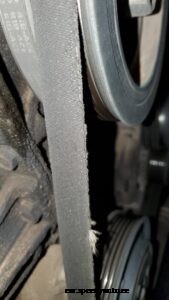 So why check your belts and hoses? They should be fine, right?
EPDM rubber is so great at not wearing – it can often hide signs of trouble. There are actually special tools and training, to identify problems with EPDM rubber parts (especially belts & hoses) before they cause catastrophic problems.
Take, for example, EPDM serpentine belts. Your serpentine belt drives all the important engine parts outside your engine. Like the alternator, power steering pump, water pump, etc. Old serpentine belts would crack and come apart in obvious ways – meaning you knew to change it, before it broke and left you stranded.
New EPDM belts last a lot longer, but the warning signs before failure are much more subtle. These drive belts wear like tires, the grooves in the belt get deeper and deeper, and require a special measuring tool to check depth.
When the grooves are too deep, the belt slips, and can become scorched, or it can risk pulley teeth cutting through the strengthening polyester cords inside the belt. If you or your mechanic just assumes your accessory belt is okay, just because it looks okay – you may be surprised with a high mileage belt failure at the worst moment.
Heater hoses take hot coolant directly from your engine, bypassing the temperature regulation of your thermostat; and bring it directly into the inside of your car to help make heat inside the cabin in cold weather.
They are constantly exposed to high temperature, and then allowed to cool down after you shut down your car. These hoses can regularly be heated around 120*F to 200*F. Just like old neoprene belts – neoprene hoses would start to show outside cracks, and flakes, as well as small splits, before they were in danger of failure.
Older cars required a cursory glance at the engine bay to know if you were risking a cooling/heating system rupture. Newer EPDM hoses last longer, just like their belt counterparts – but they are more susceptible to chemical breakdown and heat damage than older hoses. Today’s vehicles run hotter, longer, and don’t show obvious outside wear on their hoses.
This usually means that a hose that has been chemically degraded, and started cracking on the inside – looks perfectly fine on the outside.
Most owners are neglecting recommended maintenance on these systems. As a result – radiators, water pumps, and heater cores are failing well before they should – because they become clogged with pieces of degraded hose, meaning the system slows down and begins to run hotter, from these worn rubber parts.
In addition – many important hoses, like fuel hose, brake hose, and coolant hoses – have multiple layers. These hoses are designed to hold pressure, and will have an internal layer that touches the fluid, with a strengthening layer of synthetic threads, and an outer layer that is exposed to the elements.
If the outer layer is okay – it cannot be assumed that the inside layers are in the same shape. This is how sudden ruptures happen when you’re travelling or starting a vehicle. The inside layers can’t hold the pressure anymore, and the outside layer isn’t meant to. Then you end up with a massive pressure leak of a vital fluid like coolant, oil, transmission fluid, fuel, or brake fluid.

Such as – the timing belt, wiper blades, door seals, bushings, etc. These items should be inspected periodically for these hidden signs of wear. Someone who knows what to look for, and where to look – might just save you from a breakdown on the side of the road. So next time you have your car in for service, it is a good idea to go ahead and ask, ‘please check the belts and hoses!’
