
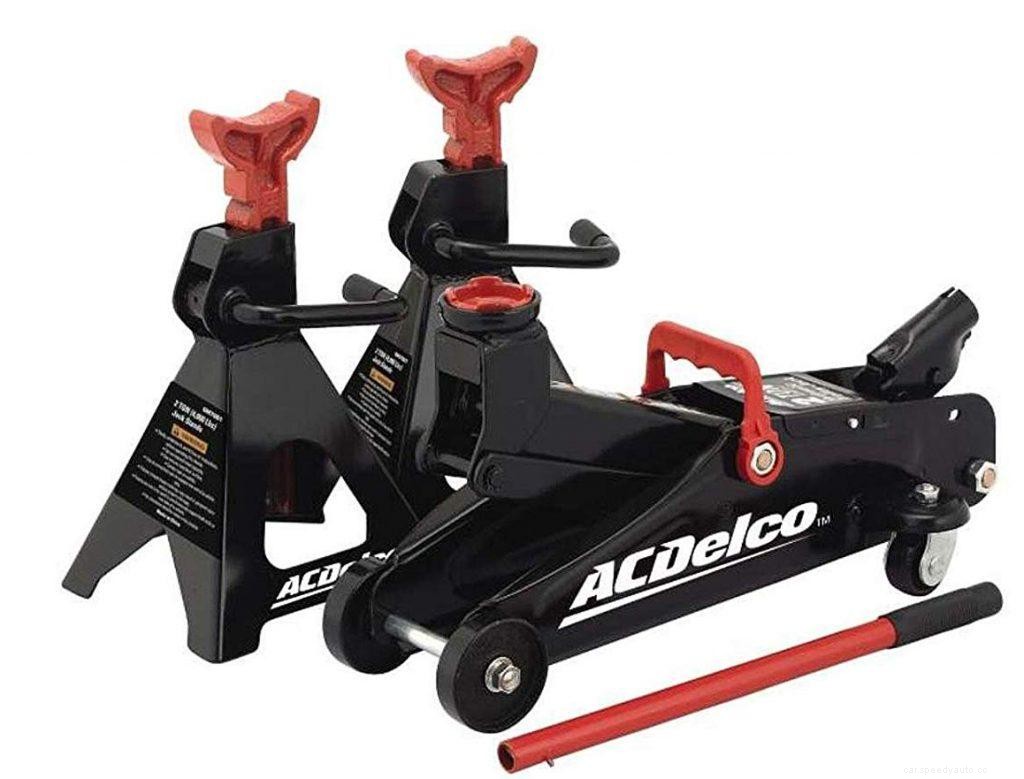
The simplest trick to make your tires last much longer is proper tire rotation. How to do tire rotation, for best performance, is after each 3000-5000 miles. Furthermore, this strategy can be useful in saving a ton of your money as well, let’s say, for buying a set of tires sooner. In fact, you can save even more by doing it yourself when it’s time for the car to demand a tire rotation. Therefore, in this technical guideline, all you need is to understand the nature of tire wearing and learn the right techniques in doing so. Just prepare only these certain handy tools and you’re ready to go: floor jack, jack stands, and a 4-way lug wrench.
Tire rotation, in a understandable definition to any non-native English speakers, is to remove all four tires of a car and install them to that car again, but in different positions, which are scientifically backed and carefully tested by mechanical experts.
The real reasons behind this is the difference in tire wearing patterns between tires. For example, front wheels will have faster wearing rate than rear wheels because 60% of car weight is put on the front suspensions, the right front wheel will wear down faster then the left front wheel since drivers have to turn left faster than turn right in countries like the US where they have to drive on the right side of the road. Vice versa, for drivers in left-side countries like UK, their cars got right front wheel wearing down much faster than left front one. Therefore, after thousands of miles, people all around the world end up with uneven tread wear in tires, in different ways.
By the changing the positions of your tires, you can equalize these natural wear patterns. Tire rotation can slow down the wearing rate of the wheel currently in fast-wearing positions by moving it to the less pressured position.
If you do this regularly, a smoother and safer ride will result from proper wheel rotation. Additionally, in the long run, you got four evenly wearing wheels and all four wheels will last much longer.
Every car owner’s manual is supposed to contain the proper tire rotation schedule. You had better consult it to see. Generally, manufacturers recommend “tire rotation how often” is every 5000 miles, but you can rotate your tires after 3000 miles if your car went off-road a lot, for example. A quick tip is that you rotate your tires at the same time you change oil for your car.
Before loosening the lug nuts, one need to know what pattern we’re going to use to rotate our tires. The type of tires will decide the pattern of rotations. There are 2 types of tires: directional tires and non-directional tires.
For front-wheel drive cars with non-directional tires Original tire position Left front wheel Right front wheel Left rear wheel Right rear wheel New position after rotation Right front wheel Left front wheel Right front wheel Left front wheel
The very first priority to rotate tires is to park the vehicle at the ground level and apply the parking brake. Tough surfaces, like concrete or tarmac, are the best options for rotating tires. Eventually to lift the vehicle, use the 4-way lug wrench to smoothly release each lug nut.
Make sure the car is not in motion when you try this, otherwise, it will be dangerous. You can use the floor jack to lift up the whole vehicle front through factory jacking point. Jacking point can be easily found on the engine front. If it is still difficult to find the front jacking, going through the vehicle manual can help.

Tire rotation and alignment are closely linked with each other. For the best alignment, keep a jack stand at both sides of a vehicle at the front.
You can utilize the support ridge for jack stands, which are often distinguished by a tiny mark at a few inches to the rear of every front wheel. After the stands are set up perfectly, you can go for reiterating the process of lifting and supporting the back-end of the vehicle.
As you have merely relaxed the lug nuts, these will slide off smoothly with the support of the vehicle. However, going through car manual is recommended for tricky aspects. Then you can clear most of your doubts regarding how to do tire rotation through the process. You can also double-check by comparing with the patterns above.
Refer to the above patterns, or else, as a tip, note that most of the tires do have the rotation pattern mentioned over the tire surface.
After you have rotated the tires properly, screw the lug nuts merely as the car is in support. Remember, if is not tightened completely; the car might fall. You may utilize the floor jack to support vehicle, and can later remove the stands.

Afterward, stiffen the lug nuts completely through 4-way lug wrench, if the car is thoroughly lowered. You can tighten the lug nut up to any extent without stripping.
Altogether, DIY tire rotation is fine if you are well versed with the technicalities to deal with a car and absolutely confident about safety aspects. Even if you can’t do it yourself, at least you should note details of your tire rotation.
If you read to this point, I believe you all learn helpful knowledge to your car. Now, after proper tire rotation, you can save yourself a whole lot of money and ensure your ride safely. Keep your record of the mileage and the rotating pattern of this time in a safe place and remember to use the piece of information for the next time. However, when it’s time to replace all your tires, do it, you cannot just rotating your car forever. Ask the professionals next time you take your car to the garage.
