
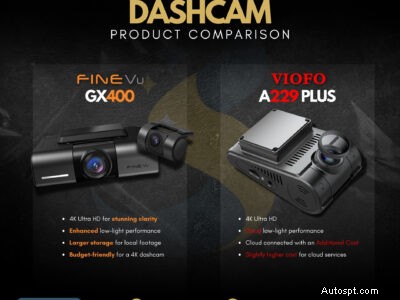
When choosing between dual-channel dash cams like the FineVu GX400 and the Viofo A229 Plus Duo, it’s worth focusing on how they align with everyday driving needs—things like reliable video capture, battery-friendly parking surveillance, and ease of use without unnecessary complexity. Both are solid options from reputable brands, delivering 2K front resolution and 1080p rear coverage with strong low-light performance thanks to Sony sensors. However, they cater to slightly different priorities: the Viofo shines in raw video detail and app flexibility, while the FineVu emphasises discreet design and efficient long-term operation.
Let’s break it down across key areas to help you decide.
* Data based on 2025 information
Both models record at 2560×1440 (2K QHD) up front at 30fps and 1920×1080 (Full HD) in the rear, making them capable of capturing license plates and details in most scenarios. The Viofo A229 Plus Duo uses advanced Sony STARVIS 2 sensors (IMX675) on both cameras, paired with HDR and Super Night Vision 2.0, which gives it a noticeable edge in dynamic range—handling glare from oncoming headlights or tunnel transitions with less washout. Reviews highlight its cleaner night footage with reduced noise, making it ideal if you drive in varied urban lighting.
The FineVu GX400, equipped with a Sony STARVIS IMX335 HDR sensor up front and a standard CMOS rear, holds its own in low light via auto night vision, but it doesn’t match the Viofo’s HDR depth across channels. That said, its consistent 16Mbps bitrate ensures sharp, artifact-free clips in everyday conditions, and the footage feels more “natural” without over-processing. If your routes involve steady highway or suburban drives, the difference might not justify the trade-offs elsewhere.
The Viofo A229 Plus Duo packs in extras like voice control (12 commands for hands-free operation), ultra-precise quad-mode GPS for accurate speed/location overlays, and Wi-Fi for quick app transfers. The Viofo app is feature-rich, allowing live previews, settings tweaks, and easy clip downloads—though some users note occasional Bluetooth hiccups with car systems. It supports up to 512GB cards and optional CPL filters for glare reduction can be purchased separately.
The FineVu GX400 keeps things simpler with built-in GPS for ADAS features (like forward vehicle movement alerts and lane departure warnings) and speed camera notifications via quarterly app-updated databases—no extra module needed. Its Wi-Fi app is praised for rock-solid connectivity and novice-friendly navigation, including live streaming and firmware updates. While it lacks voice commands, the on/off switch for quick power cycling and AI damage detection add thoughtful touches for battery-conscious users.
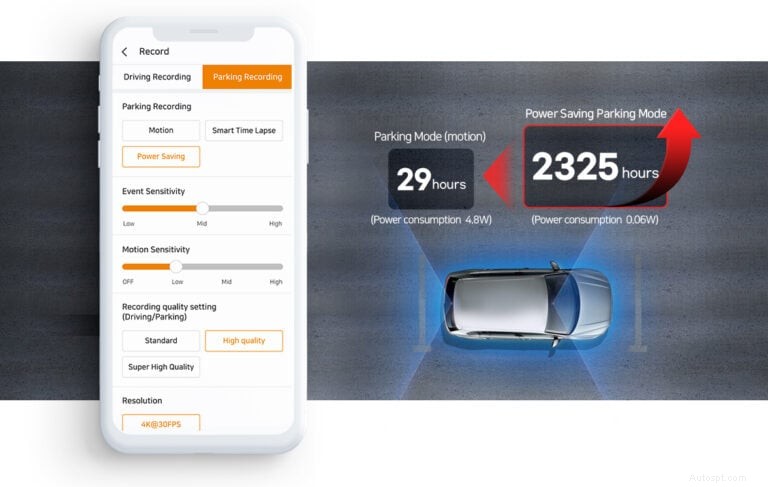
This is where the FineVu GX400 pulls ahead for practicality. Its Power Saving Parking Mode consumes 98% less power than traditional setups, potentially offering over 2,300 hours of standby time (depending on your battery and environment), with AI-driven heat monitoring that automatically throttles recording to prevent overheating or drain. The Absolute Parking Guard captures 10 seconds pre- and post-impact, which is a smart safeguard for hit-and-runs without constant full recording.
The Viofo A229 Plus Duo offers versatile parking options like motion detection, time-lapse, and impact sensing with a pre-buffer, but it draws more power in continuous modes—users report safe recording times of just 4 hours or less before risking battery depletion. It’s great for short urban parks, but for overnight or multi-day surveillance, you’ll need a stronger battery setup or frequent checks.
Both support low-voltage cut-off, but the FineVu’s efficiency feels more set-it-and-forget-it.
At just 2.3 x 1.5 inches for the front unit, the FineVu GX400 is ultra-slim and non-LCD, blending seamlessly behind the mirror for a clean, distraction-free install. The supercapacitor handles heat up to 70°C without issues, and the included hardwire kit makes setup straightforward. It’s backed by a 3-year warranty, emphasising durability in real-world heat.
The Viofo A229 Plus Duo is compact too (wedge-shaped, 2.3 x 3.9 inches front), but its 2.4-inch screen adds visibility for on-the-fly checks—helpful if you prefer manual oversight. Installation is similar, though the thinner rear cable eases routing. It also uses a supercapacitor for heat resistance, with positive feedback on build quality, but some note the adhesive mount can be finicky to reposition. Warranty is typically 18 months, extendable with registration.
The Viofo A229 Plus Duo is a powerhouse for video enthusiasts, excelling in low-light detail and smart features like voice control that make it feel cutting-edge for active drivers. However, if you’re after a low-maintenance setup that prioritizes battery life, discreet aesthetics, and reliable 24/7 protection without constant tweaks, the FineVu GX400 edges it out—its power-efficient parking and heat-smart AI make it particularly forgiving for longer-term use, especially in warmer climates. Both are worth the investment at both just coming under $500 with the necessary accessories (SD Card & Hardwiring Kit), but the FineVu’s balanced approach might save you more hassle down the road.

author, Automotive Service writer

As a seasoned author on our team, Chester also known as ‘Gadget’, for his love for all things mechanical, brings a wealth of experience and expertise to the table, particularly when it comes to automotive topics.
