
Most times when people discuss ‘transmission fluid,’ they are talking about automatic transmission, but the truth is, if your car isn’t one that relies on electricity to operate, it has some sort of transmission fluid to keep the transmission gears running smoothly. Which makes it important to know how to check and add transmission fluid when necessary to prevent your vehicle from breaking down.
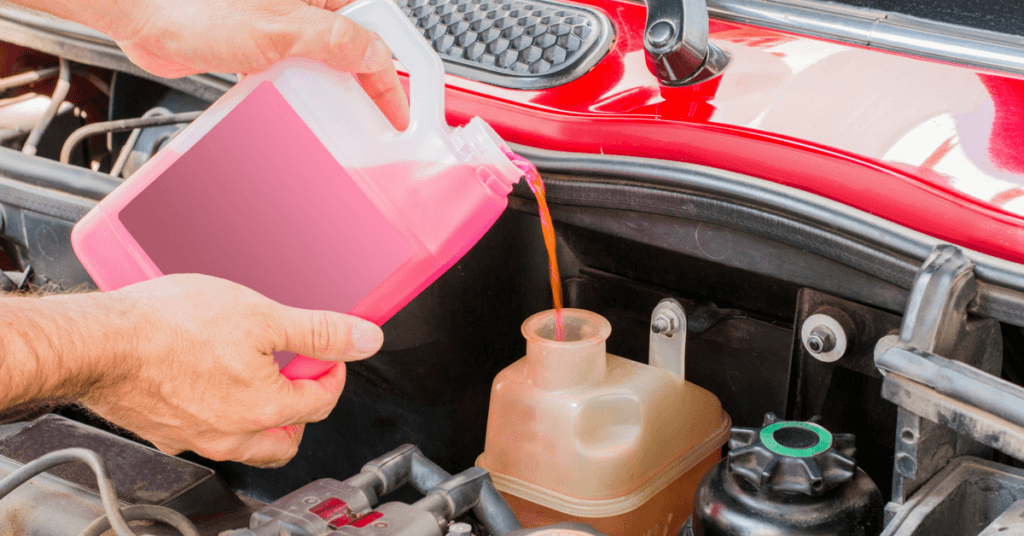
All of the power coming from the engine goes through transmission before reaching the wheels, so if the moving parts in the transmission aren’t well lubricated and, as a result, experience too much friction, then you could be looking at costly repairs sometime in the future.
The way to prevent this is by monitoring the transmission fluid level and, if necessary, top-up or change the transmission fluid. It’s worth noting that some manufacturers do not recommend changing the transmission fluid throughout the life of the transmission and as such do not have a level checkpoint or the normal refill hole in the engine compartment.
For vehicles like these that have a fluid level sensor but no accessible dipstick, you should get the service of a professional if you suspect the fluid level is low. The steps to check and add transmission fluid to your vehicle are outlined below.
What you’ll need are:
The best time to check transmission fluid level is when the engine is at normal running temperature, you could do this after returning from a 5 mile (8km) run.
To get an accurate reading of the transmission fluid, you’ll need to park on level ground so the fluid doesn’t tilt in one direction.
If your transmission has a manual gear selector beneath ‘drive’ (i.e. 1, 2, and 3 on the shifter), then you should shift through each before letting the engine idle in ‘park’ or ‘neutral’ depending on the vehicle specification.
There’s an automatic transmission fluid pipe located under the hood. You should expect to search for a moment since it is usually out of the way. It’ll be much easier to find it with the help of the manual.
Here’s a tip. The transmission dipstick will be in front of the engine if the vehicle is a front-wheel drive or towards the rear of the engine in a rear-wheel drive.
At first, it may be tough to pull out, but try to be gentle when pulling the handle. Have a paper towel or rag nearby before pulling the dipstick out completely.
Now, grab the body of the dipstick with the rag as you pull it out to get rid of excess transmission oil.
For an accurate reading of the transmission fluid level, make sure the stick is oil-free before inserting it back into the pipe.
The dipstick will have two lines labeled either “Full” and “Add” or “Hot” and “Cold.” The transmission fluid should be somewhere between either line.
If it falls below the “Hot” or “Add” line, then you need to top up the transmission fluid ASAP.
You will need about a pint of fluid to get it back up, but before topping up the transmission fluid you’ll need to do something very important.
Look at the transmission fluid on the dipstick, what does it look like?
Fresh unused transmission fluid usually has an amber color, some are more brownish, and others have a reddish color.
If the fluid on the dipstick or paper towel deviates too far from these three colors, then you will need to change the transmission fluid – not add new to the old.
It may be burnt if it looks too dark and contaminated if it looks milky.
If the fluid was red, amber, or brown, there should be very little deviation from the original color.
It may look pinkish in the case of red or a bit darker than before in the case of amber or brown.
If the fluid is burnt, smelly, or milky, then you need to flush it out as these are signs or contamination. Shut the engine and call for a mechanic.
Too much air bubbles might be an indication that there’s too much fluid in the transmission or you’re using the wrong fluid.
What you’ll need are:
First off, you need to ensure that you’re using the recommended transmission oil for your vehicle.
Automatic and manual transmission have very different transmission fluid that serves different purposes, each with slight variations and properties specific to the type of car.
Using the wrong type or variant of transmission fluid could cause severe and expensive damage to the system similar to what would happen if you used the wrong type of fuel.
We’ll discuss more on transmission oil later in the article.
Insert the funnel into the pipe where you removed the dipstick from, then top-up the transmission fluid with a little amount of fluid.
Stop and check the fluid level after adding a certain amount of fluid, so you do not exceed the recommended levels.
If you drained the previous fluid, you will need about 5-10 quarts of fluid to fill it back up.
When you’re done topping up or refilling the transmission fluid and you’ve confirmed there’s no leakage, get behind the wheel and run the transmission through all the gears.
Let the engine idle for a couple of minutes to stir the fresh fluid around, coat all the moving parts and. Ensure it circulates throughout the system.
Once you’re done with the steps above pull out the dipstick again, wipe it clean, and re-insert it to ensure the fluid level is where it should be.
If it falls drastically, you’ll need to thoroughly inspect the system for leaks. But if the fluid level is low, but not too far off from what it was when you were refilling, then you can just add half a pint or so.
If your vehicle transmission develops a fault and needs to be towed, there are things you need to consider when towing.
Most modern automatic transmissions are not to be towed more than 15 miles, and even then, the towing speed must be below 30 mph.
This is because the internal fluid pump of the gearbox is driven by the engine and when the vehicle is being towed, the engine isn’t running neither is the fluid pump which means the transmission box is spinning but is not cooled or lubricated.
The correct way to tow an automatic transmission is to disconnect the drive shafts or propeller shaft or raise the driven wheel.
The person towing the vehicle should know about this, but just in case they don’t or forgot, you can point it out.
Transmission fluids, like all engine fluids, have a limited lifespan, meaning they need to be replaced or topped at certain intervals.
Depending on the vehicle make and model your manufacturer may recommend changing the transmission fluid every 30,000 – 100,000 miles.
There are two types of transmission – automatic and manual – and the fluids formulated for each are not interchangeable.
This is simply because automatic and manual transmission consume transmission fluid in different ways.
Where automatic transmissions use transmission fluid for heat moderation, lubrication, and hydraulic fluid for pressure-operated brakes, clutches, and valve, manual transmissions use the fluid mainly for heat moderation and lubrication.
The transmission fluids formulated for each transmission type are further divided into subcategories, each with slightly different additives for specific transmission type, automaker, and gear type.
Though some manual transmissions require additive friction modifiers for gear synchronizers to operate smoothly, 75W-90 or GL-5 is as basic as you’d get.
Those formulated for an automatic transmission vary greatly depending on the year, make, and model, such as Dexron 4, T-IV, Mecron V, etc.
Irrespective of the vehicle in question, you need to use the recommended transmission fluid for that vehicle make and model.
Manual transmissions are less problematic; you could use a 100-weight gear oil instead of the recommended 75W-90, and you won’t hurt the vehicle much.
You’ll just notice a drop in fuel economy and slower shifting, but the results could be disastrous if you use a T-IV in a vehicle that requires Mecron V.
It might run for some time, but in the long run, you’ll cause more damage than you thought.
When in doubt, always refer to the car manual or check online.
You can keep your vehicle running for many miles when you take proper care of the transmission.
The one thing keeping all of these moving parts inside the transmission operating smoothly is the transmission fluid, and a routine check is all you need to prevent the system from breaking down.
