
A catalytic converter is an important device that makes up the exhaust system of a vehicle. The internal combustion process that takes place in an engine produces lots of harmful gases, which, if released into the atmosphere, are very toxic to the ecosystem.
The job of the catalytic converter is to speed up the process of converting harmful gases leaving the engine into harmless gases that can be safely released into the atmosphere. The process is quite complex and more often than not, could end up blocking the catalytic converter, therefore it’s important to know how to clean catalytic converters.
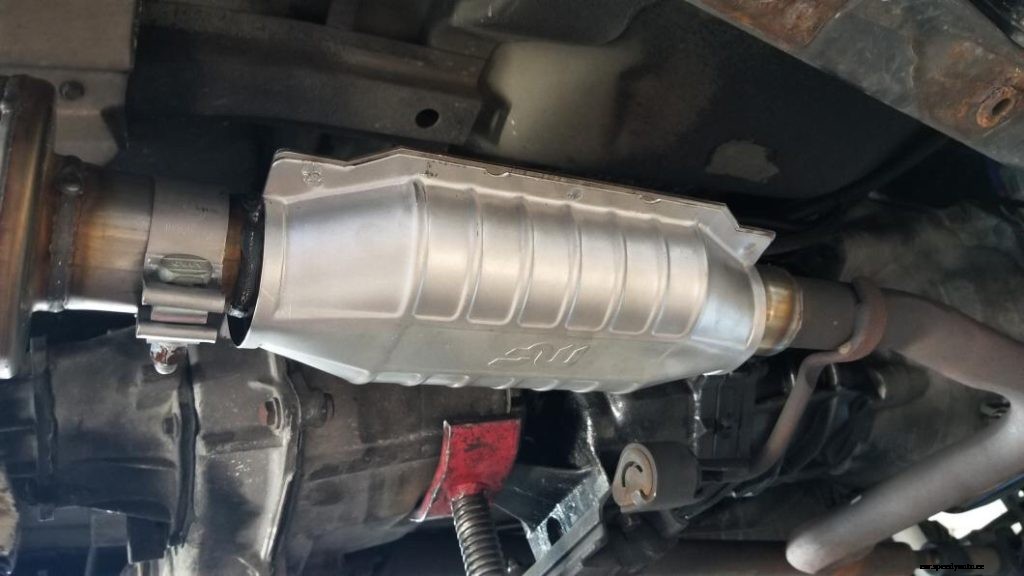
We’ve already seen that the catalytic converter works on the harmful gases coming out of the engine, therefore having a bad or faulty catalytic converter pollutes the environment, but that is not all, it reduces the performance of the engine, which leads to poorer mileage, and eventually causing the engine to fail.
It is also very likely that your car will fail an emission test too if the faulty catalytic converter is not fixed. Hence you need to treat a bad catalytic converter as a top priority in your to-do list.
A catalytic converter can develop fault either as a result of using the converter for years or from an issue with the fuel pressure regulator where the air-fuel mixture delivered into the engine contains too much fuel and the extra fuel that doesn’t get used up clogs and damages the converter.
Most mechanics will just advise you to change the catalytic converter, but there are times you could save yourself a fortune by cleaning the catalytic converter.
So if you want to know how to clean catalytic converters, then stick around. This article will explain everything you need to get the job done.
Here are some things that you need to take into consideration before you try to clean a catalytic converter.
In many instances, the parts in the catalytic converter get loose from the constant vibration coursing through the vehicle, and if this happens, you’ll have a hard time repairing the catalytic converter without removing or replacing it altogether.
Take something strong like a hammer or spanner and give the catalytic converter a little knock while listening for any loose parts inside the converter. I recommend you remove and inspect the catalytic converter if you can hear loose parts rattling inside it.
The reason is that the loose parts can come off and clog the exhaust pipe, blocking the flow of gas, which will make your vehicle jerk to a halt after driving for a while.
If the engine won’t run because the catalytic converter is so clogged, you’ll have to remove the converter and use special catalytic converter cleaning products or replace the whole catalytic converter.
Your catalytic converter may be clogged because the engine oil is leaking into the combustion chamber. Since the engine is not meant to be combusted, when this happens the oil that gets into the engine is poorly combusted and the residue flows out with the exhaust gas towards the catalytic converter. Not only will this reduce the efficiency of the converter, but the oil is bad for the sparkplugs, piston heads, and the engine because it is not getting enough lubrication, besides that you’ll have to top the oil level more often than you should.
If this is the underlying cause of the problem, then you should fix the oil leak first before attempting to repair the catalytic converter, else it will just work for a couple of days before reverting to the bad state.
It’s illegal and irresponsible not to have a functional catalytic converter. In some states, smoking exhaust pipes are a serious offense and without a functioning catalytic converter, your vehicle will fail the emission test which attracts a fine.
A clogged catalytic converter will be less effective at converting toxic gases to harmless gases. With a clogged converter, your vehicle will be giving off more emissions than the legal limit.
Every component in the car is designed to depend on each other and work in synch. If the catalytic converter is not cared for, engine performance and fuel economy will tank.
A faulty catalytic converter can cause other mechanisms to overheat and possibly damage.
There are many issues that can trigger the same symptoms associated with a faulty or clogged converter.
To be certain the fault lies with the converter, it’s a good idea to check your onboard diagnostics system.
Once the performance of the engine drops below 50%, the ‘check engine’ light will come on. With an OBD-II scanner, you can actually tell if the catalytic converter is the problem.
We’re in the information age and you can learn about almost everything online. This comes with its hazard because not all information is accurate or safe to try.
For the love of your vehicle, and yourself, do not attempt these supposedly effective methods of cleaning catalytic converters:
The problem with this method is not that it doesn’t work, rather it’s because a strong detergent like grout-eating bleach or gel may be so powerful that it cuts through the build-up on the unit.
Letting it soak increases the possibility of that happening.
Certain chemicals can be corrosive or acidic despite their effectiveness. They could eat through the exterior or interfere with the catalyst.
There are lots of guides online that encourage you to pour lacquer or paint into your gas tank in order to unclog a catalytic converter.
Though solvents like these ones are often used in the automotive industries, they are not used in this manner. You should only use products that are meant for vehicles in your car.
The idea behind this method is that the chemical in the thinner or lacquer will flow through the engine and break down the build-up that’s clogging the unit.
However, these sorts of products are not intended to circulate in the fuel system of a vehicle.
Using this method to clean a catalytic converter might cause more trouble than catalytic converters are worth.
It’s much safer to use solutions designed for cleaning your catalytic converter or emission system.
Catalytic converters can be attached in two different ways, either welded on or bolted. With the right tools and some tech-savviness, you can loosen bolts and couple them back when you’re done.
But, sawing the unit off is a little bit trickier. It’s not really worth the effort when you consider the risk of accidents to both you and your car.
Keep in mind that the sawed-off unit has to be welded back on when you’re done. The best way to do this is to take your car to the workshop and have it fixed.
This is by far the simplest method to clean out deposits on the inside of the catalytic converter and return your emission to the normal level.
The good part about these cleaners is that they can also work on your oxygen and fuel system sensors.
You need to ensure that the product you purchase is compatible with the type of fuel your vehicle uses.
Most of the detergents available for cleaning catalytic converters are only compatible with gasoline or diesel engines, not both.
Read the label so you don’t cause damage to your fuel system.
How much depends on the size of your car. A smaller car will require less than bigger cars since the size of the catalytic converter is proportional to the size of the car and the engine. Ensure you have enough product for your vehicle.
Follow the direction on the product and pour the recommended amount directly into your tank. Depending on the brand of the cleaner, you may need to have a near-empty tank.
Now start up your engine and drive around like you normally do – nothing new. This will help the cleaner circulate to the converter.
Many products will stipulate how long you need to drive before you’ll start noticing improvement.
If it works as expected, there’ll be an improvement in symptoms like smoky exhaust, engine misfire, and poor acceleration.
I recommend you only try removing the catalytic converter if you have an intermediate to advanced DIY home mechanic skills.
The catalytic converter may be severely clogged if the cleaner didn’t work on it.
If this method is also ineffective, then you’ll have to purchase a replacement catalytic converter. It’s illegal and irresponsible to drive without these pollution-controlling components.
Except you’re doing this first thing in the morning or before driving the car, then you have to let the exhaust pipe and related components cool down.
Depending on how long and how fast you were driving, the converter might get as high as 700 degrees Fahrenheit. If your vehicle is hot, then use the time while it cools down to arrange supplies.
With the help of a jack, lift the car so you have a comfortable space underneath it to work on the converter. Ensure to use your jack stands to keep it secure.
Make sure to protect your eyes from falling particles and your hands too so you don’t waste time later trying to wash out the filth.
You’ll find the catalytic converter close to, or in the middle of your exhaust pipes. It looks rounded or square.
You should be able to tell if the unit is welded or bolted. Remember, that welded units are best handled by a professional with all the necessary tools.
Use an oxygen sensor wrench and carefully remove the sensor(s) and set it somewhere safe.
Start loosening the bolts, back to front. Starting with the bolt that’s closest to the end of your exhaust and work your way forward, but don’t remove them completely.
Support the unit while removing the bolts so it doesn’t fall to the ground.
Now inspect the unit. Do you hear rattling when you shake it, or is it melted? These are all indications that the unit is damaged and must be replaced. If it looks okay, then proceed to the next step.
Set your pressure washer to low and flush the unit down. Make sure to hose down both outlet and inlet pipes to clear out nasty crud and deposits.
Fill a container with hot water and mix the degreaser into the water.
Let the unit soak in the mixture for about 30-60 minutes, but make sure it doesn’t stay too long. Now rinse the solution from the unit with your pressure washer and place it on a towel to dry. You can leave it overnight to get all the water out of the unit.
Once the unit is completely dry, re-assemble the converter and oxygen sensor. When you’re done drive the vehicle for a while to see if there’s any noticeable difference.
It is much more cost-effective to use an appropriate product three to four times a year than it is to buy a new unit to replace a faulty one.
Besides, chances are that if you let the catalytic converter deteriorate before doing something about it, other systems might also develop issues too.
If you don’t drive very often, you can get away with performing just one or two treatments in a year. What you need to do is turn the cleaner into the gas tank and drive around with it.
Now you’ve seen how to clean catalytic converters, by removing and without removing the catalytic converter.
Even at that, loosening the unit for cleaning should be reserved as a last resort in case the other method doesn’t work.
By using cleaning solutions, and often, you can extend the life of your car and prevent the catalytic converter from getting clogged. But, if the unit is damaged and the only option you have is to change it, then do just that.
With this new information you have regarding catalytic converter maintenance, we hope you make it a priority to look after the unit in order to extend the life of your converter and the vehicle in general.
This way you can delay having to buy a new one for as long as possible.
