
Mercedes-Benz, simply known as Mercedes, is a leading global luxury automative manufacturer based in Germany. The company is headquartered in Stuttgart and is famed for its high quality passenger vehicles, to include the Mercedes-Maybach. However, the company is also a leader in manufacturing commercial vehicles, to include the plug-in Mercedes eSprinter commercial EV and the plug-in Mercedes eVito electric van.
Mercedes-Benz EQ is the sub-brand used by the company for its portfolio of battery-electric vehicles (BEVs), plug-in hybrid electric vehicles (PHEVs) and mild hybrids. The pure electric cars are branded as EQ, while the PHEVs are branded as EQ Power. The mild hybrid vehicles are branded as EQ Boost. The PHEV portfolio includes:
For those of you new to zero-emission electric driving, we recommend a read of the following articles:
The Mercedes-Benz E Class premium saloon is currently in its fifth generation. It was first introduced in 2016. The E Class includes both a petrol and diesel plug-in hybrid electric vehicle (PHEV) variant.
The PHEV has a 13.5 kWh onboard EV battery, with a claimed zero-tailpipe emission range up to 35 miles (WLTP certified). Of course, the real-world range will depend on a number of factors, to include: driving profile, speed, passenger load, weather and road condition etc. Assuming a 30 mile electric range is more realistic. In any case, for shorter distances, driving in cities and towns, the 30 – 35 miles electric range is sufficient.
The EV also has regenerative braking to increase the zero-emission range. Do keep in mind that driving the PHEV on the electric mode will result in lower tailpipe emissions and cost savings. Depending on where and when the EV is charged, the cost per mile on electric mode is between 5 pence and 10 pence i.e. far cheaper than using the internal combustion engine (ICE).
Mercedes claims a fuel economy up to 188.4 mpg for the E300e and 217.3 mpg for the E300de. But achieving this will require using the onboard electric motor, powered by the EV battery on a regular basis. As is the case with the real-world electric range, expect the real-world fuel economy to be lower than the manufacturer claimed figures. However, the PHEV will deliver an improved fuel economy compared to the conventional internal combustion engine (ICE) variant, which delivers as low as 31.4 mpg.
The EV has a 7.4 kW onboard charger and can be charged 10% to 100% via a dedicated residential EV charger like Easee One in 90 minutes. Though the PHEV can also be charged using a conventional 3-PIN domestic plug (10% – 100%: 5 hrs), we at e-zoomed discourage the use domestic plugs for charging electric cars. Despite the price tag, the electric car is not compatible for rapid DC charging.
Both the petrol E300e PHEV and the diesel E300de PHEV, pair a 2.0-litre (4 cylinder) combustion engine with an electric motor (90 kW). The E300e PHEV delivers a combined system output up to 320 HP (700 Nm torque) and the E300de PHEV delivers a combined system output up to 306 HP (700 Nm torque).
The EV can achieve 0-62 mph in 5.9 seconds. The petrol plug-in hybrid has a top speed up to 155 mph. The diesel plug-in hybrid has a top speed up to 149 mph. In electric mode, the top speed is over 80 mph.
As can be expected from Mercedes, the E 300 PHEV has a luxurious interior and technology-laden, to include: Mercedes-Benz User Experience (MBUX) – controlled via voice or touch input, the innovative infotainment system can over time even predict personal habits thanks to artificial intelligence.
Other standard specifications include, active brake assist, blind spot assist, wireless charging, ambient lighting (staged – 64 colours), KEYLESS-GO starting function and high-resolution multimedia colour display.
The PHEV is practical for families and can comfortably seat adults in the rear seats (ample legroom and headroom). The boot space for the EV is smaller than the conventional internal combustion engine (ICE) variant, due to the EV battery. Nevertheless, the 370 litres available is practical.
The EV is also well suited as a company car. Company-car drivers can take advantage of the lower Benefit-in-Kind (BiK) tax rate, given the lower tailpipe emissions of the PHEV (35g CO2/km).
The plug-in hybrid electric vehicle does not qualify for the UK government plug-in car grant. Bottom-line, electric driving is good for the environment and the wallet. You can lease electric vehicles (EVs) via e-zoomed at very competitive prices!
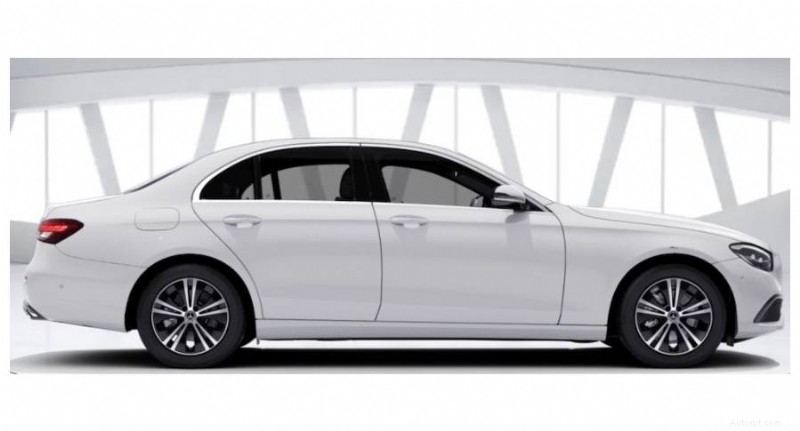
The Mercedes-Benz E 300 Saloon PHEV (credit: Mercedes)
While e-zoomed uses reasonable efforts to provide accurate and up-to-date information, some of the information provided is gathered from third parties and has not been independently verified by e-zoomed. While the information from the third party sources is believed to be reliable, no warranty, express or implied, is made by e-zoomed regarding the accuracy, adequacy, completeness, legality, reliability or usefulness of any information. This disclaimer applies to both isolated and aggregate uses of this information.
