
Land Rover is an iconic British brand, famed globally for its off-road and four-wheel drive vehicles. Land Rover is owned by Jaguar Land Rover (JLR) Automotive PLC, a leading luxury vehicle manufacturer with a distinctive reputation of being British and iconic.
However the automotive company is now owned by the leading Indian industrial conglomerate, the Tata Group. The blue chip, India headquartered company is a leading player in the automotive sector via its Tata Motors subsidiary based in Mumbai. Tata acquired Jaguar and Land Rover from Ford Motor Company in 2008. JLR continues to conduct its operations from Coventry in the United Kingdom.
Range Rover electric vehicles (EVs) include:
For those of you new to zero-emission electric driving, we recommend a read of the following articles:
The famed Land Rover Range Rover Sport (simply known as Range Rover Sport) luxury SUV commenced production in 2005. The second generation was introduced in 2013. The compact luxury SUV received a facelift in 2017. The SUV is now also available as a mild hybrid electric vehicle (MHEV) and a plug-in hybrid electric vehicle (PHEV). A pure electric Range Rover Sport is expected to be available from 2024.
Luxury, environmentally-friendly and lower driving costs, are seldom used in the same sentence when it comes to premium SUVs. However, with the addition of a plug-in hybrid electric variant by automotive manufacturers, luxurious SUVs can offer improved environmental and economy credentials.
The Range Rover Sport PHEV is certainly not ‘affordable’, but by leveraging the benefits of the zero-tailpipe emission e-mode, driving this larger family vehicle has become more affordable.
The updated Range Rover Sport plug-in electric SUV has a 38.2 kWh onboard EV battery with a claimed zero-tailpipe emission electric range up to 71 miles (WLTP certified). Of course, the real-world e-range will be lower, and possibly closer to 60 miles. However, this is certainly class-leading and can be leveraged to lower the cost of motoring.
Driving on electric mode, powered by the onboard electric motor and EV battery, is far cheaper than driving using the internal combustion engine (ICE). Depending on the cost per kWh for charging, the driving cost per mile on the pure electric mode will average between 5 pence to 10 pence per mile, far cheaper compared to using the combustion engine.
The Range Rover Sport PHEV also benefits from an improved fuel economy compared to the conventional petrol only variant. Land Rover claims a fuel economy up to 353.1 mph for the premium PHEV SUV. Of course, like the real-world EV range, the real-world fuel economy will be lower than the published data. However, the fuel economy of the Sport PHEV can be improved substantially by leveraging the pure electric mode.
To leverage the benefits of electric driving, having a fully charged EV battery is imperative. The Sport PHEV can be charged up to 50 kW DC charging: 0%-80%: 30 minutes. Do keep in mind that not all plug-in electric cars are capable of DC fast charging. But given the price tag of the Range Rover Sport PHEV, offering DC charging compatibility is a must!
In all probability, on most occasions, the EV will be charged overnight at home. We at e-zoomed recommend the use of a dedicated EV charger for home charging. The single-phase easee EV charger is a good example. The PHEV can be charged up to 100% in 5 hours.
We recommend a ‘topping up’ approach to EV charging. This way, the e-mode can be used more often and regular charging is also better for the long-term maintenance of the EV battery. Land Rover offers a warranty up to 6 years or 60,000 miles.
The Range Rover Sport plug-in Hybrid offers, both an attractive exterior design and interior cabin. Of course, luxury and technology come at a price, but having said that, the standard kit technology and features on offer, does not disappoint. The five-seat SUV offers up to 703 L boot space, which is certainly practical, despite the addition of an onboard EV battery.
The all-wheel drive Range Rover Sport P400e Sport PHEV delivers a good performance. The EV pairs a 3.0-litre (6-cylinder) petrol combustion engine with an electric motor. Despite the size and weight (2,735 kg) of the EV, acceleration is impressive: 0-60 mph in 5.5 seconds and a 140 mph top speed (maximum power: 440 hp/ torque: 620 Nm). The 510e PHEV achieves 0-60 mph in 5.2 seconds and a 150 mph top speed. The drive is refined and in e-mode the ride quality is even better and quieter!
The EV has tailpipe emissions up to 20g (CO2/km). The EV is suitable for both families and company-car drivers. Company-car drivers can take advantage of the lower Benefit-in-Kind (BiK) tax rate for electric cars. Bottom-line, electric driving is good for the environment and the wallet.
You can lease electric vehicles (EVs) via e-zoomed at very competitive prices!
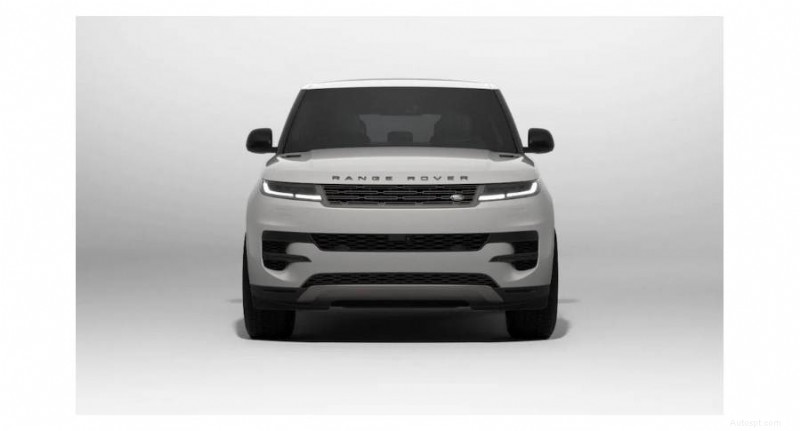
The Range Rover Sport Plug-In Hybrid SUV (credit:JLR)
While e-zoomed uses reasonable efforts to provide accurate and up-to-date information, some of the information provided is gathered from third parties and has not been independently verified by e-zoomed. While the information from the third party sources is believed to be reliable, no warranty, express or implied, is made by e-zoomed regarding the accuracy, adequacy, completeness, legality, reliability or usefulness of any information. This disclaimer applies to both isolated and aggregate uses of this information.
