
2022 has been another unprecedented year. A year, difficult to have scripted in advance, given the global uncertainties. Despite the challenges, we at e-zoomed applaud the global automotive sector in doing its very best in conducting business with a ‘Never Give In’ attitude.
In particular, the global electric vehicle sector did not disappoint. A number of new battery-electric vehicles (BEVs) and plug-in electric vehicles (PHEVs) were launched or announced in 2022, to include the Lotus Eletre Hyper-SUV, the Polestar 3 and even the first pure electric car from the famed luxury automotive manufacturer, Rolls-Royce, the Rolls-Royce Spectre. We expect 2023 to be no different than 2022, in that, the electric vehicle market will continue to mature as mainstream global automotive manufacturers develop and introduce new EV models.
The availability of public EV charging stations also gained ground in 2022. As of September 2022, the UK has 57,613 connectors and 34,860 devices across 20,888 locations, a significant increase from 2021 (credit: zapmap). But improvements were not confined just to public charging stations.
EV charging station manufacturers also worked hard to improve the quality and performance of residential and business EV charging stations. A number of new electric car charging station models were introduced to compliment the growing portfolio of battery-electric vehicles (BEVs) and plug-in hybrid electric vehicles (PHEVs).
2022 has been an inflection point, as EV charge point manufacturers have transformed from startup’s to matured manufacturers. UK based myenergi and EO Charging are excellent examples of the ‘coming of age’ of EV charge point manufacturers. We at e-zoomed are certainly excited to see myenergi and EO, both UK companies, on their way to achieve global leadership!
We have also witnessed an evolution in terms of technical specifications, design, dimensions and costs of residential and business EV charging station (AC). In general, residential EV charging stations have become aesthetically more pleasing, discreet (smaller in size), smarter in specifications, lighter in weight, better build quality, easier to install and more competitively priced. We should expect this trend in EV charger evolution to continue for the next few years.
For those of you new to zero-emission electric driving, we recommend a read of the following articles:
Among the many advantages of zero-emission electric driving, is the convenience of charging your plug-in electric vehicle at home. In fact, despite all the attention on public EV charging points, most electric vehicles are charged overnight at home. According to some statistics, more than 80% of electric car charging is done at home.
The world of EV home charging equipment has come a long way over the past few years, from the ubiquitous 3 PIN domestic plug! With the emergence of a number of EV charging point manufactures, consumers have benefitted from rapid innovation. Today home charging points are SMART, with the functioning of the charge point in the palm of your hands via a mobile app.
We strongly discourage green car owners to charge their plug-in electric vehicle via a domestic 3 PIN plug. We strongly encourage the use of a dedicated EV home charging point.
Unlike some European countries, the majority of UK households have single-phase electricity supply. In contrast, in Germany, most homes, if not all have a three-phase electricity supply i.e. providing more power to the homes!
Single-phase systems use alternating current (AC) electric power, in which the voltage and current flow changes in magnitude and direction in a cyclical fashion, typically 50 to 60 times per second. In the UK, single-phase voltage is 230 volts.
Though a number of home EV charge points are capable of up to 22 kW, single-phase will restrict the use of the charge point up to a maximum of 7.4 kW. However 7.4 kW is adequate for charging your EV overnight. A full charge can be achieved in 8 hours. Of course this will depend on a number of factors to include the size of the EV battery.
We do not know when the UK government will upgrade our homes to three-phase supply, but if you need more power i.e. to upgrade to three-phase supply, the distribution network operator (DNO) for your region will be able to assist! Of course if you upgrade your home to three-phase supply, then you can charge an electric vehicle up to 22kW, if the EV is capable of charging at this speed (electric vehicle onboard charger).
As is expected, with the growth of a new sector, like electric driving, a number of new entrants will emerge to serve the needs of the inevitable consumer base. The global and UK electric vehicle sector has certainly witnessed a number of new companies emerge across the EV industry value chain, to include electric vehicle charging equipment manufacturers.
It is therefore imperative that a consumer seeks to understand the background and track record of the manufacturer in some detail. The greater the track record, the lower the potential risk to the consumer. Of course, the more established a manufacturer, the higher the potential that the company is in business to honour any claims within the warranty period.
Of course, you cannot predict the future and even an established business can become bankrupt and closedown. However, by choosing companies that have a more established track record, you, as a consumer are mitigating your risk i.e. protecting your investment.
EV home charging points come with varying degrees of warranty, but in general the most common is 3 years. Some manufacturers offer the possibility of an extended warranty at a surcharge.
Yes, design is important, but do not make this the key factor for choosing an electric vehicle home charge point. Seduction by design is a dangerous approach for any product segment, but more so in charging points.
When purchasing an EV charge point, think like an investor i.e. protect your investment by future proofing it. Therefore look at the technical specifications in detail. You should aim to use the charge point for at least three years, if not much longer. On the e-zoomed Electric Living Shop, you can read detailed technical specifications of an EV charge point.
Where possible and appropriate, we recommend the purchase of SMART EV charge points. These plug-in car chargers can process more data and have far more functional capabilities, usually via an inbuilt SIM card or wifi.
Apart from the above, also look at choosing a charger that has higher charging speed capability. Most dedicated home electric car chargers have a charging speed of 3.6 kW to 7.4 kW. Of course, EV chargers can perform at higher charging speeds, but most households in the UK are single-phase. For higher performance charging units, a house needs to have a 3 phase electricity supply.
A tethered electric car charger is one where the cable is attached. An untethered is a charge point that has no EV cable attached. More commonly referred to as ‘socket’ only.
Tethered and untethered EV charging points have respective pros and cons. It therefore depends on a specific household needs to conclude which is most appropriate. For example, if a household expects to charge only a type 2 electric car, and mostly at home, then a tethered EV charge point is a good fit.
However, if the family expects to charge type 2 and type 1 electric cars and expects to use public charging, then a socket only (untethered) EV charge point may be more suitable. With a socket only charging station, both type 1 and type 2 EV charging cables can be used. So if a guest arrives in an EV, you can be rest assured they could use the charge point! Of course, you can also carry the EV charging cable in your car to charge at public charging points. We at e-zoomed recommend a 5m EV charging cable, a perfect length for home and public EV charging.
So in conclusion, cheapest is never the best when it comes to buying an EV charging point for your home. Investing in a high quality charging point is the best way to future proof your investment. Of course, choosing the right EV charge point installer is equally important, and we at e-zoomed offer excellent and competitively priced installation services. Prices start from £220 (including VAT). To enquire simply email us as shop@ezoomed.com.
myenergi, a UK based company is keen to emphasise its country of origin. The fast growing electric car charging stations manufacturer describes itself as ‘British made awesomeness’, with a purpose ‘to provide energy independence and drive a sustainable future’. The company was co-founded by Jordan Brompton and Lee Sutton in 2016.
The company released its first three products in 2017. The company currently operates in the following international markets: Germany, Benelux and Ireland. The company is headquartered in Stallingborough, Lincolnshire and has over 200 employees.
The company offers the following renewable energy products, all manufactured in Britain:
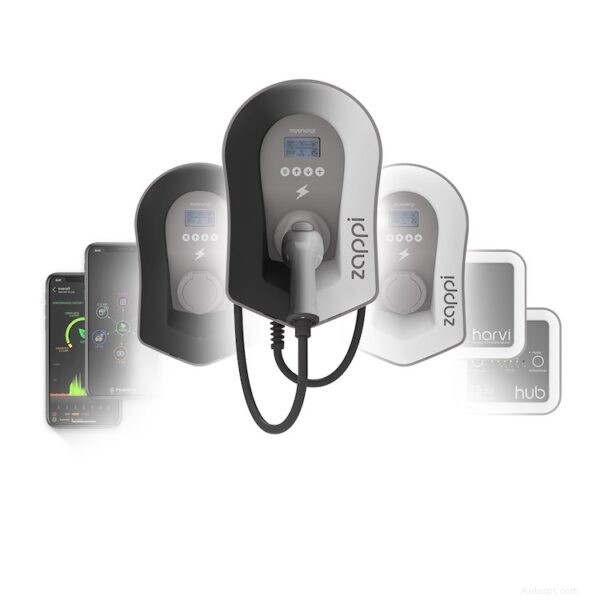 zappi Residential EV Chargers Available Via e-zoomed (credit: myenergi)
Easee is a relatively young EV charger manufacturer, set up by Norwegian entrepreneurs in 2018. However, Easee has gained market leadership in Norway, in a relatively short span of time. The company has also gained a strong presence in the broader Scandinavian region and continues to grow its geographic footprint, exporting to over 17 countries in Europe.
Easee has been recognised for its Scandinavian influenced modern and minimalist design, blending easily into a residential or business environment. Apart from design, the EV chargers are also technically strong and at par with some of the leading EV charge point manufacturers. The company employs over 250 individuals and continues to grow its workforce. The core vision of the three co-founders is to create the ‘world’s smartest electric vehicle charger’. The EV chargers are developed and manufactured in Norway.
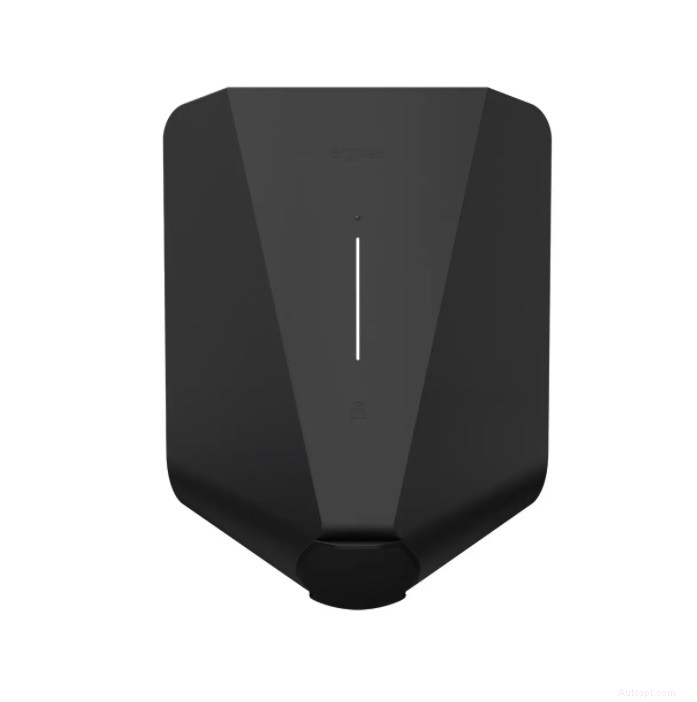 Easee One Home EV Charger Available Via e-zoomed (credit: Easee)
Tesla Inc. (formerly Tesla Motors Inc.) was founded by American engineers, Martin Eberhard and Marc Tarpenning in 2003. They named the Palo Alto based company, Tesla, as a tribute to the engineer Nikola Tesla. In fact, Elon Musk (Co-Founder, Tesla) become involved with the company post the founding of Tesla Motors. He was the lead investor in the 2004 Series A investment round.
In 2008, Tesla unveiled its first zero-emission electric vehicle (EV), the all-electric Roadster. As they say, the rest is history. Tesla, Inc is a publicly listed company and has a market value higher than any other automotive manufacturer. Elon Musk is also ranked as one of the richest individuals in the world. According to Bloomberg Billionaires Index, he is ranked second with a net worth of US$187 billion.
Tesla has the following battery-electric vehicle (BEV) models either in production or in development. In 2020, the EV company surpassed a production volume of 1 million plug-in electric cars.
Tesla also sells battery energy storage, solar panels, solar roof and other EV charging related equipment and accessories. Tesla also owns and operates a vast public network of Tesla Superchargers (25,000+ across more than 4,500 locations). The Tesla EV charger is compatible with all Type 2 electric vehicles (Tesla and other manufacturers).
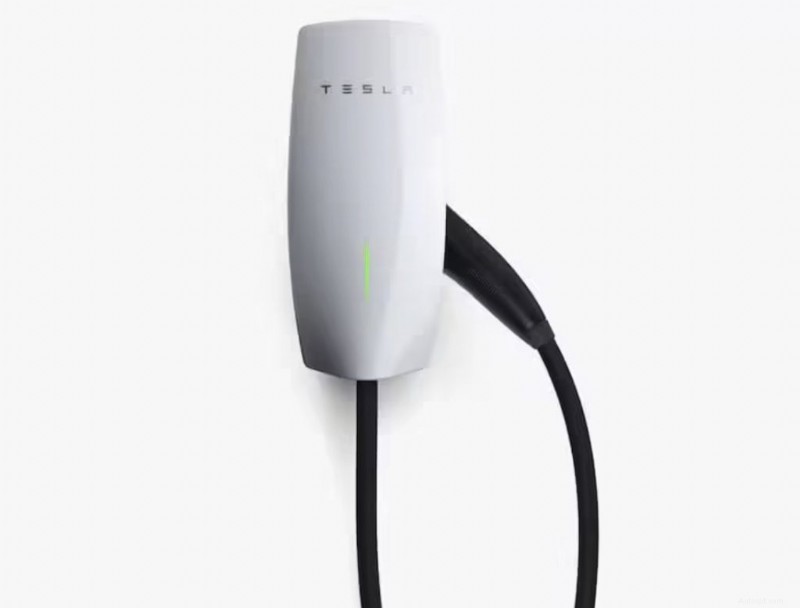 Tesla Home EV Charger (credit: Tesla)
While e-zoomed uses reasonable efforts to provide accurate and up-to-date information, some of the information provided is gathered from third parties and has not been independently verified by e-zoomed. While the information from the third party sources is believed to be reliable, no warranty, express or implied, is made by e-zoomed regarding the accuracy, adequacy, completeness, legality, reliability or usefulness of any information. This disclaimer applies to both isolated and aggregate uses of this information.
