
It’s no surprise that Nissan was and still is preparing to move away from producing its own battery cells. Former Nissan CEO, Carlos Ghosn said it many times.
In January last year, Nissan announced that its battery plant in Sunderland, UK would produce the next generation battery cells for its electric cars. However, the same was never said about other battery plants, namely the ones in the USA and Japan.
Lyndsay Pettigrew from the EV Performance confirmed what was expected:
“Bringing it back to the new Nissan Leaf for a moment, Barry and Mark informed me that the Sunderland factory are not only going to be the sole manufacture for the vehicle shell but also for the 40 KW battery.”
Concentrating all the battery cell production in one facility makes it simpler when the time of shutting down production completely comes.
However, it’s yet to be known how much longer will Nissan keep using the AESC battery cells, not only in its electric cars but also in its energy storage system. Considering that the Eaton Nissan xStorage capacity will now be increased from 6 to 9,6 kWh with the new AESC battery cells, these cells should last a little longer on the market before getting discontinued.
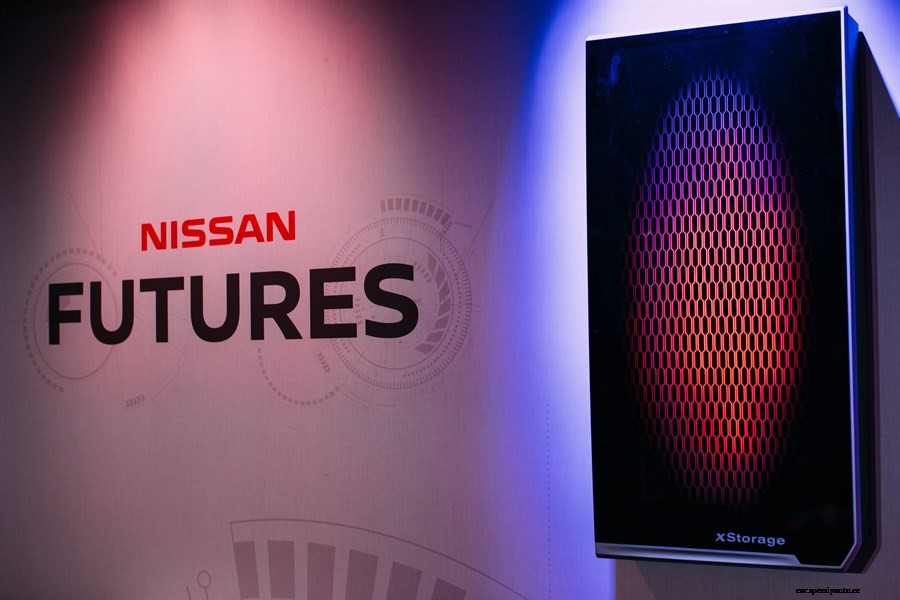
Eaton Nissan xStorage installed
As you might know the Eaton Nissan xStorage is made with 12 battery modules, while the electric car Nissan Leaf has 48 (four times more). If the new Eaton Nissan xStorage now gets 9,6 kWh from the 12 modules, the Nissan Leaf gets 38,4 kWh from 48, simple math right?
Previously we had 6 kWh x 4 = 24 kWh, now it’s 9,6 kWh x 4 = 38,4 kWh
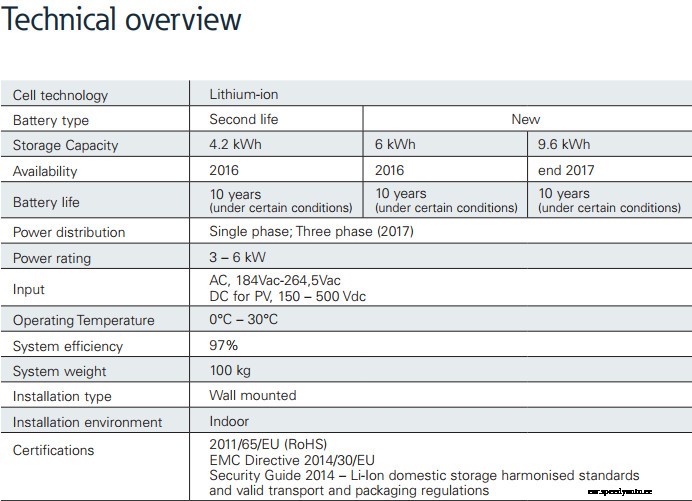
Eaton Nissan xStorage technical overview
While 38,4 kWh seems to be very little, if it’s usable capacity – as I’ve been told – it will likely be enough for the improved 2018 Nissan Leaf to get 160 EPA miles (257 km) range. Before saying that’s lame, don’t forget that Nissan doesn’t want to increase the current manufacturer’s suggested retail price (MSRP). Offering a safer and better looking Leaf, with more range and faster charging without increasing the price is what electric cars need to move forward.
As much as we like the Chevrolet Bolt EV/Opel Ampera-e, let’s face it, it isn’t considered affordable by most people. Nissan knows it can’t price the Leaf close to the Tesla Model 3, like Chevrolet did with the Bolt EV. At least, not if they are serious about regaining the electric mobility leadership, and I think they do.
Now the big piece of the puzzle missing is how much capacity and range will the LG Chem battery offer in the longer range version. While we all were expecting 60 kWh, since that’s what was shown in the IDS concept, I find it unlikely that the new Nissan Leaf will be offered with 38 and 60 kWh battery options. The weight’s difference between these two options would be too much for the Leaf’s body to support without expensive changes, especially since it hasn’t a skateboard battery platform like Tesla. The latest rumors are that the Leaf’s biggest battery option will be around 48 kWh, just enough to reach the 200 miles (322 km) EPA range psychological barrier.
To sum up, I think that a 160 miles (257 km) EPA range for the standard version will be fine if the MSRP doesn’t increase. Nissan already proved that price matters as much or even more than range. The automaker is selling the current Leaf in large numbers by offering generous discounts.
While the standard version battery capacity of 38,4 kWh is pretty much confirmed, how much would be needed for the long range version satisfy you? What matters the most? Price, range, charging rate or other?
Thanks Michał Grabowski for the heads up!
