
Opel GT X Experimental is the latest electric car concept from the PSA Group. This is a all-electric compact SUV (4 metre long) with a 50 kWh battery and inductive charging.
Here’s part of the press release:
“True to the PACE! plan promise of offering an electrified version of each Opel model by 2024, the GT X Experimental is a fully electric car with power delivered by a 50 kWh, compact next-generation lithium-ion battery with inductive charging. The GT X Experimental does not pretend to offer full autonomous driving. However, it does have Level 3 autonomous driving functions – meaning it can handle all aspects of driving but the driver must be able to respond to a request to intervene.”
What’s interesting is that the PSA Group – that now owns Opel – still aims to produce electric cars with 50 kWh batteries in 2020. While I think that 50 kWh batteries would be more than enough for very efficient electric cars – such as the Hyundai IONIQ Electric or a future Toyota Prius EV -, this isn’t the case for SUVs.
Nonetheless, if this all-electric compact SUV concept is as efficient as the Hyundai Kona Electric, with a 50 kWh battery it should get around 202 miles (325 km) of EPA range. Not bad in 2018, but not great in 2020. However, if it’s priced right, it’ll definitely sell.
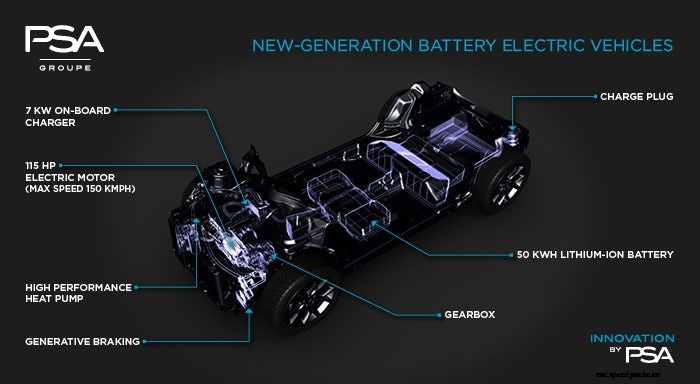
PSA all electric e-CMP platform
Anyway, more important than a concept car is that by 2020 the PSA Group plans to launch the Peugeot 208 EV and the Opel eCorsa. If these two electric superminis get the same 50 kWh battery capacity they’ll be very tempting for Europeans that eagerly wait for this kind of electric cars.
The positive side is that with 50 kWh batteries, PSA’s electric cars should be more affordable than the upcoming Nissan Leaf e-Plus or the Volkswagen Neo for example. Considering that PSA’s gas burning cars are usually cheaper than Nissan’s and Volkswagen’s counterparts, the same principle will probably be applied to electric cars. I think this is the main reason why PSA is aiming for smaller batteries.
What do you think? Will electric cars with 50 kWh batteries still be relevant in 2020 if priced right?
