
Currently Volkswagen still has its mind focused in plug-in hybrids, that’s why its BEV and PHEV cars share the same type of battery cells (PHEV 2) – with high power density, but average energy density. However, while using battery cells designed for BEVs – with higher energy density – would be better, it doesn’t mean that Volkswagen all-electric cars can’t be great.
Auto Bild reports that the next generation Volkswagen Golf 8 in its electric variant will get a 48 kWh battery, enough for 420 km (NEDC) range. If this proves to be true, it means that Volkswagen will finally start using the new 50 Ah PHEV2 battery cells of Samsung SDI.
Furthermore, Auto Bild also expects the next e-Golf to be more efficient and have a more powerful 204 hp (152 kW) motor.
This next generation Volkswagen e-Golf 8 is expected to be the last electrified effort from Volkswagen before moving to an entirely new platform, the Modular Electrification Toolkit (MEB), which is showcased with the I.D. concept. This concept electric car has been advertised with a 600 km (NEDC) range, which would translate to a more realistic 400 km (249 miles) range.
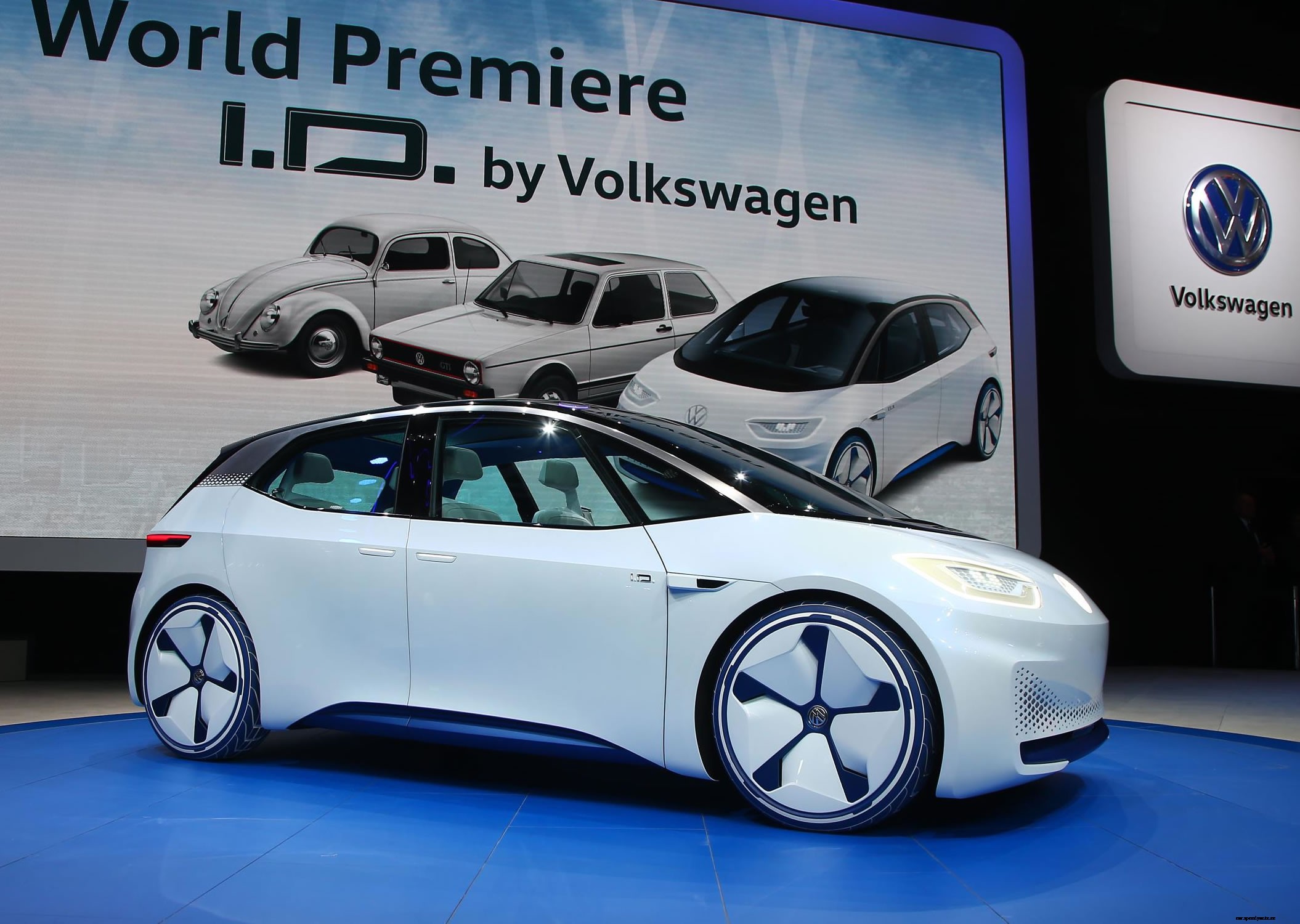
Volkswagen I.D. concept electric car
Adapting to change is a painful and slow process, especially to an enormous company such as Volkswagen, however there is no denying that it’s happening.
Update: the latest information available suggests that Volkswagen will bring the electric ID hatchback as a replacement for the e-Golf already in late 2019/early 2020. This means that the eighth-generation Golf might not get an electric variant, however it doesn’t mean that the current generation e-Golf won’t get a battery upgrade before the arrival of its successor.
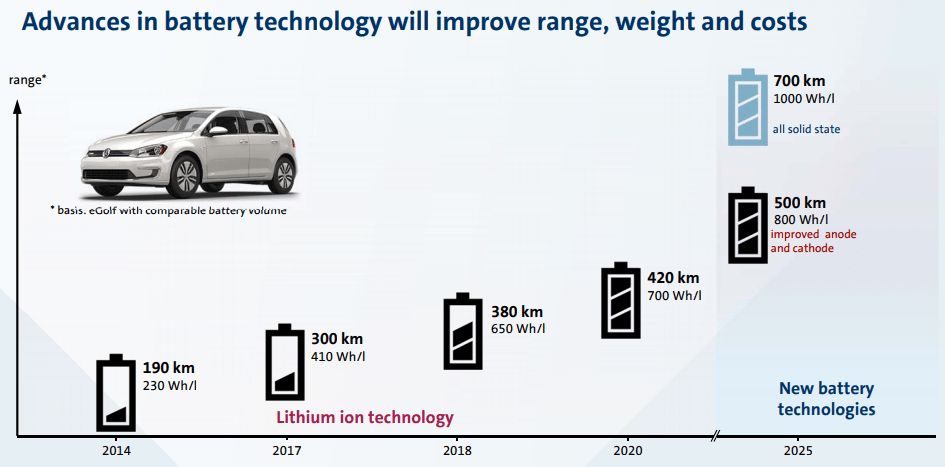
Advances in battery technology will improve range, weight and costs by Volkswagen
Next year the new Samsung SDI battery plant in Hungary will start the production of PHEV2 50 Ah and BEV2 120 Ah battery cells. While the BMW i3 will definitely get its battery cells upgraded from 94 to 120 Ah, the Volkswagen plug-in cars will probably be upgraded from 37 to 50 Ah.
The biggest advantage of automotive prismatic standardized battery cells is that they allow quick and easy upgrades. It would be a pity if Volkswagen doesn’t take advantage of it as soon as possible…
