
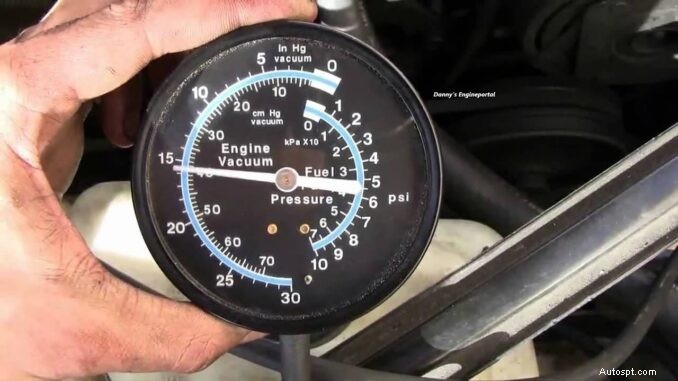
 Reading A Vacuum Gauge
Best of all, an Engine Vacuum Gauge Test is cheap and easy to do.
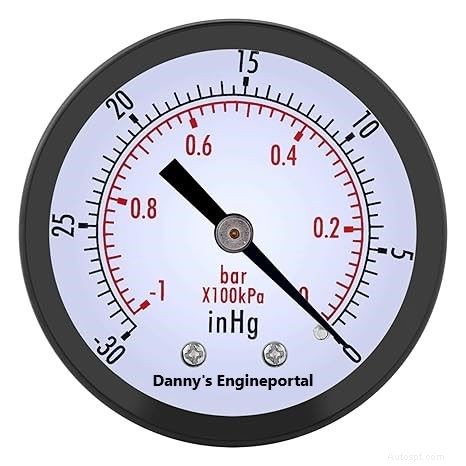 Vacuum Test Gauge
So, a vacuum gauge measures the suction created by your engine. Internal combustion engines act like giant air pumps.When the pistons move down it creates a vacuum in the intake manifold. Any leak or mechanical failure disrupts this suction. This is where the gauge comes in, as it displays these changes in real-time. Also, it is a mechanical diagnostic tool that does not rely on software or batteries. For this reason, every DIY mechanic should own one.
Above all, an engine vacuum gauge test is simple. You only need the gauge itself, though most kits come with various rubber adapters. First, you must start your vehicle and let the engine reach its full operating temperature.
Once the oil is thin and the idle is steady, look for an empty vacuum port on your intake manifold. Make sure this port is located past the throttle, to ensure you are measuring the true manifold vacuum.
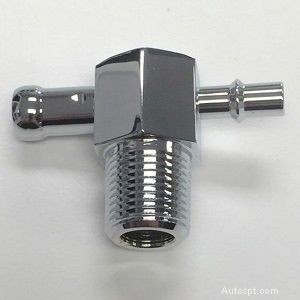 Intake Manifold T Fitting
Occasionally, all ports are already in use. In this case, you may need to use a “T” fitting to tap into an existing line. Above all, ensure the connection is tight and secure. As even a small vacuum leak at the hose will ruin the test. Once connected, look at the gauge face to ensure the needle is not stuck. Now you are now ready to read the results. Just remember to keep the vehicle in “Park” or “Neutral” with the parking brake is firmly set.
By comparing your readings to these, you will know your engine’s condition.
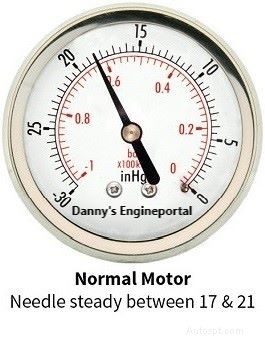 Normal Motor
A healthy engine has a very specific signature. For example, at idle, the needle should be steady, between 17 and 22 inches of mercury (also known as “Hg”). A steady needle in this range is great news. As it means your rings and valves are sealed and your timing is likely correct. But, if the needle is shaky, there is an issue.
 High Altitude
It is important to note that your location matters. Because, high altitudes change the air pressure and also affect the vacuum your engine can pull. Therefore, you must adjust your expectations based on the elevation. To do this, subtract one inch of mercury for every 1,000 feet. For instance, if you are in Denver at 5,000 feet, your “normal” reading might be 12 to 17 inches. Do not panic if the numbers seem low. So, Always consider your local elevation first.
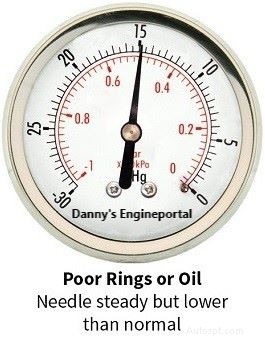 Poor Rings or Oil
But what if the needle is steady, but low? Generally, a reading below 15 inches is concerning. Typically, this points to worn piston rings or poor oil rings. In other words, the engine is losing its ability to pump air, adding to compression loss. You might also see low readings with custom parts. For example, high-overlap camshafts naturally reduce idle vacuum. Always consider your engine’s specific build. This makes doing a engine vacuum gauge test worth it.
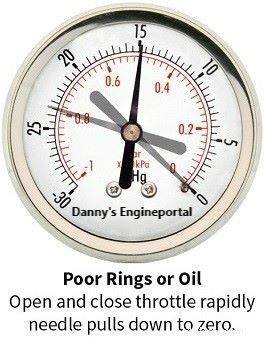 Poor Rings or Oil
Once the idle test is complete, the next step is the “snap” test. Quickly open the throttle all the way, then, let it snap shut immediately. While doing this, watch the needle closely. It should drop near zero instantly, subsequently bounce up to 25 inches, and finally settle back to the idle range. This bounce confirms your rings and valves are seating properly.
Poor Rings or Oil
On the other hand, the snap test can reveal hidden wear. Suppose the needle drops to zero, but only bounces back to 20. This is a clear sign of tired piston rings. Even if your engine still runs well, it is losing efficiency. This makes doing a engine vacuum gauge test worth it.
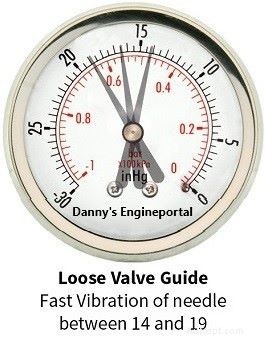 Loose Valve Guide
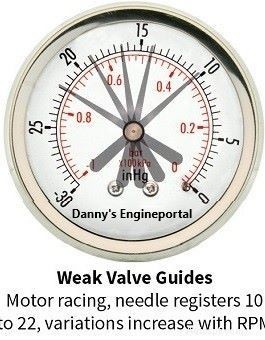 Weak Valve Guides
In addition to the valves themselves, valve guides are critical. If they wear out, the needle will flick back and forth rapidly. And, appear as a blur between 14 and 19 inches. This is a sign of head wear, and your engine likely needs a professional valve job.
You can test for weak valve springs at high RPM. To do this, slowly rev the engine to 4,000 RPM. If the needle stays steady, go higher. Watch the needle for any rapid swinging. If it stays steady, go higher. However, if the swings get wider as revs increase, your valve springs are weak. This leads to “valve float”, power loss and engine misfires. This makes doing a engine vacuum gauge test worth it.
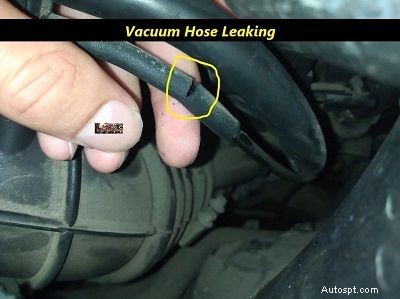 Vacuum Hose Cracked And Leaking
In contrast, a very low reading (like 5 inches) indicates a massive loss of suction. This could be a cracked hose, a failed intake gasket, or even incorrect timing. To fix this, you must hunt for the source. Try listening for a “hissing” sound or using soapy water to find the bubbles. Vacuum leaks can cause many problems.
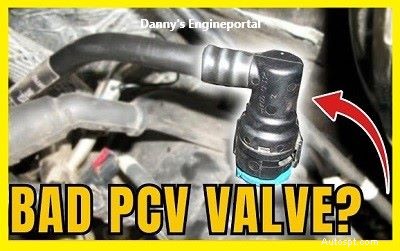 Bad PCV Valve
A slow, drifting needle means several things. It could be a bad idle “air fuel” mixture. Your carburetor or fuel system needs tuning. It could also be a clogged (PCV) system. The engine cannot breathe through its crankcase. Check for a leak in the intake manifold as well. These issues are often easy to fix. The gauge simply points you in the right direction.
This test is the fastest way to check an engine. Unlike other methods, you do not need to pull spark plugs or wait for a computer. Instead, it provides instant feedback. For this reason, it is gold for used car buyers, as it prevents you from buying a “lemon.”
The vacuum gauge is a timeless tool that provides data, scanners often miss. While it will not tell you everything with 100% certainty, it certainly narrows down the list of possible culprits. In the end, it is the best 5-minute investment you can make for your tool box.
“Is your engine giving you trouble? Grab a vacuum gauge and run this 5-minute test today to stop guessing and start fixing.
