
Dan Ferrell writes about do-it-yourself car maintenance and repair. He has certifications in automation and control technology.
A loud exhaust system may manifest through noises like:
Usually, these type of loud, unusual noises result from loose components, road damage, system leaks, or engine problems affecting the exhaust system. For example, a rich-fuel condition that goes unattended, misfires, or overheating can adversely affect a gasket, seal or the catalytic converter itself.
Besides producing loud exhaust noises, an exhaust leak may be accompanied by:
What next:
First, identify which section of the exhaust system the loud noise is coming from.
Often, you'll find rather quickly whether the noise is located at the front (around the exhaust manifold or down pipe connection), the midsection of the vehicle (catalytic converter or surrounding area), or rear of the vehicle (pipe, muffler, tailpipe).
| Index |
|---|
1. My Exhaust Rattles |
Video: Rattling, Noisy Catalytic Converter |
2. What Is That Hissing Sound? |
3. I Hear a Ticking Noise |
4. My Car's Exhaust Sounds Clunky |
5. What is Causing That Pinging Noise? |
6. Why Is My Exhaust Vibrating? |
7. Preventing Expensive Exhaust System Repairs |
More Exhaust System Diagnosis Help |
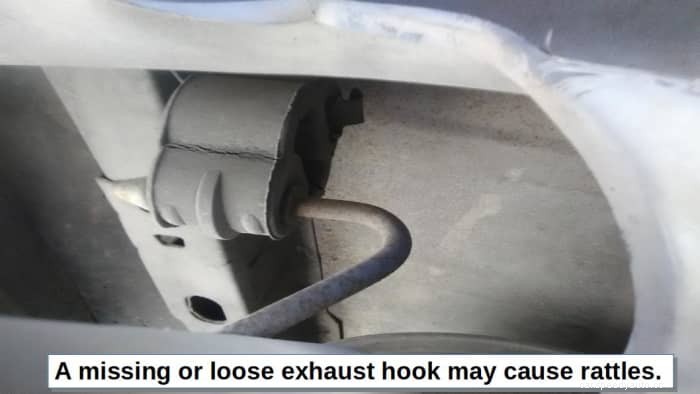
Some potential problems may cause an exhaust system to rattle.
Look for a:
In modern vehicles equipped with stainless steel exhaust systems, a rattle noise usually points to a loose component or a failed catalytic converter. Engine performance issues can seriously affect the catalytic converter over time.
Too much unburned fuel reaching the cat for a period of time will break or disintegrate the inner ceramic structure, causing the rattling noise that you may notice at idle, stopping at a corner, or when driving at low speeds.
On high-mileage vehicles, an old catalytic converter is more prone to failure.
If you hear a rattling sound coming from under the vehicle, inspect the catalytic converter.
The sound of a bad catalytic converter may vary, depending on the internal damage. Sometimes, it may not sound at all. But here's an example of how one failed, rattling catalytic converter sounds like. Watch the following video.
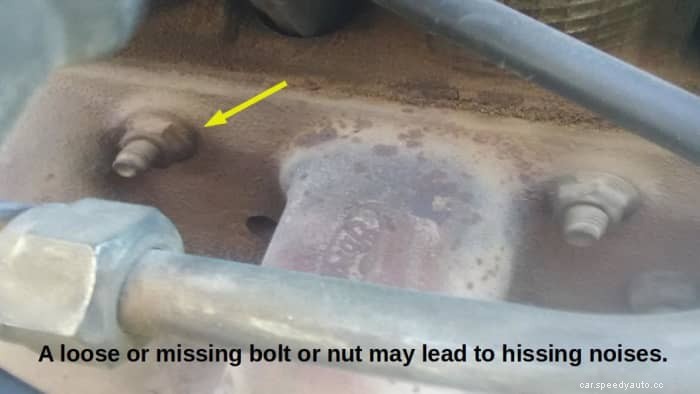
Just like a ticking noise (see next section), a hissing sound may come from a leaking exhaust. However, you may hear it as a high frequency hissing or rushing noise. Rust and road damage are common causes of exhaust leaks.
Check for potential leak sources:
Investigate and fix the source of the hissing sound. Like a ticking noise, a hissing sound may signal exhaust fumes (carbon monoxide) that can find their way into the passenger area of your car.
A leaking exhaust manifold gasket may be noisy during a cold start, but once the engine warms, the sound may stop as the manifold expands and closes the gap in the gasket.
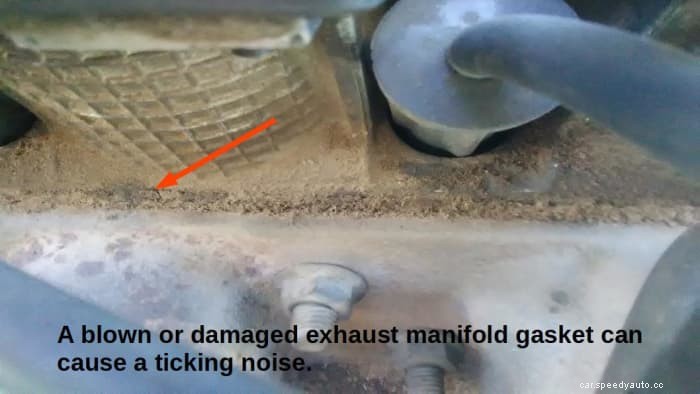
Sometimes, a ticking noise is something to worry about. The ticking noise may come from a small opening (leak) in the exhaust system that is allowing exhaust gasses to escape. The sound may vary as the exhaust heats up.
Check for:
Often, the ticking may turn into a humming or whistling. Another potential signs that you may be dealing with a leak in the system is a slow acceleration from a complete stop or an unpleasant odor.
With a leaking manifold gasket, the ticking noise may go away once the engine reaches operating temperature. This is because the expansion of the manifold closes the leak in the gasket.
If you suspect a leak, make sure to find the source of the noise since poisonous gasses may find their way into the passenger compartment area of your car.
Warning!
...a hissing sound may signal exhaust fumes (carbon monoxide) that can find their way into the passenger area of your car.
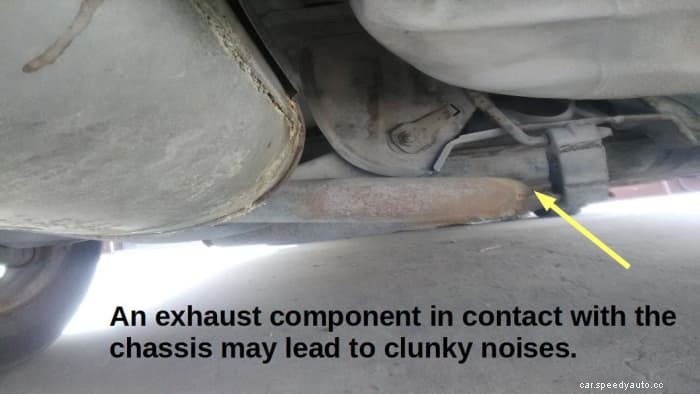
Usually, a clunky sound in the exhaust system comes from an:
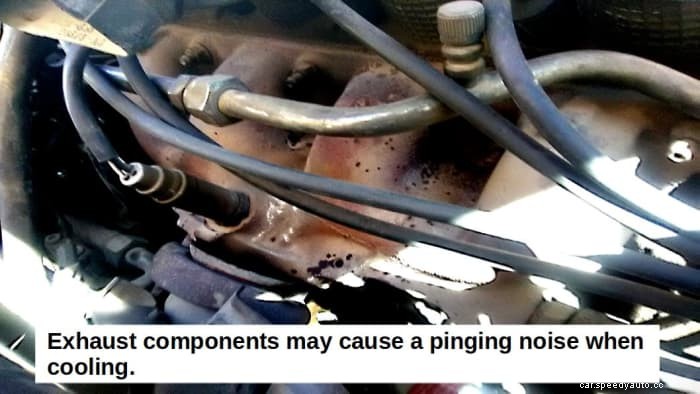
Probably you don't have to worry about that pinging noise coming from your car's exhaust system.
It's common for hot components to produce a pinging noise when they begin to cool. For example, you may hear this noise when turning off the engine.
Exhaust components expand under engine operation because of the high temperature of the flowing combustion gasses. When you turn off the engine, these same components begin to contract as they cool, producing a pinging noise.
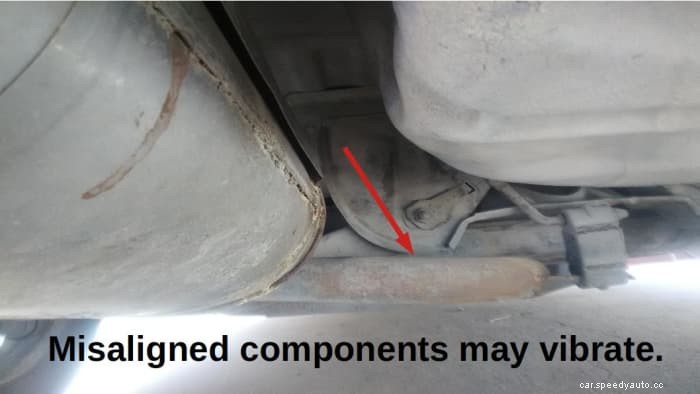
This is similar to an exhaust system suffering from a ticking noise.
Look for:
Depending on the particular problem, you may also hear a buzzing or clunking noise as well.
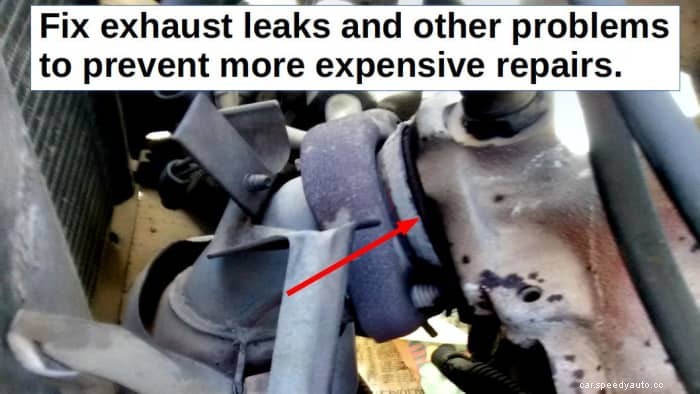
A loud exhaust system not only is inconvenient, and possibly unsafe, but it may lead to other problems as well:
On the long run, it'll also affect your wallet as well. Besides reducing emissions and getting rid of poisonous gasses, the exhaust system helps the engine run more efficiently and keep fuel consumption at proper levels.
However, a leaking exhaust system affects other operating systems while increasing fuel consumption. Thus, delaying an inspection can also increase repair expenses.
So try to fix that loud exhaust as soon as possible, especially if you've noticed:
Take a look at the exhaust system, starting at the exhaust manifold, and inspect it all the way down to the muffler and tailpipe.
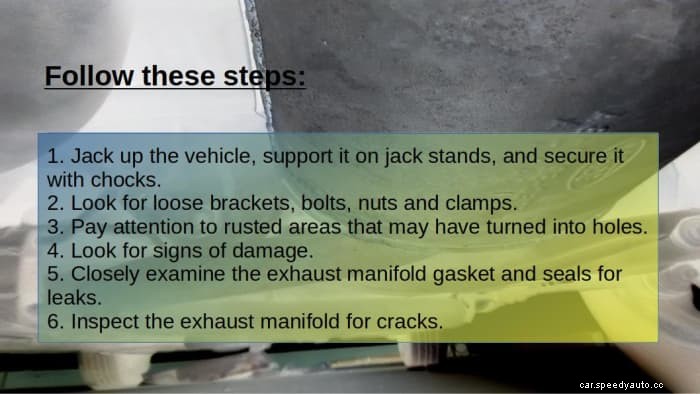
Consult your vehicle repair manual if you need to repair or replace a component.
This content is accurate and true to the best of the author’s knowledge and is not meant to substitute for formal and individualized advice from a qualified professional.
