
The alternator is a crucial component that supplies the car with power when the engine is running. Undercharging is a more common issue, but it’s also possible for the alternator to overcharge, which can lead to a series of electrical failures.
Alternator overcharge is caused by a defective voltage regulator, and the only solution is to have the alternator refurbished or replaced.
There are two electric suppliers in an engine – the alternator and the battery. The battery stores a large amount of power which can be used to power the electrical components when the engine is off, such as the radio or hazards, but its main purpose is to deliver a massive surge of power to the starter and get the engine running.
Once the engine has started, the alternator takes over from the battery as the primary power supply. It’s also responsible for recharging the battery so it can crank the engine again. The crankshaft pulley and alternator pulley are connected with a drive belt which transfers power from the engine to the alternator.
Simply speaking, the alternator is an electric generator that utilizes rotational power to generate electricity.
The first symptom of a bad alternator is the battery dashboard warning light. You can use an OBD2 scanner to diagnose and confirm that the alternator is causing a power issue. Without a scanner, you’d have to take your vehicle to a mechanic, and likely pay more than the cost of the tool.
Headlights and taillights are the next to go. Variable and high voltage will significantly reduce the lifespan of light bulbs and cause premature burnouts. In more serious cases, the high voltage will heat up the battery and reduce its effectiveness and lifespan. Blown fuses and relays are also common as they are a safety system that prevents more serious electrical damage.
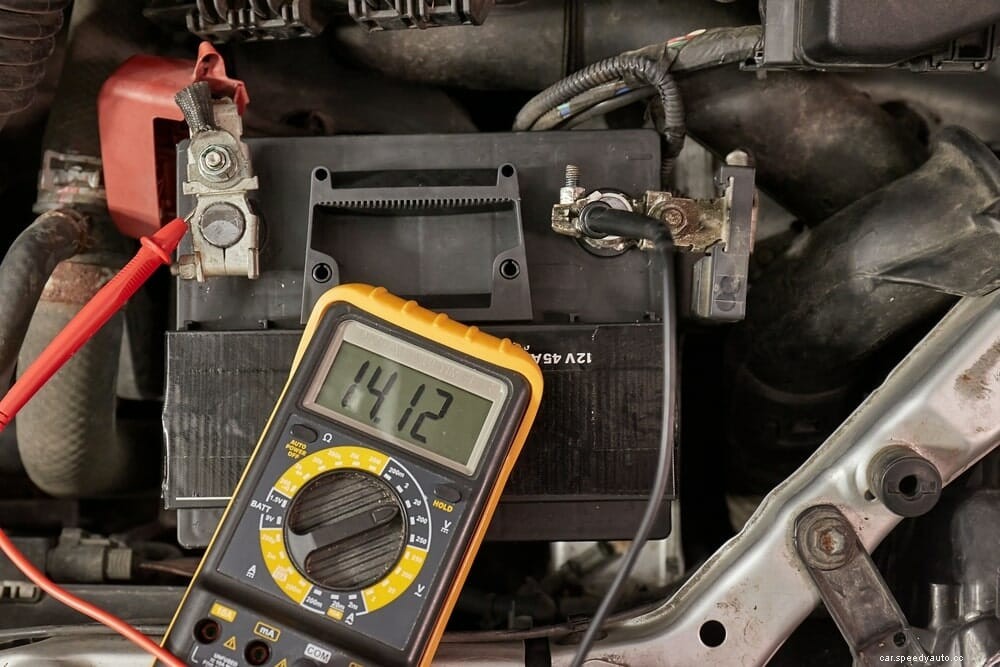
The car battery is set to operate at 12.6 volts, while the optimal alternator voltage is 14.2 volts. With these figures and a multimeter, we can easily confirm whether the alternator is overcharging your vehicle.
Battery voltage below 12.2 volts could indicate that it’s dying. Drive the car for at least 30 minutes and check again. If the battery voltage is still low, to confirm what the cause is, we need to eliminate the alternator.
The alternator operates in the 14.2 to 14.7-volt range. This is enough power to quickly but also safely recharge the battery. Turning on the headlights and other power consumers may lower that voltage slightly, as the alternator has to supply them with power as well.
If the voltage drops below 14.2 volts without load, or below 12.7 volts under load, it’s a clear sign that the alternator is not supplying enough power. However, if the alternator is supplying enough power, but the battery remains under 12.6 volts, that means that the battery is dying.
The overcharge is the easiest to diagnose – the voltage reading when the engine is running will go beyond 14.7 volts. The following video doesn’t have a good explanation on how to fix the problem, but it shows you how to connect the multimeter and read the voltage.
I’ve seen a few temporary bypass solutions to the problem, but I don’t recommend doing that. The problem has to be addressed properly, and the only way to fix an overcharging alternator is to take it off and have it repaired, or install a new one.
To fix the voltage regulator, you’d have to open the alternator and have advanced knowledge of electrical systems – a task beyond the skills of a DIY mechanic. Instead, we can turn to one of many alternator repair shops for assistance, or get a new alternator from Amazon or local parts store.
The difficulty of the job depends on the location of the alternator. If it’s easily accessible, the job is fairly easy, but if it’s located deep inside the engine bay, you’ll have to remove parts that get in the way. In that case, I would advise you to look up a vehicle-specific guide as it will show you the optimal way of accessing the alternator.
| Title | Price | Buy | |
|---|---|---|---|
 Top
Top | DEWALT Mechanics Tool Set, 205 pc (DWMT81534), | Buy Now | |
 Top
Top | Permatex 80078 Anti-Seize Lubricant with Brush Top Bottle, 8 oz. | Buy Now | |
 Top
Top | Klein Tools 605-6 1/4-Inch Cabinet Tip Screwdriver, Heavy Duty, 6-Inch | Buy Now | |
 Top
Top | Lavaxon Wire Brush Set 3Pcs - Nylon/Brass/Stainless Steel Bristles with Curved Handle Grip for Rust, Dirt & Paint Scrubbing with Deep Cleaning – 7 Inches (Red) | Buy Now | |
 Top
Top | Powermaster 47861 Alternator | Buy Now |
Driving with an overcharging alternator increases the risks of damage to the electrical components, primarily light bulbs, and the battery. You don’t have to stop immediately and call a towing service, but you shouldn’t drive your vehicle normally either. Take it to a mechanic or address the problem yourself by following the guide.
15 volts is generally considered a bit too high, but it really depends on what the manufacturer specified. European cars have to run with daytime running lights or standard low beams at all times, so the alternator voltage might be set higher to compensate for the constant power draw.
I can make a point about 15 volts bordering normal operation, but 18 volts is way too high and can overheat the battery. If your alternator is outputting more than 15 volts, it should be replaced or repaired immediately.
The battery won’t overcharge on its own – the overcharge is caused by the alternator’s faulty voltage regulator. Replacing the alternator will stop the overcharge from happening again.
It’s debatable whether a bad ground will cause the alternator to overcharge. The problem is more likely to cause the alternator to undercharge, as the power is lost on its way to the battery. The alternator voltage regulator keeps the voltage in check and as you’ve seen from the multimeter readings, its main purpose is to get 14.2 to 14.7 volts on the battery terminals and not go over.
I would consider 14.7 volts to be the upper output limit for a well-functioning alternator. Anything beyond 14.7 volts is a cause for concern as it will lead to light bulb failure and battery damage.
There is no difference, it’s only a matter of terminology. A 12-volt alternator has to output at least 14 volts to adequately charge the 12.6-volt battery. Anything less, and the battery won’t be charged quickly enough and will eventually deplete from all the engine starts.
Yes, a bad alternator pulley will cause the belt to squeal, especially when the engine has just been started.
Yes, it’s completely okay to leave the battery on the charger overnight. I do not understand all the concern about it – once the battery reaches the optimal 12 volt level, the charger knows it doesn’t have to continue charging further.
It would be like saying that you shouldn’t drive overnight, as the alternator is continuously going to feed 14 volts to the battery and overcharge it. Just check the features of your charger to confirm it has an automatic shut-off and you can charge overnight without issues.
Yes, the alternator receives enough power from idle revs to charge the battery. Only the old dynamo alternators depended on the higher RPM to deliver enough of a charge – modern alternators deliver the same current regardless of the RPM.
Yes, driving the vehicle causes the battery to recharge through the alternator. The time it takes to charge the battery depends on a few factors, but generally, 30 minutes is enough to offset the start and provide a decent recharge.
The answer is debatable, but I would like to be on the safe side and disconnect the terminals before charging, as it only takes a minute to take them off. Battery manufacturers like Varta also recommend taking the terminals off before connecting the charger.
The drop should not be measurable, as even 0.1 volts can be too much. Think about it this way – if 11.8 volts is the minimum to start the vehicle, and 12.2 – 12.8 volts is the optimal battery voltage, just one week of inactivity would drain the battery to the point where it can’t start the vehicle.
As we all know, cars can be parked for weeks and still start fine, so if you notice a voltage drop overnight, that means you’ve got a power drain in the system that needs to be addressed.
Alternator overcharge is a serious problem, but with a good socket set and a replacement alternator, the problem can be fixed in under an hour. Call the local refurbishment companies and get an estimate, or buy a brand new alternator if it’s affordable.
The labor cost of an alternator replacement is at least a couple hundred dollars, but you can buy the tools for less and keep them for the next repair. That way you’re building up your toolkit until eventually, almost all repairs will involve replacement parts and nothing else, significantly reducing the overall cost.
Find more tips on alternators here:
6 Best Alternators Reviewed For 2022
Can You Jumpstart A Car With A Bad Alternator?
Do Motorcycles Have Alternators?
