
The basic operating principle of the internal combustion engine is fairly simple – pick apart a lawnmower or an old agricultural tractor and you’ll see that it’s not as high-tech as it may seem.
However, modern engines are anything but simple. In an effort to optimize the power output, fuel efficiency, and gas emissions, engines are equipped with sensors, filters, and high-precision components.
Only one component needs to fail and the engine could start running rich, which wastes fuel, diminishes performance and in more serious cases leads to mixing of the gasoline and engine oil. But don’t worry – I’ll help you identify the cause, and show you how to fix it!
The causes for the engine to run rich are bad spark plugs, O2 sensor, MAF sensor, IAT sensor, TPS sensor, CTS sensor, coolant valve, ECU, fuel pressure regulator, and bad fuel injectors.
Before we get into the potential causes and how to fix them, we should cover our bases and review the symptoms of an engine running rich. The symptoms almost always appear together, which makes it easier to properly identify the problem.
The smell of gasoline as you drive, combined with a loss of power and increased fuel consumption is one of the clearest signs that the engine is running rich. Black smoke is another well-known indicator of the improper air-fuel mixture.
If you’re having trouble starting the engine or running idle, the problem is so bad the fuel is flooding the cylinders and can’t even detonate. Lastly, the check engine light will appear to warn you of the problem.
Running rich is a serious problem and should be addressed as soon as possible. The piston rings do not form an ideal seal and will let some gasoline mix with the engine oil. Usually, this is not a problem as there are systems in place to get rid of the gasoline. However, running rich will flood the sump with too much gasoline, leading to engine wear.
While we’re going to cover all the causes of running rich, you’ve got to understand that you cannot blindly start swapping parts. It’s not necessarily a bad thing, but it can be a very expensive way to solve the problem. Instead, you should invest in a device that will make diagnosing the problem a lot easier.
One of the advantages of an engine with an electronic control unit (ECU) is the ability to easily identify faults in the system. Without a scanner, you’ll struggle to identify the cause of the problem, but for as little as $30 you can get an OBD2 scanner and read the error codes.
Using a diagnostic scanner is simple – you just need to locate the OBD2 port in your vehicle, which is usually hidden underneath a storage compartment in the center console. Plug it in, turn on the engine and initialize the scan. Depending on the features of the scanner, you’ll either get an error code to cross-reference with the vehicle’s repair book or a complete description of the problem.
The oxygen or lambda sensors are responsible for monitoring the exhaust fumes. Sensor 2 is located after the catalytic converter, and only monitors its effectiveness, but otherwise has no impact on the engine. Sensor 1 is located between the engine and the catalytic converter and is much more important.
Sensor 1 registers when unburnt fuel leaves the engine block and sends a signal to the ECU to adjust the air-fuel mixture and run lean. Failure of the sensor leads to either incorrect or complete lack of feedback so the engine will continue to run rich.
As it’s located between the exhaust manifold and the catalytic converter, sensor 1 is still within the engine bay and easier to access than sensor 2.
Its exact locations vary greatly depending on the layout of the engine, but if follow the exhaust pipes from the engine block, you’ll find a wire and a plug protruding from the exhaust.
Tools you’ll need:
| Title | Price | Buy | |
|---|---|---|---|
 Top
Top
Top
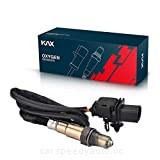
Top | KAX 234-5107 Oxygen Sensor Original Equipment Replacement 250-25035 Heated O2 Sensor Sensor 1 Upstream 1Pcs | Buy Now | |
 Top
Top
Top
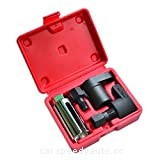
Top | ITEQ 5 Pcs Automotive Oxygen Sensor Socket Wrench Remover Tool and Thread Chaser Set | Buy Now | |
 Top
Top
Top
Top | SATA 3/8-Inch Drive Quick-Release 72-Tooth Ratchet with an Teardrop Head, Full-Polished Chrome Finish - ST12971U | Buy Now | |
 Top
Top
Top
Top | Permatex 81343 Anti-Seize Lubricant, 1 oz. Tube , White | Buy Now |
Step by step instructions:
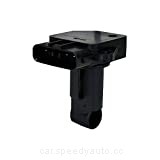
MAF stands for mass air flow and this sensor is responsible for monitoring the amount of air flowing through the intake towards the engine. Just like the O2 sensor, the MAF sensor sends data back to the ECU so it can adjust the air-fuel mixture.
Failures of the MAF sensor are accompanied by a severe loss of power and increased fuel consumption.
Changing the MAF sensor won’t be difficult as it’s easily accessible from the top of the engine bay. To find the sensor, start at the air filter housing and trace the air hose towards the engine – the sensor will be in the way.
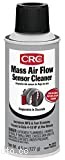
You can opt to clean the sensor instead of replacing it. Keep in mind that you’ll have to use a special MAF cleaner as WD-40 or other cleaners will damage it.
Tools you’ll need:
| Title | Price | Buy | |
|---|---|---|---|
 Top
Top | Denso 197-6020 Mass Air Flow Sensor, Regular | Buy Now | |
 Top
Top | CRAFTSMAN Screwdriver Set, Assorted, 8-Piece (CMHT65075) | Buy Now | |
 Top
Top | CRC Mass Air Flow Sensor Cleaner, 4.5 Wt Oz, 05610 | Buy Now |
Step by step instructions:
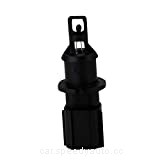
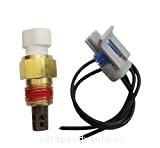
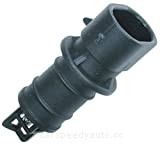
The intake air temperature sensor does exactly as the name describes, and it’s usually a separate device from the MAF sensor which measures the volume of air. On some engines, the MAF and IAT sensors are combined into one.
Temperature affects the density of air. The colder the air is, the denser and oxygen richer it will be. More oxygen makes for better combustion, which is why the aftermarket cold air intake upgrades have become so popular.
The process of changing the IAT sensor is identical, if not easier than changing the MAF sensor. The two are sometimes built into the same housing, and in those circumstances, follow the steps for replacing the MAF sensor.
Tools you’ll need:
| Title | Price | Buy | |
|---|---|---|---|
 Top
Top | ZBN Air Intake Charge Temperature Sensor 4606487AA 4606487AB | Buy Now | |
 Top
Top | Intake Air Temperature Sensor IAT/MAT/ACT Kit Fits For GM Repl.OE# 25036751 25037225 | Buy Now | |
 Top
Top | ACDelco Professional 213-4663 Intake Manifold Temperature Sensor | Buy Now |
Step by step instructions:
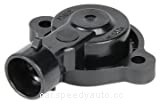
Moving up the air intake towards the engine, we have the throttle body and the throttle position sensor (not to be confused with TPMS – tire pressure monitoring system). As a part of the fuel management system, the data provided by the TPS is combined with data from other sensors to adjust the amount of fuel injected into cylinders.
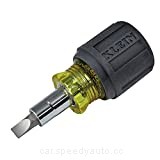
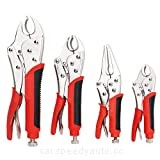
The trend of easily removable sensors continues, as the TPS can be swapped in just a few minutes with just a screwdriver. The only complication you might experience is the seizing of the screws – you can use the grip pliers to break them loose.
Tools you’ll need:
| Title | Price | Buy | |
|---|---|---|---|
 Top
Top | ACDelco GM Original Equipment 213-912 Throttle Position Sensor | Buy Now | |
 Top
Top | Klein Tools 32561 Multi-Bit Screwdriver / Nut Driver, 6-in-1 Stubby Screwdriver with 2 Phillips, 2 Slotted Bits, 2 Nut Drivers | Buy Now | |
 Top
Top | FASTPRO 4-Piece Locking Pliers Set With Heavy Duty Grip, 5", 7" and 10" Curved Jaw Locking Pliers, 6-1/2" Long Nose Locking Pliers Included, Vise Grip Wrench Set | Buy Now |
Step by step instructions:
The job of the fuel pressure regulator isn’t to keep the fuel flowing at constant pressure – it actually adapts the pressure based on the throttle input. Failure of the fuel pressure regulator will cause a number of performance issues, including the running rich problems.
To replace the fuel pressure regulator, you have to take it off the end of the fuel rail without the fuel line hose. You’ll be working around gasoline, so make sure to take all the necessary safety precautions.
Tools you’ll need:
| Title | Price | Buy | |
|---|---|---|---|
 Top
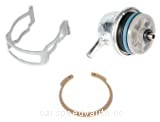
Top | ACDelco GM Original Equipment 217-3073 Fuel Injection Pressure Regulator Kit with Clip and Snap Ring | Buy Now | |
 Top
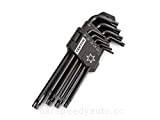
Top | TEKTON Star Key Wrench Set, 9-Piece (T10-T50) | 25291 , Black | Buy Now | |
 Top
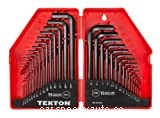
Top | TEKTON Hex Key Wrench Set, 30-Piece (.028-3/8 in., .7-10 mm) | 25253 | Buy Now |
Step by step instructions:
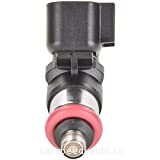
Fuel injectors spray a precise amount of fine fuel mist into the cylinders to create an ideal mixture for combustion. Failing injectors will cause misfires, poor gas mileage, loss of power, failure to start, and rough idle.
Changing the fuel injectors will take you a couple of hours and it’s a bit of a delicate process. Still, I believe it’s not out of your scope of abilities, even if you’re relatively new to DIY repairs.
Tools you’ll need:
| Title | Price | Buy | |
|---|---|---|---|
 Top
Top | Bosch 0280158091 62399 Original Equipment Fuel Injector for Select Ford Edge, Flex, Fusion, Taurus, Taurus X; Lincoln MKS, MKT, MKX, MKZ; Mazda CX-9, 6; Mercury Sable (1 Pack) | Buy Now | |
 Top
Top | DEWALT Mechanics Tool Set, 205 pc (DWMT81534), | Buy Now |
Step by step instructions:
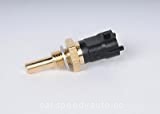
The coolant temperature sensor, otherwise known as the engine coolant temperature (ECTS/ECT) sends data to the ECU so it can adjust the fuel-air mixture accordingly. It’s normal for a cold engine to run richer because the conditions for optimal combustion have not yet been made.
Failed CTS can make the ECU think that the engine is cold even when it’s not, so it will run rich unnecessarily. Another clear symptom of the CTS problem is the temperature gauge going up and down while driving, as the ECU can’t figure out the exact reading.
Tools you’ll need:
| Title | Price | Buy | |
|---|---|---|---|
 Top
Top | ACDelco GM Original Equipment 213-4777 Engine Coolant Temperature Sensor | Buy Now | |
 Top
Top | Performance Tool W1173 SAE/Metric 40-Piece SAE and Metric Socket Set, 1/4" & 3/8" Drive | Buy Now | |
 Top
Top | Capri Tools CP21023 Portable Oil Drain Pan, Anti-Freeze, Green | Buy Now |
Step by step instructions:
The coolant temperature valve or thermostat operates on an ingenious principle. When the coolant is cold, it restricts its flow to allow it to heat up. Once it reaches an optimal temperature, the valve will automatically adjust the flow to keep the temperature stable.
When it fails, the valve usually shuts open and allows full flow at all times. Unlike the sensor, this will actually make the engine run cold and cause it to burn more fuel. The engine is not supposed to run cold for long and faces serious damage if it continues to do so.
Tools you’ll need:
| Title | Price | Buy | |
|---|---|---|---|
 Top
Top | MotoRad 2067-195 Engine Coolant Thermostat | Buy Now | |
 Top
Top | Selizo 40Pcs Hose Clamp Including 7 Sizes Adjustable Pipe Tube Clamps 304 Stainless Steel Hose Clips | Buy Now | |
 Top
Top | Klein Tools 600-1 5/16-Inch Flat Head Screwdriver with Cabinet Tip, 1-1/2-Inch Heavy Duty Round Shank and Cushion Grip Handle | Buy Now | |
|
Top | Capri Tools CP21023 Portable Oil Drain Pan, Anti-Freeze, Green | Buy Now |
Step by step instructions:
Replacing the ECU is very simple – once you gain access, it’s just a matter of unscrewing a couple of screws and pulling power plugs out. However, ECUs are one of the most reliable components and it’s very unlikely to fail. On top of that, the ECU is very expensive, from $500 to several thousand dollars.
If you’ve ruled out all the other options, I would advise you to take your vehicle to a professional and get it diagnosed. The cheap OBD2 scanners have some limitations, so it’s better to invest some cash into the help of a professional, instead of making a potentially unnecessary purchase of a new ECU.
Spark plug-related issues have more to do with misfires and knocking sounds coming from the engine, but once the engine has run rich for long enough, it will foul the spark plugs and you’ll have to inspect and replace them if necessary.
We’ve covered the spark plug change in a number of articles, from picking the right type to the number of spark plugs necessary. If any of the spark plugs is visibly dirty or fails the multimeter test, a good practice is to replace the entire set.
Running rich is extremely bad for the engine as it causes gasoline to mix with engine oil and fouling of the spark plugs. Apart from bad performance with increased fuel consumption, running rich for long will cause severe damage to the engine.
The two terms are used to describe the air-fuel mixture created inside the engine block. Running rich implies too much fuel in the mix while running lean means there’s not enough fuel. Neither is good for the engine, and you always want to run on an optimal mixture.

You can get away with driving the car back home or to a mechanic, but driving it daily is a very bad idea. The increase in fuel consumption is not even a concern compared to the costs of repairs you’ll incur by letting the engine run rich. Considering that most of the causes can be solved with $50 and a screwdriver, you should fix the problem as soon as possible.
You may think that more fuel would positively affect performance, but the effect is quite the opposite. When running rich, you’ll experience reduced performance with poor acceleration and throttle response.
As the amount of fuel sprayed in the cylinder doesn’t have enough oxygen to burn completely, it can lead to fouling of spark plugs and misfires. The extreme cases of running rich will cause misfire without other factors, but it’s more likely caused by spark plugs.
Because running rich doesn’t burn off the fuel completely, it can lead to carbon buildup and fouling of the cylinders. These particles may affect the piston rings if the problem isn’t sorted in a timely manner.
Running lean means that the engine does not have enough fuel for the combustion mix, which causes a lack of power and misfires.
This question is kind of misleading – the O2 sensor is supposed to read rich and it does so often. The ECU takes that information and adjusts the fuel output accordingly. That’s how the system is supposed to run. If you have problems with the O2 sensors, check the dedicated section above for more information.
Black smoke is caused by an air-fuel mixture that is too rich. The fuel particles that don’t burn completely turn into soot which escapes through the exhaust.
There’s a lot of reasons why the engine will run rich, but a quick scan with the right diagnostic tool will show you the root of the problem.
The most probable cause is one of the sensors, that are very affordable and easy to replace, even by a novice mechanic. I highly advise addressing the problem as soon as it appears. Continued driving will increase the fouling inside the engine block, as well as on the fuel injectors, sparks, valves, and piston rings.
Related topics can be found here:
Why Would A Car Run Better With The Mass Air Flow Sensor Unplugged?
What Causes Spark Plugs To Go Bad Fast?
What Happens If You Overfill Your Gas Tank?
