
Unless you drive a manual car, you probably use power steering fluid. It is used in most modern cars with power steering. While you might see new cars coming out of electrical power steering system, a lot of cars from the last decade consists of a hydraulic power steering system.
Whenever a hydraulic steering system is used, it requires power steering fluid to function properly. So, what is power steering fluid? What are the power steering fluid colors and what do they mean?
In a power steering system, the power steering fluid is an essential component. As the name suggests, it increases the efficiency of the movement and makes steering easy.
In a hydraulic power steering system, the power steering liquid acts as the medium to transfer force from the steering wheel to the road wheels. Along the way it multiplies the force as any hydraulic system, thus reducing the effort needed to steer the car.
The fluid is located in a reservoir under the steering column. It is usually on the driver’s side. Identifying it is not that hard, since it is clearly marked “power steering” or “steering fluid”.
Nowadays, we have various types of power steering fluids in the market. Most manufacturers recommend what type of power steering fluid you should be using on your car. It is important to make sure you use the exact kind that manufacturers suggest. Let us look at some commonly used types of power steering fluid.
Mineral fluids consist of a fraction of petroleum and a few other additives. This fluid is especially great for rubber components. It reduces the wear on them as much as possible and increases the life span of the steering system. It is also cheaper compared to many other types of fluids.
The main disadvantage that you get by using this fluid longevity of the fluid itself. The fluid runs out soon and you would have to regularly replace it.
This is a mix of synthetic fluid and more natural mineral fluid. It forms a color that is a mix of both synthetic and mineral fluid. This is a better lubricant than most other fluids in the market. While it is good for metal components, it creates more wear to rubber components.
This is the most widely used power steering fluid today. It is artificially engineered to give the best possible effects to the power steering system. Most car manufacturers recommend the use of this particular type of fluid.
This is made of petroleum and a bunch of special polymers. Other additives are used to reduce the deterioration of the rubber. There is not a lot to complain about this type of fluid. It is durable and provides great results in terms of lubrication. The low viscosity of the fluid makes it effective in low temperatures.
Finally, we have the universal fluid. As the name suggests the fluid is compatible with a lot of different steering systems. It is also a type of synthetic fluid as it is artificially engineered.
The special additives in this fluid help reduce stiffness while increasing the lubrication properties. Some are engineered to provide superior defense against corrosion and wear. It can also seal small leaks.
The main issue would be the varying viscosity. You should make sure to choose the optimal viscosity for your car before using this fluid.
Knowing the color of the fluids in your car is important. There are plenty of fluids in your car. Some of them are engine oil, transmission fluid, brake fluid, coolant, and of course the steering fluid.
For example, if you find a liquid dripping down your car, only by knowing the color you will be able to identify the fluid. And by identifying the fluid, you should be able to figure out what is wrong with your car. Due to this different fluids are dyed in different colors. So what is the color of the power steering fluid?
This is the standard color for power steering fluid. Most power steering fluids in the market are dyed red. There are some which are more towards pink as well.
If you see a red color liquid leaking from the car, chances are it is the power steering fluid. But if you want to be more certain, you could look for the location of the leak. If it is in the front of the car and a bit towards the driver seat it is probably the power steering fluid.
The texture won’t let you know a lot, but the power steering fluid is a bit slippery. So is a lot of other fluids in your car, since they contribute to reducing friction.
So what does red or pink fluid in your driveway mean? Well if it is leaking, you need to get it sorted out immediately. But the good news is that it is still functioning properly and has not expired yet.
While red or pink is the standard color of the power steering fluid, you must understand that it arises due to the dye. Naturally, the fluid is clear. Some manufacturers decide to keep it exactly the way it is as they believe dying the liquid could change its chemical composition. So there is a good chance that your steering fluid can be clear.
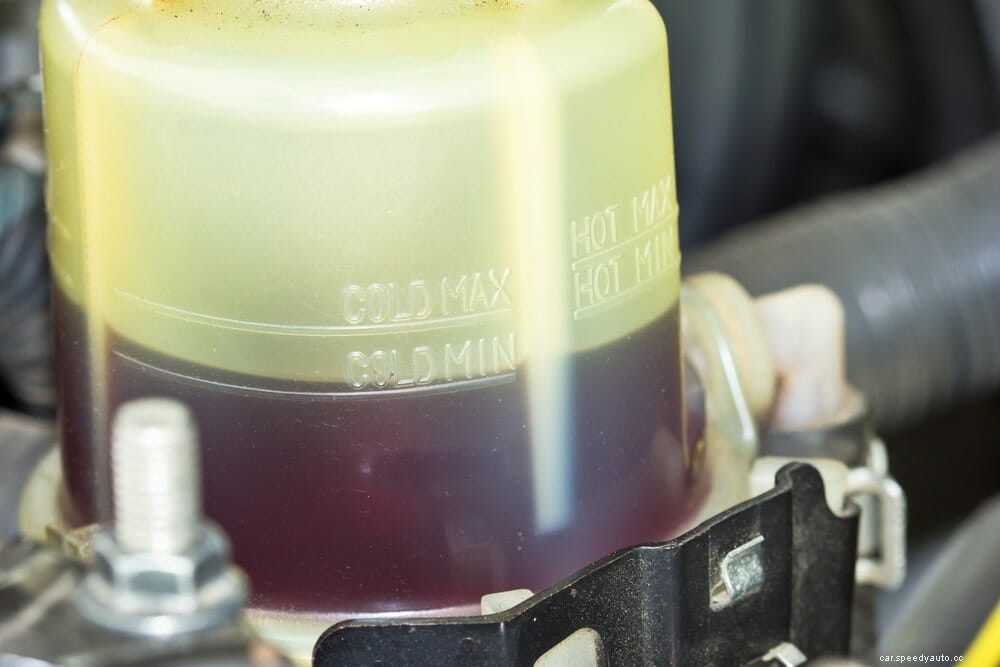
Steering fluid is not manufactured in dark brown or black color. This color is assigned to the engine oil. Engine oil starts out as a brown liquid. As it collects dust and debris collected in your engine, it changes color to black.
The same is seen in steering fluid. Even though you might pour red color fluid into the reservoir, with time it will acquire a lot of dirt and debris. This eventually changes the color of the fluid to brown or black.
If you see your steering fluid in this color, you should change it immediately. At this point, the fluid has been circulating a tad too long on your power steering system. Dirty power steering fluid will not be able to do its chores properly.
If your power steering fluid is yellow, it doesn’t mean it is dirty. So why would the power steering fluid turn yellow? The most probable cause is that the coolant might be mixed up with the power steering fluid.
This is not a common scenario. But how bad it is?
Actually, it is not going to affect the power steering a lot. Unless the ratio of coolant to power steering fluid shifts drastically in the direction of the coolant, it will not affect the power steering system in a harmful way. But if the coolant is leaking, you might run out of coolant. So you should get it fixed.
This is the worst possible color you could find your steering fluid to be. If your fluid is milky or foamy, it means that air is trapped in the fluid. Rather than being slippery, you might find your steering fluid to be slimy.
If this were the case, you must take immediate action. Drain the fluid as soon as possible and replace it.
Once it turns milky or foamy, it is no longer favorable inside your steering system. You would start hearing knocking sounds from your steering and steering will take more effort than usual. In serious cases, your steering wheel could seize mid-drive.
As long as your steering fluid is either red or clear, you should be fine. The fluid changes color as it contaminates. With time and the accumulation of dirt and other impurities, the fluid will turn to a darker color. This is an indicator to change the steering fluid.
If your steering fluid is either white, milky, or foamy, it is contaminated with water or air. This would also indicate that it is time to replace your steering fluid.
If you find out the color of your steering fluid through a leak, you should consider fixing the leak. Even though it might not have an immediate effect, the system could eventually run dry. Without lubrication, you’d be risking major damage to the steering system.
Some newer manufacturers dye their steering fluid with a green shade. This doesn’t mean that your steering fluid is bad. The bottom line, if you find your steering fluid in a dark color or milky, you should change it immediately.
Now that you know which power steering fluid colors are bad, you might consider replacing your steering fluid. Do you need a mechanic to do this job? Replacing the steering fluid is not a hard task. Equipped with the proper knowledge, you can do it yourself.
Let us discuss the entire procedure of replacing power steering fluid.
First, you need to find the most appropriate power steering fluid for your car. Different manufacturers suggest different types of steering fluids. The appropriate fuel would be mentioned in the owner’s manual. If you cannot find the owner’s manual, you should be able to look it up on the internet.
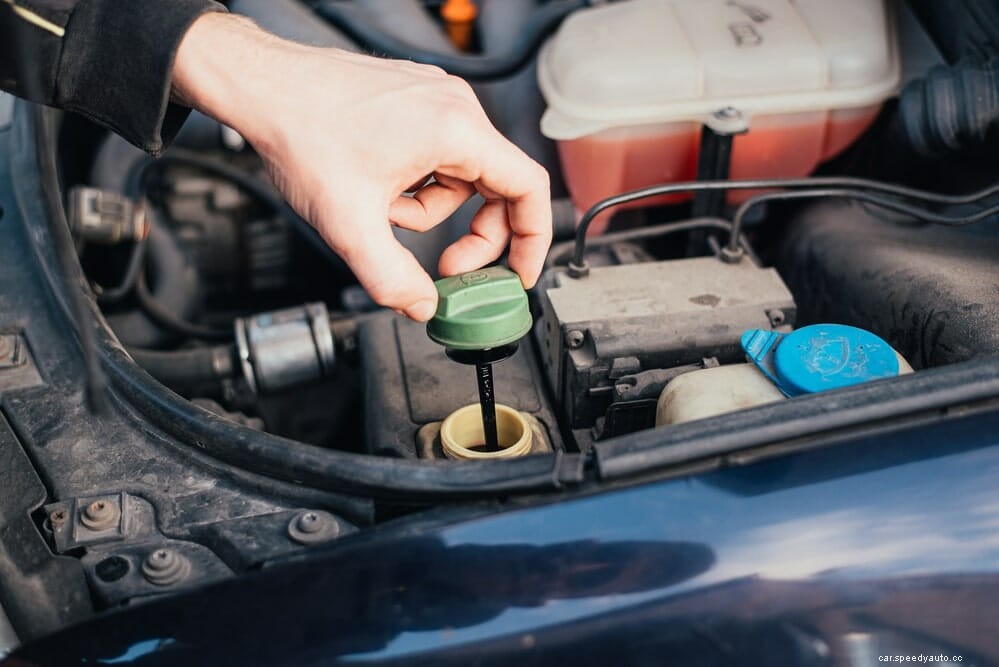
Now that you have the proper fluid, you need to locate the steering fluid reservoir in the car. Pop the hood open. You should be able to distinguish the reservoir easily.
Use a jack to lift the front end of your car so that you can crawl under. Take a container to empty the old fluid onto. Crawl under the car, and drain the old liquid out.
If you cannot get all the liquid out, turn the steering wheel to either side. This will drip any remaining fluid inside.
Now use a funnel to refill the reservoir with the new fluid. Make sure to pour the fluid until it reaches the proper level.
Remove the jack and get the back to ground level. Start the engine and let it run for a few seconds. Try turning the steering wheel left and right to check if it works smoothly. Take it out for a short drive if needed. Recheck the fluid levels.
If you are satisfied, that’s it, you have successfully replaced the steering fluid.
Power steering fluid is considered a necessary component for the car to function. When you see discolored steering fluid, it simply means that your steering fluid is not functioning properly. But why do you need to change your steering fluid? What is the worst that could happen?
Just imagine, what if you lose power steering while driving. Not a big deal right, you can still steer. You might think that as long as you can steer your car you can manage. The truth is we are used to driving with power steering. If you lose your power steering, adapting to that will take time. So you won’t have full control over the car.
Now imagine the same thing happening when you are driving at 100 miles on the freeway. You cannot steer properly. It would be just a matter of time before you crash.
If you were wondering what could be worse than losing power steering, it is losing steering completely. A function of the steering fluid is to lubricate the steering system. By doing so it makes sure the cogwheels and other components work smoothly.
If your fluid has turned black due to dirt or it is milky it will lose almost all its lubrication properties. This could cause the steering to seize. You won’t be able to steer your car in either direction. If this happens at high speeds, the results could be fatal.
This is another effect of lack of lubrication. If your system is not lubricated properly, the components will not be able to work in sync or work smoothly. This would cause the metal components to rub against each other causing knocking sounds.
When your steering fluid loses its viscosity, it would no longer be an effective hydraulic fluid. The fluid is the only way that the force could transfer from point to point. For that to happen it should be a flowing liquid.
When dirt is accumulated, the density of the liquid increases while reducing the viscosity. You would have the same symptoms if you are running low on steering fluid.
These are just some of the damages or dangers that you could face when you do not have a functioning steering fluid in your steering system. Therefore if you see your steering fluid is at an unusual color, you should try to replace it as soon as possible.
Power steering has made driving modern cars easier. There are two different power steering systems. They are electric and hydraulic. Hydraulic power steering uses power steering fluid. Just like you maintain the quality of the engine oil or transmission fluid the steering fluid should also be monitored and replaced when necessary.
Generally, the power steering fluid is dyed in red or pink color depending on the concentration of the dye. Clear power steering fluids are also common. Modern manufacturers are now using a green dye as well. As long as your power steering fluid belongs to one of the above colors, it is in fine condition.
When the steering fluid spends a considerable time in your steering system, it starts to change color. With the accumulation of dirt, it will start turning into a dark brown or black color.
If it is mixed with water or air, the fluid will turn foamy and milky. Either of these colors means that the fluid is contaminated. If you notice your steering fluid at this stage, you should replace it quickly.
Replacing the power steering fluid is not a hard task. You do not need to hire a mechanic for the process. Find the right type of steering fluid according to the manufacturer’s recommendation. With a bit of work, you should be able to replace it yourself.
Your power steering fluid plays a huge role in keeping the power steering system functional. So if you run out of fluid or if your fluid is not up to par, it could cause a lot of damage to your steering system. Worst case scenario, it could fail mid-drive and cause havoc.
Thus you need to make sure that your steering fluid is in the best possible condition. Now that you know the power steering fluid colors, maintaining it should not be an issue.
Let us look into some of the most common questions that car owners ask about power steering fluid.
Power steering fluid does not require constant top-up or replacement. On average power steering fluid last between 3 to 5 years. Or it lasts 30,000 to 60,000 miles. But if you notice any reason to replace the power steering fluid, you should get it inspected and replaced if necessary.
Power steering fluid has a lot of functions. The main reason to use a fluid in the steering system is to act as a hydraulic fluid. Other than that it acts as a lubricant, coolant for the steering system, cleans the system, and prevents corrosion. Some are even capable of repairing small leaks.
The main component is silicone or petroleum. Using this as a base, other substances are added to enhance its capabilities. Different manufacturers use different additives. So they could have slightly different properties.
Look for unusual noises from the steering system. If it starts to groan or create a knocking sound, the chances are you are low on steering fluid.
Apart from that if your fluid has lost its effectiveness, you would notice your steering become stiffer, vibrate excessively. If you notice any of these you need to check your power steering fluid.
Some say that the power steering fluid turns green when it expires. But this is not true. Some modern manufacturers are starting to use green dyes on the steering fluid. This does not mean that there is a problem with your power steering fluid.
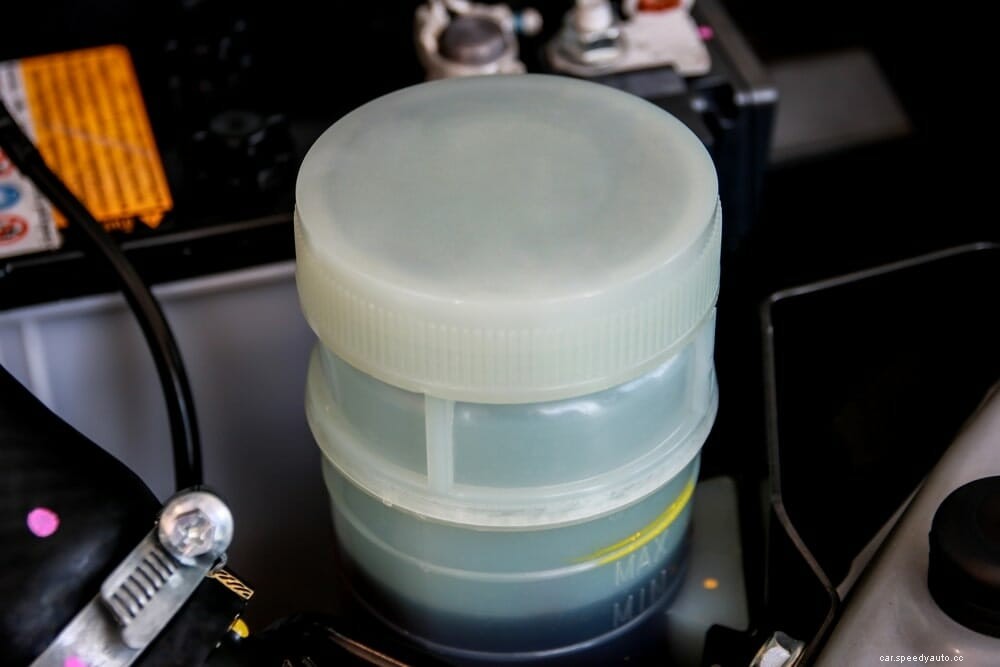
You can use automatic transmission fluid also known as ATF on your power steering. It is always advisable to use power steering fluid for the vehicle, but if you need to top off your reservoir, you can do so with transmission fluid.
Different types of power steering fluids are marked with different price tags. Generally, mineral power steering fluids are the cheapest. They cost around $10 to replace.
If you are using synthetic oil, the cost is slightly higher. Synthetic oils could cost $20 to $50. Fluids used in performance cars and sports cars are a bit more advanced and costs more.
You cannot use brake fluid for your steering system. Brake fluid and steering fluid aren’t the same things. And they are not interchangeable. If you do not have a power steering fluid, the next best option is Automatic Transmission Fluid. Using a different fluid is never advisable.
Brake fluid can damage the power steering system. If you put brake fluid on a power steering system it will damage the pump.
