
A car failing to start is one of the biggest hurdles that you could face as a car owner. It can be really frustrating if your car doesn’t start when you need it the most. There are dozens of components that need to work properly for your car to start.
When one of them fails, you might run into this problem. But if your car won’t start after getting gas, it could come down to a few causes.
To better understand why your car won’t start after getting gas, you need to know what goes inside your car when you start it.
When you turn your key, a series of parts work together to start your car. The starter motor is the first to react. It turns the crankshaft, which causes the pistons to move in the cylinder. This movement draws a mixture of fuel and air. This is combined with the spark from the spark plugs and the engine fires up.
You might hear your engine heaving and cranking when it is about to start. This is the sound that is emitted when the crankshaft is firing up. After the crankshaft starts to move and the fuel ignites, the reaction allows the engine to run on its own power.
The initial power to start the engine comes from the starter motor. The fuel that burns comes is sent through the fuel pump. The started motor gets its power through the battery.
Now you can imagine the plethora of components that work together to start your engine. And each one of those components is just as important as the other.
Though there are a ton of components that chip in to start your car, only some of them are directly associated with the fuel lines. There are only a few components that are affected when refueling. This brings down the list of suspects for why your car won’t start after getting gas.
Let us look at some reasons why your car won’t start after getting gas. It could be either one of these or maybe even multiple reasons.
This is a more common mistake than many of us think. Though forgetting to put the cap back on will not immediately show any effects, it will start to mess with your engine in the long run.
You might notice that the check engine light is on when you forget to put the cap back on. This is easily mistaken as some other internal issue and causes you to panic.
But why is the cap so important? If you think that the cap is only to keep the fuel from spilling out while you drive, you are mistaken. When you put the cap back on, it seals the gasses inside the tank. These gasses produce a bit of extra pressure to pump the fuel into the combustion chamber.
Without the cap, the gasses will escape. This will reduce the pressure inside the tank.
But will this be the cause, why your car won’t start after getting gas? Highly unlikely, the effects will take a while to show. But if you see the check engine light come on after refueling, you might want to take a look at the cap, before you diagnose the cause of the check engine light as a different problem.
As the name suggests, the job of the fuel filter is pretty simple. It filters the dirt and debris that is in the fuel. Though you might be able to notice it, the gas you pump in is filled with a lot of tine dirt and debris. When these are filtered at the fuel filer, they cause a clog at the fuel filter.
When there is a clog in the path of the fuel, the flow is reduced. This means that your engine will not get the fuel it needs. It could slowly reduce the performance of the engine and ultimately, cause the engine to shut down.
You might see a few of these symptoms if your fuel filter is dirty or clogged. You might notice that your engine is not accelerating as it did in the past and whenever you load your engine, it will emit a lot of smoke. The odor of fumes will also be prevalent.
As it gets worse your engine will start to misfire. The fuel economy of your car will continuously decrease. After a while, your fuel filter will not be able to do its job. This will allow dirt and debris to enter the engine. This can damage the engine.
This can happen if you run out of fuel or maybe your car was sitting for a while before refueling. If the clog has completely blocked the path for the fuel to the engine, even after you refuel, the fuel will not reach the engine.
Without furl reaching the combustion chamber, you might notice the engine heaving and cranking, but it won’t start. Since your battery is working, the started motor will engage the crankshaft, but without the fuel, the chain reaction to start your car will not happen.
Keep your eye out for symptoms of a dirty or clogged fuel filter. If you notice that your fuel filter is dirty, get it cleaned.
Usually, cleaning or replacing the fuel filter every 10,000 miles or annually should be fine. But the number actually depends on the purity of the fuel you pump in. Try to do a bit of maintenance on your fuel filter every year.
This is one of the most common reasons why your car won’t start after getting gas.
The fuel pump is the equipment that pressurizes the fuel inside your gas tank and transports it into the engine of your car. With a failed fuel pump, the gas that you just pumped will not be able to flow into the engine.
The fuel pump needs to be cooled. When it is working it could reach high temperatures, and the fuel in your tank acts as a coolant to the fuel pump. It absorbs a lot of the heat produced by the pump, thus keeping the temperature of the fuel pump under control.
When your fuel is low, the fuel cannot absorb a lot of heat from the pump. This will cause the fuel pump to overheat. Even though it might not immediately fail due to overheating, when you refill the tank with gas, the sudden drop in temperature can damage the fuel pump.
This will make it hard to start the car. This is because the fuel pump cannot pump the appropriate amount of fuel to the engine. But chances are you will eventually start the engine. After a few tries, the fuel pump will send enough fuel to fire up the engine.
Just cause your engine is working doesn’t mean it is working perfectly. An engine might start with a malfunctioning fuel pump, but you will notice the effects of the fuel pump when you drive. If the reason why you had a hard time starting our car after refueling was the fuel pump, you might notice a few more symptoms.
One of the easiest symptoms to notice is the whining noise that the fuel pump emits as you drive. Whining noises are often caused by low fuel levels, dirty fuel, or a faulty fuel pump.
If you hear whining noises after refueling it cannot be due to low fuel levels. So it is either contaminated fuel or a faulty fuel pump. If you hear such a noise you need to get your fuel filter and your fuel pump checked.
Another symptom of a failed fuel pump is a sputtering engine while driving at high speeds. You might encounter engine sputters when accelerating as well. When you stress your engine, it could lose power if you have a faulty fuel pump. This is caused by the low fuel levels entering the engine.
Along with these symptoms, you will be able to notice a low fuel economy as well.
If you notice any one of these symptoms along with the initial problem, that is your car won’t start after getting gas, chances are your fuel pump is malfunctioning.
In case you suspect that your fuel pump is faulty, you need a way to confirm that the symptoms you see are caused by a faulty fuel pump.
The best way is to check the fuel pressure. If the pump is working fine, the fuel pressure should be fine. If it is not satisfactory, then your fuel pump is malfunctioning. This is often caused by the voltage delivery to the pump. A low voltage going into the pump will result in low fuel pressure.
If the voltage is not the issue, the fuel pump is faulty. In this case, you need to replace the fuel pump. Thankfully, replacing the fuel pump is not a hard task or costly. You should be able to do it yourself with the proper guide.
The purge control valve is a component of the vehicle’s EVAP system which is better known as the Evaporative Emission Control system.
The EVAP system captures the fuel vapors and stores them temporarily in something known as the charcoal canister. The EVAP system is in charge of regulating and controlling the emissions of your vehicle.
The purge control valve plays a major role in the entire process. It makes sure that the engine vacuum takes the fuel vapors from the EVAP system.
The purge control valve fails when it is in an open state. When it is stuck at an opened state it will send in a fume when the engine is at ignition instead of being closed and stopping the vapor flow. The excess vapor floods the engine.
For the fuel to burn you need a proper ratio of air. When there is room for much fuel vapor inside the engine, there is no room for air. Since O2 is compulsory for combustion when the engine is flooded with fuel vapors, the lack of room for air will obstruct ignition.
Refueling could cause more fumes to go into the charcoal canister. Without the purge valve, there is nothing to regulate the flow. Thus a damaged purge valve will obstruct firing up the engine. But eventually, you should be able to start the engine.
Just because you got your engine started doesn’t mean you should continue driving and ignore the problem. Chance are you will encounter the same problem when refueling the next time. So you need to replace the purge valve. But how do you know that your purge valve is the one that is broken?
Again, a purge valve will also result in a low fuel economy. A unique symptom of the purge valve failure would be rough idle. This is because even when you are idle, your engine will be getting more fuel than needed. This will result in a rough idle.
This will also result in poor engine performance. Basically, for optimal engine performance, you need to have the perfect ratio of air and fuel. If you increase the amount of fuel you need to increase the airflow as well.
This is why most performance-based cars, couple a fuel injection kit with a supercharger or a turbo. This is to bring more air into the engine to burn the excess fuel. Whenever the balance is off, the engine will not perform properly.
A purge valve failure will also result in an illuminated check engine light. Once you suspect that the reason why your car won’t start after getting gas is a faulty purge valve, you need to get it replaced. The procedure can be done yourself if you are willing to spend some time and effort on your car.
As discussed above, these are the most common reasons why you might face a car that is not starting after refueling. So depending on the issue you might have to take a different approach to deal with it.
Even if you do not put the cap back after refueling, you will still be able to get your car running. It will not have any immediate effects, but you might run into some trouble if you continue to drive with the cap off.
The check engine light will also be lit, so you will have to replace the cap. Fortunately, even if you lose the cap, you can buy a replacement.
Rarely does a fuel filter result in your car not starting after refueling. Fuel filters will not get clogged in a short period. It will get worse and worse with time. Even at the early stages, the symptoms will urge you to get it checked. If you continuously ignore it you might end up with a clog.
If you notice symptoms that your fuel filter is clogged, get it cleaned or replaced. This will bring your engine back to its old glory.
Usually, when your car won’t start after refueling, the culprit is either the fuel pump or the purge valve. They both have almost the same symptoms.
But they are not hard to distinguish. If you hear a whining noise, chances are it is caused by the purge valve. On the other hand, if you smell a strong odor caused by gas, then it is probably caused by a faulty fuel pump.
Either way, you shouldn’t continue driving with either one of these problems. They will prove to be challenging to drive with. Even if you believe that you can rise to the challenge and manage to drive with a faulty fuel pump or purge valve, it will cause a lot of damage to the engine. So you need to get it checked out and fixed as soon as possible.
Here are some of the most common questions regarding, why your car won’t start after getting gas?
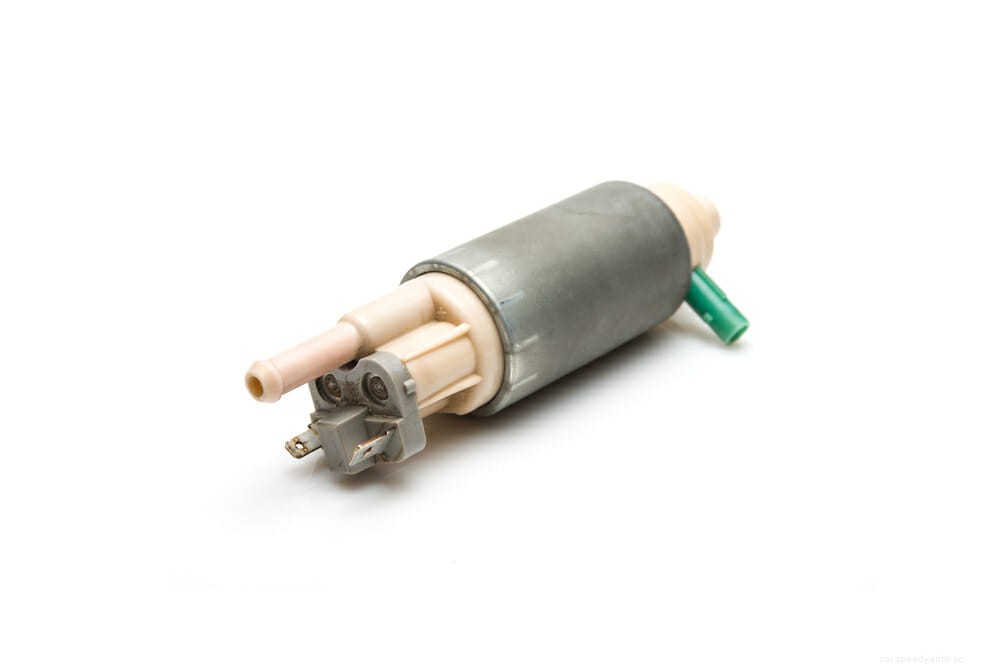
Fuel pump prices drastically differ, based on the model and make of the car. Fuel pumps used in most modern high-end vehicles tend to be costlier. Prices of the actual fuel pump range from $180 to $1300.
For a basic car, the fuel pump usually costs between $200 to $300. For the replacement, with labor charges, you are looking at $350 to $500 or more. But since replacing the fuel pump is pretty easy, you can save on labor costs by replacing the pump yourself.
Unlike a fuel pump, in the case of a purge valve, the model and make of the car will not drastically change the value.
On average, replacing a purge valve at the hands of a professional will cost between $120 to $170. The valve costs around $75 and can go up to $110. Labor costs vary between $45 and $55. No matter what car you own, the cost to replace a faulty purge value will be close to the average.
Keeping a full tank of gas will definitely help your car in the long run. As we discussed in this article, one of the benefits of having a full tank of fuel is maintaining the temperature of the fuel pump. The fuel acts as a coolant in this case.
A fuel tank is basically empty space. Since it is not a vacuum, the part that does not contain fuel is filled with air. Air contains water vapor. This could condense and damage the fuel tank. So having a full tank of fuel will reduce the damage air does to the tank.
A bad purge valve floods the engine with gas fumes. This means that your engine will need more air to burn the fuel. Unless you get more air in the engine, it will not start.
So to bring in more air, press down on the throttle. This will bring more air in, hopefully, it’ll be enough to ignite the fuel in the flooded engine.
Fuel caps are pretty common. If you are looking for a cap, you can easily find one online. If you are in a hurry, any automotive parts store should be able to help you.
Not all fuel filters are made to be cleaned. If your fuel filter has a paper filter it cannot be cleaned. This means you would have to replace your fuel filter.
Unless you notice any symptoms of a dirty fuel filter, replacing it every 2 years or 24,000 miles is enough. It mainly depends on the cleanliness of the fuel.
Facing an engine that doesn’t want to start could get frustrating. This is especially true when you just got your car refueled. There are a few reasons why your car might not start after getting gas.
Most of these causes are easy fixes. The parts for these repairs cost less than $150. And the good news is you do not have to spend on labor. These problems are often easy fixes and you can do them yourself.
The purge valve replacement is the toughest out of the above problems to fix. If you are not familiar with or comfortable doing repairs on your car, it is best if you consult a professional for a purge valve replacement. Even if you pay a mechanic to fix your car, it will cost less than $300.
So you do not have to worry if your car doesn’t start after refueling. Usually, it is an easy fix, so try to get it fixed at your earliest convenience. Never ignore the problem, and let it linger in your car. If you drive around without solving the issue, you could end up with major damage.
