
If you have ever been driving and turned off your car, only to hear it making strange noises, you are not alone. This is a common problem that many drivers experience.
There are several reasons why your car might make noise after being turned off, and in this article, we will discuss some of the most common ones. We will also provide tips on how to fix the issue. Keep reading to learn more!
It is a question that has been asked by many drivers but not everyone knows the answer. Some might say that it’s normal for an engine to make noise after it has been turned off, while some say no.
Let’s try to find out under this article if it is really normal or something more serious is happening with your vehicle. But first, we’ll try to answer this question by looking at some of the most common reasons why a car is making noise after it has been turned off.
Your engine makes noise when you step on the brakes because your brake pads rub against your rotors and create friction which causes a lot of noise. This sound lasts only for a short period of time and doesn’t last longer than 10 seconds or so unless you keep your foot on the brake pedal.
There is another reason behind this phenomenon: “The other popular theory is that it’s caused by evaporative emissions (EVAP) systems, but I think there may be some confusion here with something else going on because the noise you’re talking about is a steady grind, whereas what you hear from an EVAP system could best be described as a whirring/hissing sound.”
In short, this noise is caused by either your brake pads or your EVAP system.
There are other causes for this phenomenon to occur and one of them is due to a loose component somewhere in the engine compartment. For instance, there could be a loose belt that rubs against other components making that specific noise whenever it hits those objects.
There’s also another cause which might need trained personnel to look into because it can cause serious damage should you not have it checked as soon as possible. An example of this reason is a damaged engine mount.
That’s definitely something you don’t want to take lightly so you should have it checked the moment you hear this noise.
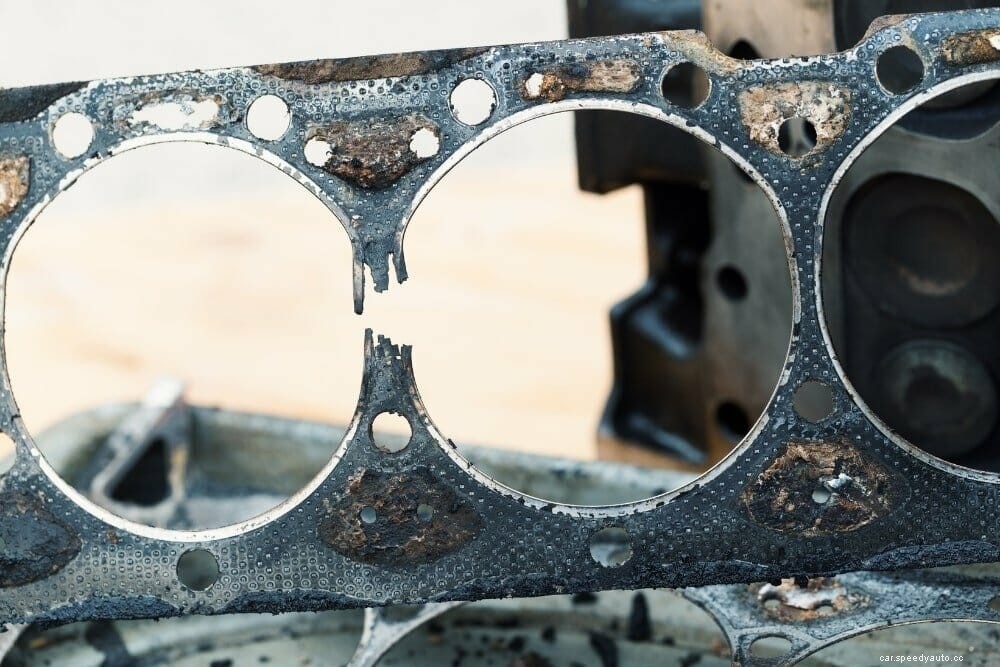
One of the most serious reasons for this noise is when there’s a damaged head gasket. This means that coolant and oil are mixing together and it’s not a good sign. If this is the case, then you’ll need to take your car to a mechanic as soon as possible because it might mean that your engine is about to blow.
Many people are unaware that low oil is the main cause of engine noise after turning off. When your car’s oil is low, it can result in components under the hood vibrating which will make a lot of noise once you turn the engine off. The reason why this happens is that “the lack of lubrication on those parts causes them to heat up and expand due to friction.
Then when everything cools down after you shut off your vehicle, they contract back to their original shape but at that point, they’re still hot and expanded so they end up making all sorts of racket.”
There are some things you can do in order to try and fix the issue yourself before taking it to a mechanic.
If you think that the noise might be coming from your engine, try tightening all of the belts and making sure they’re in good condition. You can also try adding some oil if it looks like your car is running low on it.
These are just a few solutions that you can try before taking it into a mechanic. However, if the noise is too loud or you’re not sure what’s causing it, then you should take it in and have a professional take a look at it. They’ll be able to diagnose the problem and fix it for you in no time.
As mentioned earlier, there are many reasons why your car might be making noise after the engine has turned off. It could be anything from loose components to a damaged head gasket.
If you’re not sure what’s causing the noise, then take your car to a mechanic and have them take a look at it. They’ll be able to tell you exactly what’s wrong and how to fix it.
For instance, if you think that the noise is coming from your brake pads, then try cleaning them off or replacing them if they’re too worn out. Another solution would be to replace your rotors if they’re too damaged.
In the meantime, try to troubleshoot the problem yourself by checking all of the components in your engine compartment and tightening any belts that might be loose.
If you’re still not able to figure out what’s causing the noise, then take it to a mechanic and have them take a look at it. It could be anything from a broken part to low oil, so don’t hesitate to get it checked out.
If you are experiencing this issue with your car please do not hesitate to reach out for help. Most mechanics are more than qualified to diagnose and repair the issue.

You can also reach out to your car manufacturer if you are still unsure of what is causing the noise. They will be able to help you figure out where the issue is and how to fix it.
Remember, this problem should not be taken lightly as it could lead to serious engine damage down the road. Get it checked out as soon as possible!
If you are feeling handy there are additional ways to solve your noise problems. A common problem that owners of cars with a manual transmission have is the noise the engine makes when the car is turned off.
The sound can be characterized as a grinding, rattling, or squeaking noise and usually only lasts for a few seconds. The good news is that this problem is normally not serious and it does not mean there is an impending repair coming up in your future.
There are several things you can do to stop the car from making noises when turned off, starting with easy fixes to more complicated ones. In most cases doing something yourself can save you money while also being fun!
Repairing your car will not only ensure that your engine runs quietly but also prolongs its life by keeping everything working correctly.
In order to reduce this noise, you need to solve the problem of how the engine is being held in place while it’s running. On a manual transmission car there is a rubber coupling that joins the flywheel and driveshaft together.
When you put your car into gear and pull out of your driveway, the engine is spinning at thousands of RPMs and all the movement has to be transferred through this rubber coupling since there’s not enough room for gears.
A lot of torque goes through this connection, especially when accelerating hard or up-shifting under load (while driving). As such these couplings often fail over time due to wear and tear… well actually mainly because people try their best to make them fail!
The easiest way to make these couplings fail is to drive your manual car like you would an automatic.
If you accelerate slowly and change gears at the correct moment, there will be much less stress on the rubber coupling than if you rev it out and dump the clutch to get into first gear.
You can improve this coupling by spraying some rubber-friendly lubricant called silicone spray onto it every now and then, or take it off completely and grease it instead (if that’s possible). Either way should solve your problem!
Another common cause of noise when turning off a car is caused by worn engine mounts which are responsible for holding down the engine while also absorbing some of its vibrations.
Basically, these mounts are made from soft rubber with metal rings embedded in them, they are attached on one side to the car and on the other, they have a metal rod that slides into the engine block thus keeping it in place.
When these mounts wear out, your engine will jolt as you come to a stop due to their lack of resiliency. A little annoying, but not necessarily dangerous.
Replacing these mounts might solve your problem; however, if they are really worn it’s better to replace them along with the rubber coupling since this will probably happen again in the future if you don’t (trust me, I’ve done this work before).
Another common cause is loose bolts that hold down the gearbox (or flywheel for non-manual transmissions), causing damage to an automatic transmission that can result in expensive repairs since these are sealed units.
For manual transmissions, this is not as much of a problem since you can easily rebuild the gearbox by replacing bearings, seals, etc.
If bolts are looser than they should be it’s usually good insurance to tighten them up before they fall out, and if they do… well you’ll know about it when your car starts sinking towards the ground! Make sure someone else does the tightening though; we don’t want any extra holes in our boots.
Tightening or replacing the worn engine and transmission mounts is a pretty simple and straightforward task that most auto mechanics will be able to handle without too much trouble, however changing engine couplings isn’t as easy as it sounds since there generally aren’t any places nearby that stock those parts.
There are many different parts of your car that can make noise, but some of the most common culprits are:
There are many ways to soundproof your car, but the most effective method is usually to install some form of insulation. This can be done by adding extra material inside the doors, trunk, or hood of your car.
You can also buy noise-canceling materials that will attach to the outside of your car and reduce the amount of wind and road noise that enters the interior. If you’re handy with a toolset, you might be able to do some of this work yourself; however, it’s always best to consult with a professional if you’re not sure what you’re doing!
Noise-canceling materials are designed to reduce the amount of exterior noise that enters the car. This can be done by using sound-absorbing materials like foam, or by installing panels that block out sound waves.
Soundproofing is a method of reducing the overall noise level inside the car. This can be done by adding extra insulation, or by using sound-deadening materials like rubber or vinyl.
Both methods have their own benefits and drawbacks, so it’s important to choose the one that will work best for your needs. If you’re not sure what to do, consult with a professional! They’ll be able to help you find the right solution for your car.
There are many ways to reduce engine sounds, but the simplest is usually to add an aftermarket muffler. This will help to quiet down the exhaust and make your car less noisy overall.
You can also install soundproofing materials in the engine bay to dampen the noise that’s created when the engine runs. If you’re handy with a toolset, you might be able to do this work yourself; however, it’s always best to consult with a professional if you’re not sure what you’re doing!
Regular soundproofing materials like foam or batting can be used in cars, but they won’t be as effective as specialized automotive insulation. Automotive insulation is designed to deal with the unique challenges of reducing noise in a car, so it’s always best to use materials that have been specifically designed for this purpose.
If you’re not sure what to do, consult with a professional! They’ll be able to help you find the right solution for your car.
There are many different things that can cause car noises, but some of the most common causes are:
If you’re not sure what’s causing the noise, then take your car to a mechanic and have them take a look at it. They’ll be able to tell you exactly what’s wrong and how to fix it. Don’t hesitate to get help if you’re experiencing this issue!
There are many reasons why your car might be making noise after the engine has turned off. It could be anything from a damaged engine mount to low oil.
If you’re not sure what’s causing the noise, then take your car to a mechanic and have them take a look at it. They’ll be able to tell you exactly what’s wrong and how to fix it. Don’t hesitate to get help if you’re experiencing this issue!
