
One of the better ways of looking for a used car online is to set the budget, tick the accident-free box, and set loose age criteria. On a tight budget, you’ll get a lot of economic, subcompact, and hatchback cars but you’ll also see a surprising number of Mercedes Benz vehicles.
Mercedes is a brand known for luxury and production quality, but their vehicles are not immune to value depreciation. Combine that with very expensive maintenance costs, and people would rather sell them at a huge loss than invest in repairs.
Buying a used Mercedes can be risky, but if you know what to look for and approach the purchase with the right mindset, you can get an excellent car for a bargain. In this guide, I’ll cover the main reasons why Mercedes-Benz cars are so cheap and give you a few tips on how to buy one, so continue reading to find out more!
Before we dive into the reasons why Mercedes cars quickly become cheap, let’s look at the value depreciation trend across their fleet.
| Model Year | Depreciation | Residual Value |
| 2021 | 0% | 100% |
| 2020 | 19.40% | 80.60% |
| 2019 | 29.17% | 70.83% |
| 2018 | 39.23% | 60.77% |
| 2017 | 46.65% | 53.35% |
| 2016 | 54.65% | 45.35% |
| 2015 | 58.74% | 63.66% |
| 2014 | 66.33% | 36.34% |
| 2013 | 69.54% | 30.46% |
| 2012 | 72.47% | 27.53% |
| 2011 | 75.03% | 24.97% |
The lost value on Mercedes vehicles is severe, and after just 1 year it loses 20% of its value. By year five, it’s already lost more than half of its value, and the drop settles at 15-25% after 9-11 years.
You would think that the more expensive S-Class would lose its value more quickly than the practical C-Class, but the drop is fairly equal across all Mercedes models. S-Class loses 55% of its value after 5 years, E-Class loses 50%, with the C-Class being in the middle at 53% lost.
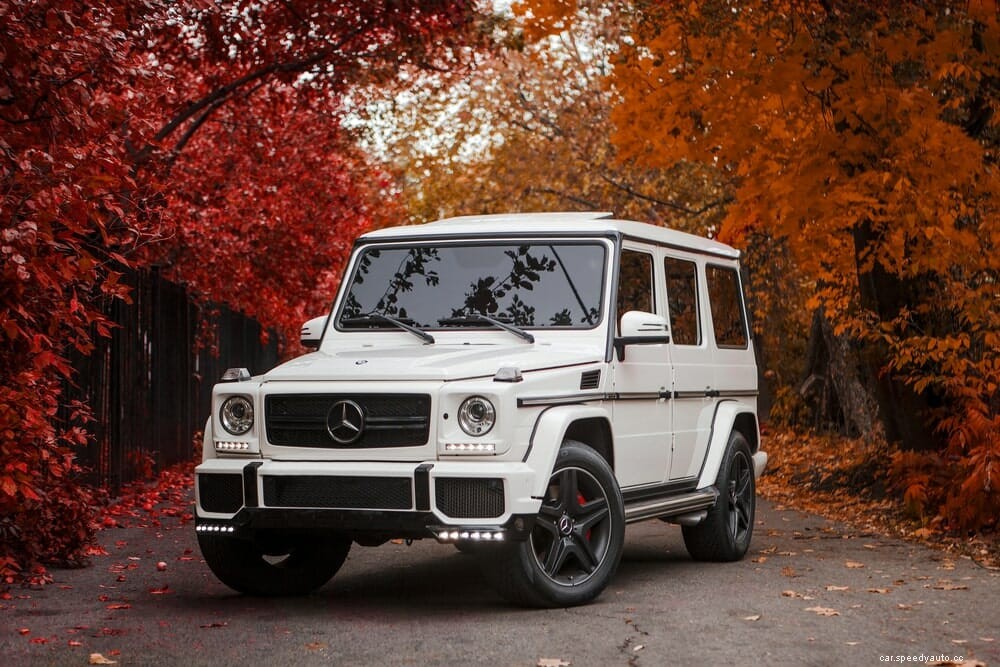
Maintenance is not the only reason why Mercedes cars become so cheap. The type of owner, market saturation, and luxury status play a part as well.
Maintenance is the primary reason why the value of Mercedes cars plummets as soon as they leave the warranty period. The preconception is that Mercedes vehicles are unreliable, which is simply not the case. The production standards and quality are one of the best in the industry, matched only by a few Japanese and German manufacturers.
The frequency of component failure isn’t the problem – it’s what happens when they inevitably do fail. Mercedes maintenance and repairs are the most expensive out of all manufacturers, regardless of class and location.
The cost of parts isn’t always terrifying, especially if you go with non-OEM alternatives.
However, just about every mechanic is going to charge extra just because it’s a Mercedes, while the official dealerships and mechanics shops generally charge over $100 per hour for labor alone.
We’ll go through maintenance costs in more detail later, but this should be enough to illustrate the point and prepare you for the costs that come with owning a used Mercedes.
Wealth and prestige are most easily displayed through a luxury car. While some of us would be more than happy with an F-150 that’s 5-10 years old, those who buy or lease a Mercedes are only interested in having it when it’s brand new.
This explains the sudden value drop that happens after just one year – they’re frequently returned within the first year or two in favor of a new model.
For some, driving an S-Class isn’t enough – it has to be the latest and the best S-Class there is. This leads us to the third point of market saturation.
People generally lease a car for 3-5 years or in case of purchase, keep it even longer, but a Mercedes might exchange two or three owners before its fifth year. Combined with the reservation towards used Mercedes vehicles, the market becomes oversaturated, especially with upper-class models.
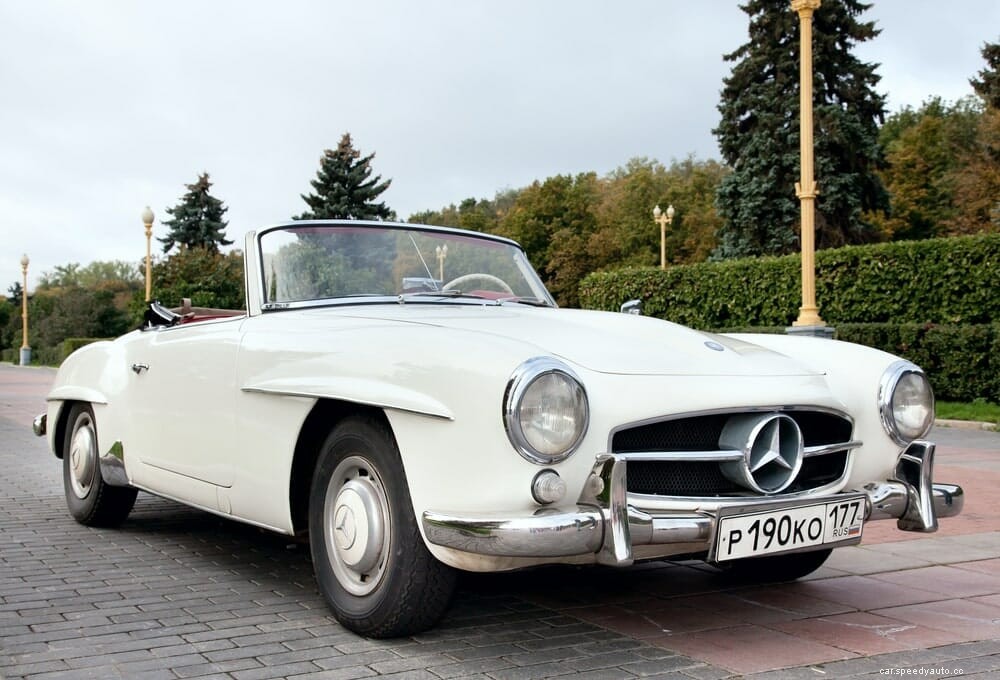
This point is easily overlooked, but it has a significant impact on the value depreciation. As you know, equipment packages and trim levels are what manufacturers make the most money on. From floor mats and spare tires to four-wheel drive and moonroof, the prices are much higher than they should be.
Unlike normal cars, where the spread between trims follows a bell curve, Mercedes models are extremely top-heavy. From C-Class to S-Class, nobody really wants the base models, so they’re packed full of equipment that drives the price up.
Because there are a lot of them on the market with similar high-end, its value is significantly diminished and affects the overall value of the vehicle.
Buying a Mercedes-Benz is not difficult – maintaining it is. That’s the first and most important point to take from this article. However, so many will compare the jacked-up prices, high labor costs, and frequent failures of Mercedes to other vehicles. I’ll try to illustrate why this is the wrong thing to do.
For $25,000 you can get an 8 to 10-year-old S-Class or a 1-year-old Honda Accord. They’re both sedans, albeit in different luxury categories, but let’s see what kind of features you can get with each model.
I will compare only the basic trim features, but keep in mind that the used S-Class will almost certainly not be in base trim.
| Category | Honda Accord | Mercedes S-Class |
| Powertrain | 1.5 liter turbocharged 4-cylinder engine with CVT transmission | 4.7 liter turbocharged V8 engine with 7-speed shiftable automatic |
| Safety | LED headlamp, DRL, 4-Wheel ABS, traction control, emergency braking assist, lane departure warning, pre-collision safety system, airbags | LED headlamp, DRL, collision prevention, attention assist, Distronic cruise control, cross-traffic sensing systems, MBrace, lane-keeping assist, adaptive headlights, airbags, brake drying, pre-collision & post-collision safety systems, 4-Wheel ABS, stability control, cornering lights, electronic brakeforce distribution |
| Entertainment | 160-Watt audio output, 4 speakers, USB, speed-sensitive volume control, AM/FM stereo | 590-Watt audio output, 13 speakers, 2 subwoofers, Burmester premium speakers and stereo system, DVD player, USB, AUX, memory card slot, satellite radio, surround audio, video monitor, AM/FM stereo |
| Comfort & Convenience | Adaptive cruise control, electric power steering, keyless ignition, rearview camera, interior air filter, dual-zone front climate control, 2 power windows, 17-inch tires on painted alloy wheels | Adaptive cruise control, electric speed-proportional power steering, front and rear parking sensors, keyless ignition, rearview with a wide-angle camera, sun sensor, alloy, wood and leather trim, electrochromatic rearview mirror, interior air filter, dual-zone climate control, 4 power windows, power mirrors, 18-inch run-flat tires on alloy wheels |
Some people would argue that comparing an S-Class to a budget Honda Accord is unfair, and that’s what I would say as well. A 10-year-old S-Class outdoes the brand new Accord in every single category, despite costing the same.
With Accord, I tried my best to include every meaningful feature, while I left out more than half of S-Class specs.
This table also shows how easy it is to fall into the Mercedes trap. You see that for $25,000, you can get so much more with the S-Class so you decide to buy it. What people fail to acknowledge is that the S-Class originally cost over $100,000 and the maintenance reflects this price, not the one paid 10 years later.
The more features a car has, the more there is to break. Having ventilated seats, auto-reclining headrests and 4-zone air conditioning are nice when they’re all working, but repairing even the most trivial part can be a $1,000 job.

Based on CarEdge data, the average 10-year cost of maintenance for the Mercedes E-Class is $11,224. The risk of a major problem, which they classify as $500 or more in parts and labor is 31.57% during that time, which is actually 8% better than the average for the segment.
This is a much more reasonable choice, but it’s still double what you’d pay to maintain an Accord in the same period.
The biggest problem with Mercedes vehicles is the air suspension featured on more luxurious models. When it fails, the cost of repairs goes into thousands of dollars. The other issues involve advanced tech features that are also very expensive to repair.
Seeing 20-year old C-Class or E-Class Mercedes isn’t uncommon, but that’s because they were still fairly simplistic in design. It’s less likely for newer models to last as long because of all the expensive components that have to be maintained to keep the car running.
Mercedes and BMW have been in competition for decades and it’s impossible to provide an objective answer. I would give BMW an edge with their 3-Series over C-Class, the 5-Series and E-Class are equal but S-Class definitely wins over the 7-Series BMW.
In terms of SUVs, I favor Mercedes-Benz mainly because I dislike the design of BMW crossovers, but that depends on personal taste.
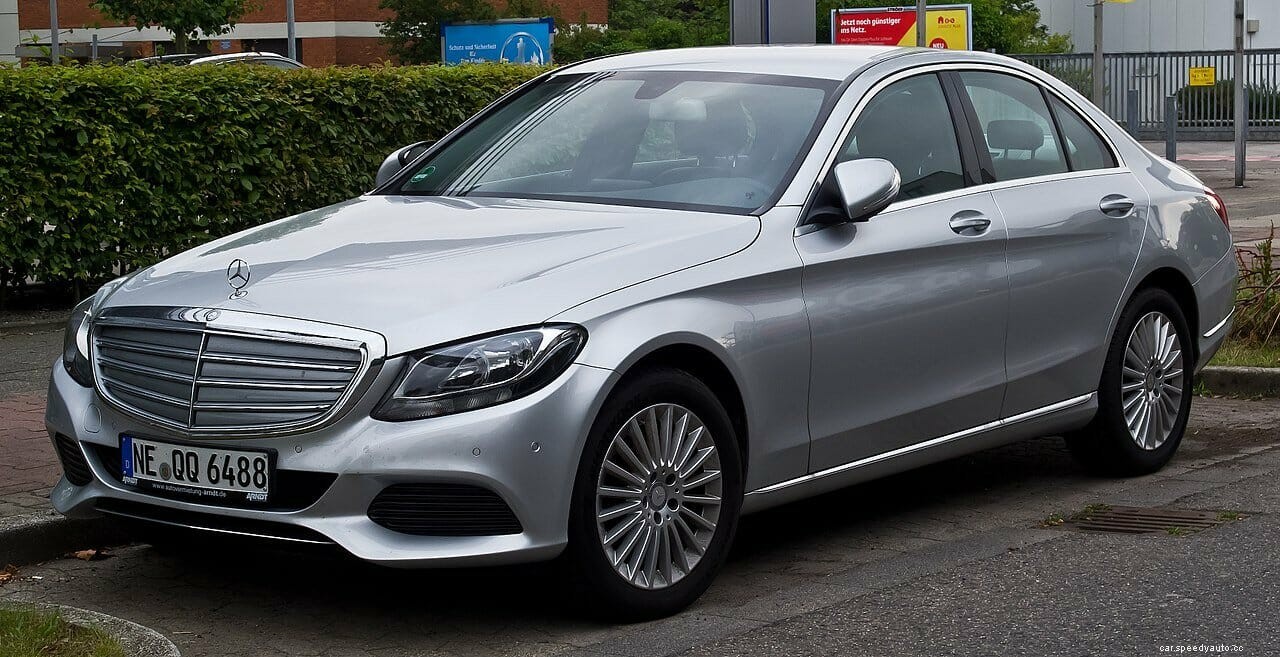
When you’re buying a used Mercedes, you should stay away from AMG models as well as any upper-class vehicles. You don’t want to be the one replacing the timing belt, air suspension, LED headlamps, or any of the surround-vision cameras.
The simpler the car is, the more reliable it will be, which is why 10-15-year-old Mercedes E-Class and C-Class models are still viable to drive today.
Mercedes is not a reliable brand, and in fact, it fares better than most in almost every vehicle class. The reality is that cars aren’t being built like they used to be, but it also has to do with our expectations of what a car needs to do.
The first thing a modern buyer looks at is the high-tech features, sensors, and cameras, but nobody thinks that these sensitive and expensive systems might break down, just like an alternator or a ball bearing.
In contrast, an ’80s E-Class has virtually no equipment and a somewhat fuel-inefficient engine, but that’s exactly why it’s capable of crossing a million, if not millions of miles.
Volkswagen is definitely the most powerful and successful car brand not only in Germany but also in the world. However, Mercedes-Benz has been so influential in the industry and continues to create the most luxurious cars that it’s easy to consider it the best German car brand.
The answer to this question is complicated. The founder of the company was Ettore Bugatti, an Italian-born French. The company itself was established in Molsheim, a German town in eastern France. Today, Bugatti is owned by Volkswagen, but it is still produced in France.
If you asked a mainland-European this question, the answers would be overwhelmingly in favor of German cars. However, in America, I would say that Japanese cars are much better. They’ve had a significant presence on the market for decades, and have established a near-domestic cost of repair and maintenance service.
German vehicles are set back by two factors – the first is the high maintenance cost, but the second is the outsourced manufacturing. A true German-built car is a notch above any other, but if it’s produced in Mexico or even the USA, the production quality does not meet the same standards.
Some would argue otherwise, but I believe that German-built Mercedes and Volkswagen are much better than their global counterparts. I can base the answer on the example of VW, which is considered the most reliable brand in Europe, yet despised in the US for its short lifespan.
I have been in several discussions where people were saying their German cars were falling apart after 150,000 miles, yet all I’ve encountered trek 250,000 miles with ease. It took us a while to realize that these cars did not come out of the same factories, and those that were built in Germany lasted a lot longer.
Would I recommend buying a used Mercedes-Benz? Yes, but it depends on the model.
Avoid S-Class and AMG models at all costs, break down the cost of long-term maintenance, and always consider the original price. There are many Japanese and domestic cars that offer a similar experience at a more affordable price, but everyone should get to experience what Mercedes has to offer at least once.
If you know a good mechanic that charges fairly, then you won’t have any issues with maintaining a Mercedes-Benz.
