
The Nissan Leaf is a budget all-electric car from a Japanese manufacturer that has been around since 2010. The price depreciation is very steep, and Leafs lose as much as 40% of their value in just 2 years.
In this article, we’ll go over the factors that affect the value of Nissan Leaf and figure out its reliability. Like with any electric vehicle, the durability of battery packs is going to be the deciding factor, as the cost of replacement is equivalent to an engine and transmission rebuild.
Electric car purchases are heavily subsidized which is reflected on the used car values, rather than the MSRP. That’s the reason there’s a massive value drop within the first few years of any 0 emissions vehicle.
The second-generation models are at least 5 years old, which approaches the limit of their battery life. Combined with the range deterioration that happens over the years, it’s not uncommon to see older models going for the fraction of the original price.
Nissan Leaf has been introduced in 2010 as a compact 5-door hatchback running exclusively on electric power. Initially, it had a range of only 73 miles on its 24 kWh lithium-ion battery. The range was optimized over the years until the 2016 model with its 30kWh could do 107 miles.
The first generation lasted until 2017, and during the 7-year period, it has sold a total of 303,678 units, 114,827 of which were sold in the United States. From 2011 to 2014 and in 2016, Leaf was the best-selling electric car in the world.
The second generation was released in the October of 2017 for the 2018 model year and made significant improvements to make Leaf more viable. The range was increased to 151-170 miles with the 40kWh battery or 226 miles with the 62 kWh battery in the Leaf Plus or e+.
The electric motor comes in two power configurations: one produces 148 horsepower and 240 lb-ft of torque, while the other delivers 215 horsepower. These figures would be impressive for a conventional hatchback, but Leaf weighs 3,480 – 3,620 pounds, making the power/weight ratio adequate.
The new Leaf sold over 200,000 units globally, with roughly 50,000 making their way in the hands of US drivers. The models are divided into base and PLUS based on the battery size and are available in S, SV, and SL trim levels.
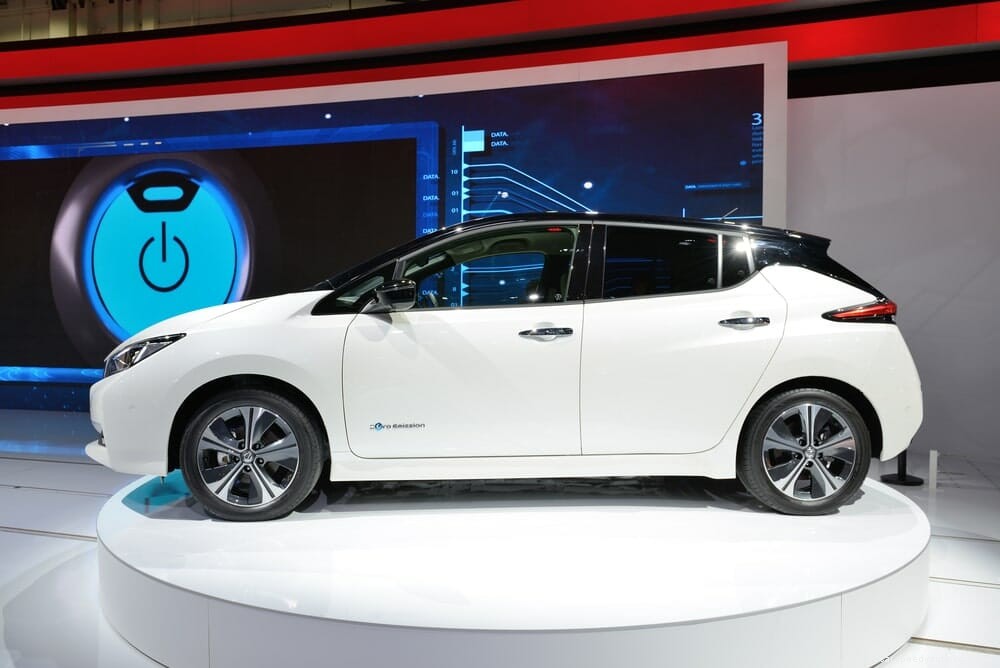
Based on the current offer by Nissan USA the cheapest model – Leaf S with a 40kWh battery has a starting price of $27,400. With the standard battery, Leaf SV costs $28,800 while the Leaf S starts at $31,670.
The PLUS models with the 62kWh are more expensive – $32,400 for the Leaf S PLUS, $34,960 for the Leaf SV PLUS, and $37,400 for the Leaf SL PLUS. The model with the highest starting price of $43,970 is a Leaf SL PLUS with ProPILOT assist, intelligent Around View monitor, leather-appointed seats, LED headlights, and Bose audio system.
Nissan heavily promotes the government incentives and Federal tax credit that have a significant effect on the original price. The base Leaf S can be bought for as little as $19,900, or $24,900 with the PLUS battery pack.
Nissan Leaf prices nosedive from the moment the car leaves the dealership, but there’s a reason why this is the case. The following table shows the current value of used models and how much value they’ve lost over the years.
| Model Year | New Price | Current Price | Remaining Value |
| 2021 | $33,291 | $33,291 | 100% |
| 2020 | $33,236 | $25,559 | 76.9% |
| 2019 | $33,126 | $19,821 | 59.8% |
| 2018 | $33,222 | $17,198 | 51.8% |
| 2017 | $30,892 | $10,969 | 35.5% |
| 2016 | $30,288 | $9,838 | 32.5% |
| 2015 | $29,890 | $7,901 | 26.4% |
| 2014 | $29,975 | $7,628 | 25.4% |
| 2013 | $29,544 | $5,669 | 19,2% |
The data is formed around the average price of a Nissan Leaf model of $33,291, which would get you a Nissan Leaf S PLUS ($32,400) with a few extra features. So why does Nissan Leaf drop 23% of its value in just one year, and 40% in two years?
If we consider the government incentives, that same Nissan Leaf S PLUS can cost you as low as $24,900 to drive out of the dealership. Because everyone is getting these deals, the original price cannot reflect the value of the used models. Compare the post-incentive price to the price of a used 2018 model and the value drop is just 31% over four years, which is excellent.
The period between 2018-2017 marks the transition between 1st generation and 2nd generation Leaf. The limited range of the 1st generation combined with the 5+ years on the battery pack makes these models very unappealing.
Aside from the interior components, all-electric vehicles have only a few systems to maintain – wheels, brakes, suspension, and steering. Let’s take a look at how much these components and services cost for a Nissan Leaf.
| Component/Service | Parts Cost | Labor Cost | Total Cost |
| Tire Rotation | N/A | $25 – $120 | $25 – $120 |
| Tires Set | $350 – $500 | $0 – $200 | $350 – $700 |
| Brake Pads | $35 – $150 | $80 – $200 | $115 – $350 |
| Brake Calipers | $300 – $500 | $150 – $300 | $450 – $800 |
| Brake Rotors | $200 – $400 | $200 – $350 | $400 – $750 |
| Brake Master Cylinder | $100 – $300 | $100 – $300 | $200 – $600 |
| Pair of Shocks | $300 – $400 | $100 – $150 | $400 – $550 |
| Strut Bearing | $330 – $380 | $100 – $150 | $430 – $530 |
The maintenance costs are fairly reasonable and equal to conventional hatchbacks. The tires are not particularly expensive as Leaf runs on 16″ or 17″ rims, and the rest of the components last for tens of thousands of miles before they need replacing.
The elephant in the room is the cost of new battery packs, and as we’re talking about used Leaf models, we have to consider the replacement costs.
The good thing is that new Leaf models include an 8-year or 100,000-mile warranty on the battery pack, which means that low-mileage used vehicles have a lot of useful life left in them.

The most significant maintenance cost of owning an electric vehicle is battery replacement. I often equate battery swap with engine swap or rebuild because of just how expensive it gets.
The small 24kWh first-generation batteries cost at least $5,000 to replace at a dealership, while the new 62kWh packs cost over $10,000. Refurbishing old batteries is a time-consuming job that is often not worth considering, but there are a few ways to get cheaper batteries.
There are companies that pull batteries out of wrecked cars, test them and then use them as replacement packs. They even offer to retrofit 40kWh or 62kWh into first-generation Leaf, drastically improving its range.
The cost of a 24kWh pack is $2,500 – $3,500 and depends on the quality of the batteries. Larger 40kWh packs can cost up to $4,500, while the largest 62kWh packs go for $9,500 because they’re generally in good condition.
Nissan Leaf is most commonly found with one of three battery configurations – 24, 40, and 62 kWh. I’ll break down the charging times in the following table, and then we’ll review the running costs.
| Battery Size | Level 1 Charging | Level 2 Charging | Level 3 Charging |
| 24kWh | 10-12 hours | 1-3 hours | <30 minutes |
| 40kWh | 15-19 hours | 2-6 hours | 30 minutes |
| 62kWh | 25-30 hours | 3-9 hours | <1 hour |
Level 1 battery chargers plug into the wall outlet and deliver just 120 volts, which is why they’re the slowest recharging method.
Level 2 is a proper charging station that can deliver the full 220/240 volts delivered to your home, significantly improving recharge times.
Level 3 is reserved for DC fast chargers that can be installed for domestic use but are more commonly found on public parking spots. They deliver a massive current that can charge the most compatible electric vehicles in under an hour.
The cost of charging Nissan Leaf depends on your location and the size of the battery pack. One kWh of electricity costs between $0.10 and $0.20, so a full 40kWh charge will cost you only $4 – $8 and provide 150miles of range. Considering that $6.6 gets you just 2 gallons of gasoline, Leaf beats even the best hybrids in terms of cost-per-mile.
To find an answer to this question, you’ll have to do a lot of math and figure out if going with a used electric vehicle is the right move. Take into account the price of insurance, electricity, replacement batteries, and the quality of the car you’re getting for the money.
Even though the first-generation models are ridiculously expensive, I’m not sure if they’re worth considering. You can find a 2015 model for $7,500, but as it’s already 6-7 years old, the batteries won’t keep the full charge which is low, to begin with.
Replacing the 24kWh batteries will cost at least $5,000, and you’ll get the 70-85 mile range, but if that’s enough for you, driving an electric car for only $13,000 is not so bad.
The second-generation models are better options all things considered. The mileage is significantly better and the 2018 model is just halfway through its 8-year battery warranty. The 2019 model averages around $20,000, which is at least $5,000 less than a new model.
With low mileage, even a used second-generation model can be an excellent purchase.
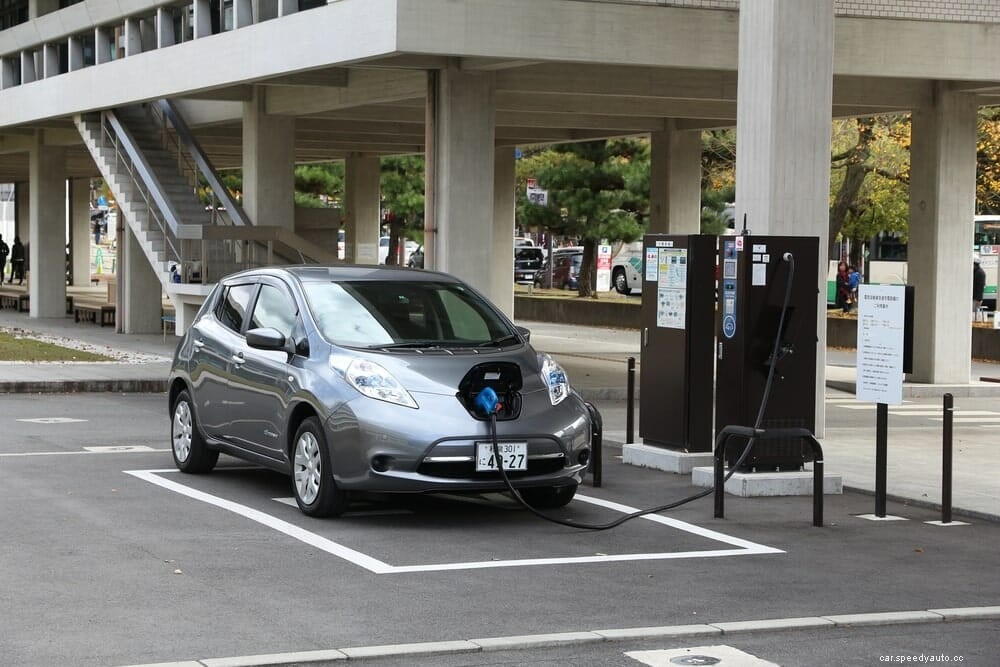
The first-generation Nissan Leaf has had issues with battery deterioration. They would lose range over time and fail completely after only 6-7 years. The second generation shouldn’t have these problems as it comes with an 8-year or 100,000-mile warranty on the battery pack.
The lifespan is dictated by the battery life, and the second generation should last roughly 100,000 miles. All but the latest models from the first generation will need replacement battery packs to stay on the road.
We have a full comparison between Leaf and Prius on our website but the short answer is that Toyota Prius is a better option based on a number of factors including resale value, lower price, and durability.
Tesla uses proprietary charging connectors which means that no other electric vehicle can charge at their stations, including the Nissan Leaf.
The second generation has only been around since 2018, so it’s unlikely that any of the models are pushing high mileage of roughly 80,000 miles. For the first-generation Leaf, anything beyond 50,000 miles could be considered high mileage because age is a contributing factor to battery deterioration.
If you’re buying a used Leaf, you’ll have to change the batteries only once, but the cost can be significant. The first generation models had issues with battery lifespan, which can last between 6 to 8 years. As for the second generation, the improvements in design increase the durability to at least 8 years.
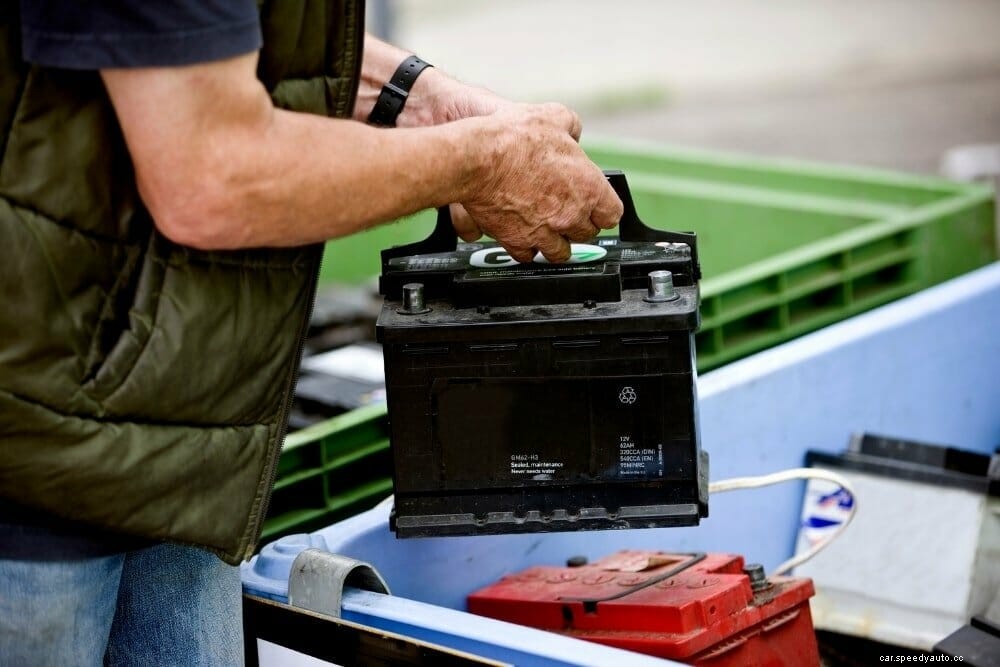
The biggest drawback of the older Nissan Leaf models is the limited range. There are companies that offer retrofitting of newer 40kWh batteries into 1st generation models, significantly improving the maximum range. However, the retrofitting cost is expensive at $4,500 – $5,500.
When you put everything down on paper, Nissan Leaf offers a lot of value as an electric vehicle. The starting price after incentives is excellent, the range of 151 – 226 miles is more than enough for work commutes, and the maintenance is fairly cheap.
The value depreciation isn’t as drastic as it seems, and the fuel savings more than compensate for it.
Nissan Leaf will be discontinued in 2025, 7-8 years into the second-generation production run and 14 years since the original model has been released. From a buyer’s standpoint, this is not a cause for concern, as there’s going to be enough models produced to saturate the spare-parts market.
Nissan leaf can reach a top speed of 90 miles per hour and accelerates from 0 to 60 in 7.9 seconds.
Nissan Leaf is a solid electric car that has a lot to offer for the cost. Investing in a new model is not a bad idea given the massive incentives, but if you want to get a used model instead, I would advise limiting your search to the 2nd generation models, easily identifiable by their 40kWh or 62kWh battery packs.
Mileage isn’t the only factor that affects the battery pack, as heat and cold could affect the lifespan as well. You can find a lot of used Leaf models at official Nissan dealerships, which will make things a lot easier.
Check whether the battery warranty is transferable and whether it can be extended if you plan on keeping the car for a longer period of time. A bumper-to-bumper warranty isn’t necessary given the low number of parts that can fail, but if it’s reasonably priced, it could come in handy.
