
The Honda Odyssey is one of the best minivans ever made, a claim that can be backed by high sales figures and stellar user ratings. Minivans have fallen out of favor in the last few years with large SUVs becoming increasingly more popular.
However, the benefits of the minivan are still there – affordable price, safety, and sufficient cargo room even at maximum occupancy.
The Odyssey can last up to 20 years. The engine is capable of crossing more than 300,000 miles, but there have been reports of transmission failure between 150,000 and 200,000, although a lot of drivers did not experience problems with the powertrain.
To form an idea of how reliable the Honda Odyssey really is, we need to explore different consumer and expert reports. Then we can take a look at the most common problems and general maintenance and repair costs to establish the true cost of ownership.
J.D. Power is an excellent source that takes into account thousands of user ratings. The reliability rating is fairly high for 2020-2019 at 74-77 out of 100. The fourth-generation Odyssey scores even better, with a lot of years close to or above 80/100.
RepairPal gives the Honda’s minivan an above-average rating of 3.5/5. The average frequency and severity of issues are comparable to the other vehicles in the segment, but the cost of repairs is slightly cheaper.
An impressive rating of 8.7/10 is given by the iSeeCars website. Their statistic shows us that 2.9% of all the Odysseys cross more than 200,000 miles, which is significantly more than the average 1.6% for the minivan segment.
Consumer ratings on Cars.com for the fifth-generation Odyssey are very positive, with the lowest score of 4.6/5. The fourth generation impresses just as much with consistent 4.6-4.7 ratings through the years.
The problem with the transmission in the second-generation Odysseys (1999-2004) is well known, but as these minivans are now at least 18 years old, their reliability issues are not as relevant today.
The number of user complaints about the 2011-2022 models on CarComplaints is not high. The fourth generation received a total of 510 complaints during the 7-year production, with the 2014 model receiving the most at 130.
The 2022 model has received 3 complaints, while the 2018-2021 years got a total of 76 complaints, an average of 25 per year.
| Model Year | Main Complaints |
| 2011 | Low Battery Indication Paint Peeling on the Roof Suspension Creeking |
| 2012 | Paint Peeling Vibrations & Rough Riding Excessive Oil Consumption |
| 2013 | Shaking During Braking Paint Peeling Hesitant Acceleration |
| 2014 | Clunking Noise & Jerking Hesitation and Stalling Engine Misfire |
| 2015 | Hard Shifting & Transmission Noise ABS Light Issue Sliding Door Noise |
| 2016 | Uncomfortable Seats Failure To Shift Engine Light On |
| 2017 | High Pitched Whining Noise Stutters When Accelerating |
| 2018 | Transmission Failure Water Leak |
| 2019 | Entertainment System Failure Emission Light Turning On Automatically Shifts Into Park |
| 2020 | Entertainment System Failure Disconnected Wire Harness Slow Brake Response |
Whether you’re buying a brand new Odyssey or a used one, knowing how the value drops over time is important if you want to get the best deal possible.
| Model Year | Original Price | Current Price | Value Lost |
| 2021 | $38,631 | $38,631 | 100% |
| 2020 | $38,231 | $30,394 | 20.5% |
| 2019 | $37,432 | $27,639 | 26.1% |
| 2018 | $36,731 | $24,839 | 32.4% |
| 2017 | $35,792 | $21,395 | 40.2% |
| 2016 | $35,687 | $18,437 | 48.3% |
| 2015 | $35,209 | $15,776 | 55.2% |
| 2014 | $35,065 | $12,912 | 63.2% |
| 2013 | $34,790 | $11,205 | 67.8% |
| 2012 | $34,551 | $9,953 | 71.2% |
| 2011 | $34,113 | $9,091 | 73.4% |
The Honda Odyssey has one of the healthiest depreciation curves – the difference between a brand new and a used model is slightly higher 20.5%, but all the subsequent years follow a linear 6-8% decrease in value.
This is an indicator that the Odyssey is consistently well-produced and that its userbase is not interested in leasing it in for a couple of years, but instead holds on to their minivan for longer.
The data hasn’t been adjusted for 2022 yet, but the best-used Odysseys are those with under 10,000 miles on the clock, which would be the 2021 models. You can expect a 10-20% decrease in price and virtually no drawbacks as the vehicle is still in warranty.
Because there are no lemon years in the fifth and fourth generation, you could safely pick any model in the last 10 years. Still, I would recommend models newer than 2014 as that marks the beginning of the facelift, or even 2016+ if you can afford it.
In terms of maintenance and repairs, the Odyssey is exactly in the middle of the minivan segment. CarEdge’s extremely rigorous maintenance schedule puts the 10-year service figure at $7,379 and estimates a 21.58% chance of a major issue that will cost more than $500 to repair.
Honda has created a system of service reminders that include specific fluid and component changes and we can use this data to create a chart of maintenance costs.
| Service Type | Maintenance Tasks | Labor & Parts Cost |
| A | Replace Engine Oil | $50 – $200 |
| B | Replace Engine Oil & Filter Detailed Inspection |
$100 – $250 $150 – $250 |
| 1 | Rotate tires |
$100 – $250 |
| 2 | Replace Air Cleaner Replace Dust Filter Inspect Drive Belt |
$30 – $100 $30 – $60 $20 – $50 |
| 3 | Replace Transmission Fluid |
$150 – $300 |
| 4 | Replace Spark Plugs Replace Timing Belt Inspect Water Pump Inspect Valve Clearance |
$200 – $300 $700 – $1,100 $20 – $50 $50 – $100 |
| 5 | Replace Engine Coolant |
$250 – $400 |

Considering how expensive insurance can get it’s important to know the average cost and see whether it fits your budget. The Honda Odyssey is marginally more expensive to insure than other minivans with an average cost of $1,580 annually or $132 monthly. The cost scales with the trim level, from $1,474 in the LX trim up to $1,680 in the Elite trim.
| Model Year | Age 20 | Age 30 | Age 40 | Age 50 |
| 2022 | $3,150 | $1,664 | $1,580 | $1,438 |
| 2021 | $2,964 | $1,562 | $1,486 | $1,354 |
| 2020 | $2,916 | $1,530 | $1,458 | $1,330 |
| 2019 | $2,626 | $1,384 | $1,316 | $1,200 |
| 2018 | $2,552 | $1,344 | $1,278 | $1,166 |
| 2017 | $2,460 | $1,292 | $1,126 | $1,126 |
| 2016 | $2,130 | $1,132 | $1,076 | $982 |
| 2015 | $2,286 | $1,200 | $1,148 | $1,048 |
| 2014 | $2,232 | $1,172 | $1,124 | $1,026 |
| 2013 | $2,092 | $1,098 | $1,056 | $964 |
The Odyssey has been recalled a total of 53 times since 1995. This number isn’t particularly high when you consider that some problems are only discovered years after release and affect multiple model years at the same time. Still, the recall data provides a view into what went wrong during manufacture and what to look out for when buying an Odyssey.
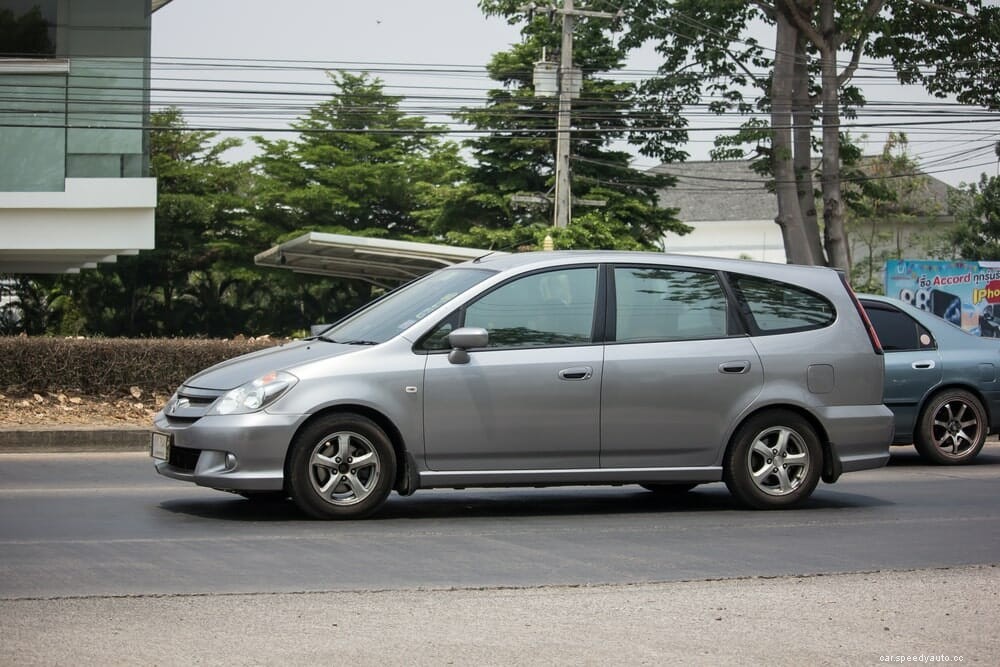
The Honda Odyssey appeared during the period of a severe financial crisis in Japan. At the time, the auto manufacturing regulations were very strict and forced the manufacturers to use existing production facilities and adhere to the dimension restrictions.
The resulting compact MPV was well received in Japan, but saw limited success in the US, with roughly 20,000 Odysseys sold annually for a total of 94,000. The inline-4 engine was considered the norm in Japan, but the American audience found its power to be disappointing.
Honda decided to move the manufacture of the future Odyssey models to a new facility in Lincoln, Alabama, where it’s still made to this day.
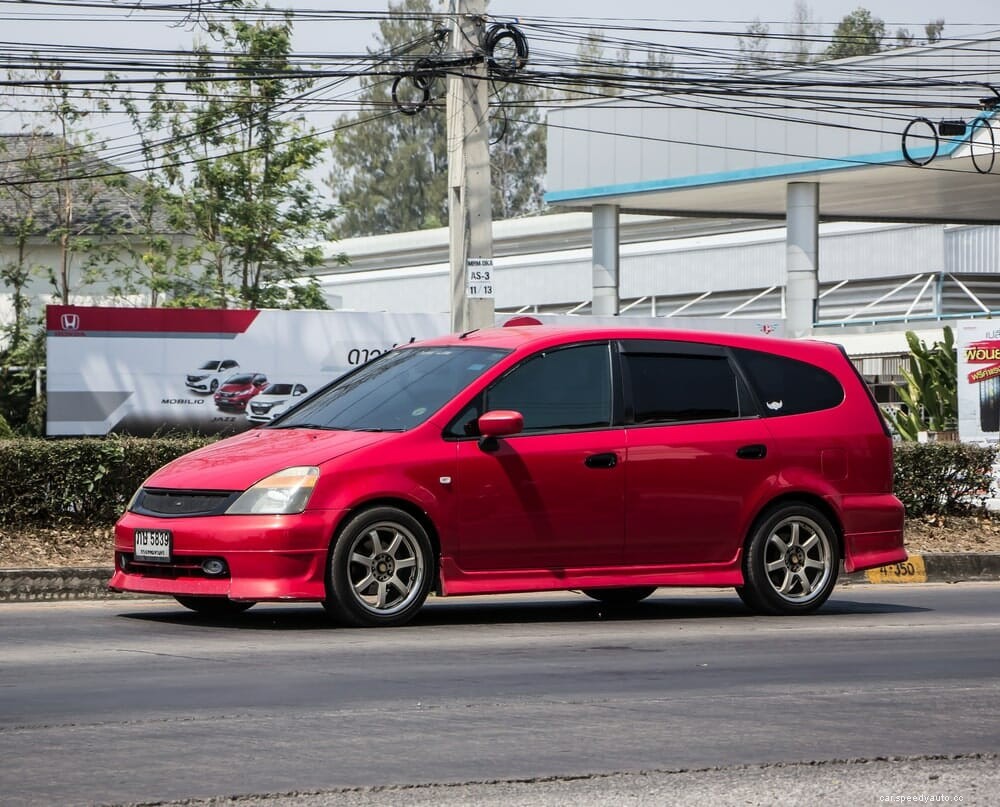
For the second generation, Honda adapted to the American market and created an MPV in the style of the Chryslers minivans with sliding doors. Unlike other manufacturers, Honda provided two sliding doors as standard equipment, as well as fold-into-floor rear seats that later became the norm with all minivan manufacturers.
Instead of an inline-4, the second-generation Odyssey used a 3.5L V6 which was praised for its power output. The 4-speed automatic transmission was the weak point, resulting in a class-action lawsuit that extended the warranty period. The 5-speed automatic introduced with the 2002 facelift didn’t fare any better, suffering from third gear clutch problems.
In spite of these issues, Odyssey created a name for itself in the US with a total of 800,000 units sold.
The design of the third generation was significantly improved and the Odyssey grew in width and weight but retained the same interior volume as the previous generation. It came with side-curtain airbags, more storage compartments, and electronic stability control.
A lot of improvements were made to increase convenience and comfort, such as integrated sunshades, roll-down windows in the second row, 60/40 split-bench in the rear. The seats could now be folded with headrests in place and a “Plus-One” jump seat was offered to increase the seating capacity to eight.
Towards the end of its production in 2008, the Odyssey received a facelift with improvements to the front and rear lighting group, grille, and dashboard. Newer tech such as AUX jack, Bluetooth, and the backup camera became available. In total, 869,000 models were sold, with record sales of 177,919 units in 2006. The success of the third generation would not be replicated by future models.
The fourth generation is slightly longer and wider than the previous and was built with more high-strength steel to improve safety. The 2011 model received a full five-star rating from NHTSA, with the rollover being the only 4-star category.
The Insurance Institute for Highway Safety (IIHS) discovered that the Odyssey has the lowest driver death rate of 0 per million registered years. Starting with the 2013 model, all subsequent Odysseys came with a rear-view backup camera.
A refined 3.5L V6 was still used as the only engine option with a 5-speed automatic transmission. A 6-speed automatic was available from 2011 to 2013 with Touring models, while the 2014 facelift brought it to every trim.
The facelift improved several aspects of the Odyssey, starting with safety. Forward collision warning, lane departure warning, and blind-spot monitoring significantly reduced the chance of an accident. As for the visual changes, the minivan received an aluminum hood and front fenders, a new grille and front fascia, as well as integrated fog lights.
The infotainment system was made compatible with Apple, USB, and Bluetooth devices. Honda sold 833,000 fourth-generation Odysseys over the span of 7 years.
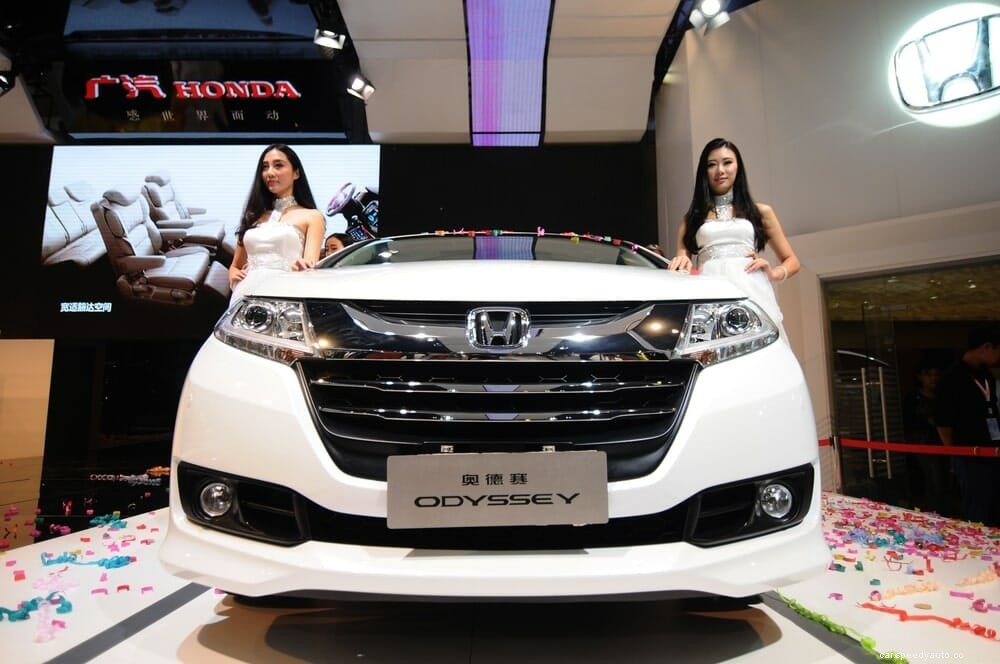
The current Odyssey model has been around for 4 years and has received a facelift for the current year. Honda struck gold with their 3.5L V6 as it’s still in use with some revisions and increased power. For the non Touring and Elite models of 2018 and 2019, Honda used a 9-speed automatic transmission. Starting with 2020, all models come equipped with a 10-speed automatic gearbox.
As you’d expect from a modern Honda, it comes equipped with a myriad of safety features that are designed to both prevent accidents, and keep the occupants protected during an impact. The IIHS gave the Odyssey top scores in all but the headlight category and made it their Top Safety Pick+ for 2018.
The sales of the current generation have been affected by the pandemic and the chip shortage, but it still reached 365 thousand customers.
With the transmission problems fixed, the fourth and fifth-generation Honda Odysseys can cross a lot of miles. If you’re buying a used Odyssey, I would say 150,000 miles is high, but if you already own one and you’ve maintained it properly, you can cross more than 250,000 miles without major issues.
I don’t think there are any special model years in the Odyssey’s production as it was consistently made for the past 10 years. The 2016 model has been heavily praised for its reliability and has received high ratings from authority websites.
The Honda Odyssey has average reliability ratings, which is not a bad thing. You can rely on parts to last for as long as they’re rated for and plan the maintenance accordingly. Considering that the are no surprise failures, I consider the Odyssey’s reliability to be above average.
The 1999-2004 era was definitely the most problematic, with total transmission failure after only 100,000 miles. The more recent models have been consistently built, and while there were some recalls made, the problems should be resolved. The 2013 model was recalled for power train and engine issues which were the most concerning problems.
It may be pushing it, but it’s not unheard of for an Odyssey to cross 300,000 miles. The V6 engine is very reliable and as long as the transmission endures it, Odyssey will go beyond 300,000 miles with regular maintenance and minor repairs.
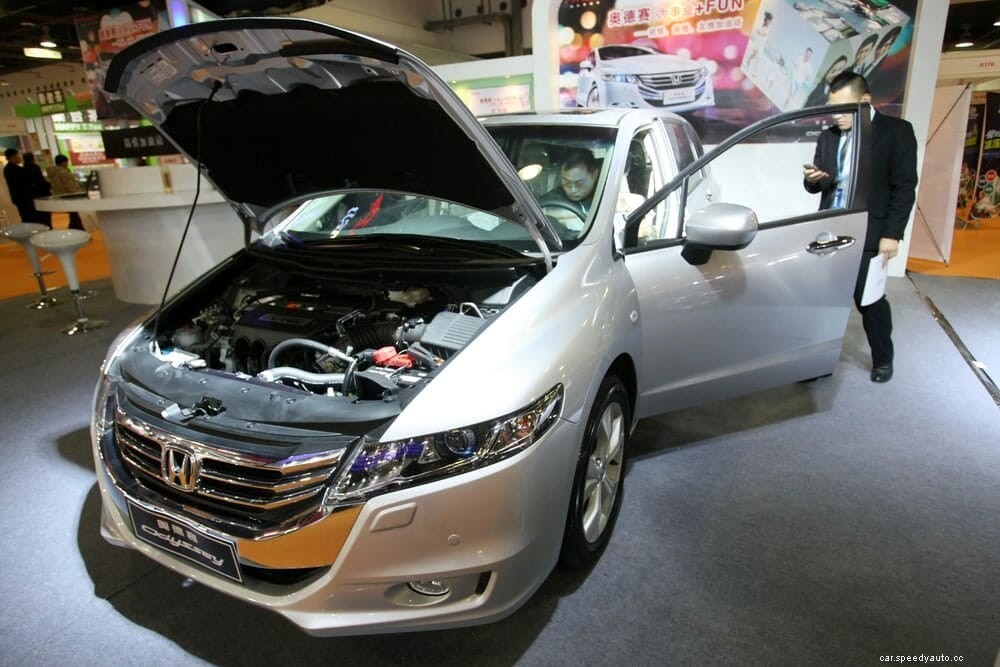
The Honda Odyssey is the longest-lasting minivan on the roads, with 2.6% of all registered models still in use after 200,000 miles. The percentage might seem low, but it’s significantly better than the average for the minivan segment.
The second generation built up a bad reputation for its failing transmissions, so avoid the 1999-2004/2005 models, especially the 2002 model year.
The Honda Odyssey is one of the best minivans you can buy in 2022. Not only is it reasonably priced, but it’s also reliable, has a powerful V6, and can cross hundreds of thousands of miles with ease. When you put it all together, the fact that it’s the longest-lasting minivan shouldn’t be surprising.
