
How many times have you seen a car on the side of the road parked with smoke billowing from the engine? Though there could be many different reasons, it is often caused by an issue with the cooling system. To make sure that the cooling system works perfectly, we use a substance called antifreeze.
Even though antifreeze contains a lot of benefits, it is not favorable to the environment. As a responsible vehicle owner, you need to know how to dispose of antifreeze the right way.
To understand the need for disposing of antifreeze the right way, you first need to know what antifreeze is. And why do you need antifreeze in your car?
Antifreeze is a liquid that is commonly used these days in cars as a coolant so the engine or other components don’t get heated.
In cold weather, it keeps the engine warm enough so it can function properly. This is the main function of antifreeze or coolant. It makes sure that your engine is running at the optimum temperature, so it can function efficiently.
The coolant these days is half water and half glycol. Glycol is the antifreeze component of the mixture. This prevents the liquid from turning into ice in harsh winter conditions.
The glycol also prevents the coolant from reaching its boiling point in extreme heat. Since water has a low boiling point, in front of extreme engine temperatures, it could boil.
Apart from these, antifreeze acts as a lubricant, prevents rust, and cleans your cooling system. So it is evident that antifreeze is a crucial component in your car.
Even though water might do a better job cooling the engine, it is not an ideal coolant. The fact that it could boil or freeze when the temperatures are harsh, and the fact that it could cause corrosion, makes it a bad choice for a coolant.
But when you use antifreeze mixed with water, it makes the perfect coolant. It eliminates the negative impacts that water could cause, while still providing the cooling abilities of water.
There are 2 main types of antifreeze.
Until recent times, this was the most common chemical coolant used. This is a very toxic chemical substance that is dangerous to crops, humans, and animals. Thus, it can cause fatal consequences. Ethylene glycol has a sweet odor and taste thus being very dangerous to the likes of children and animals
This is the type of antifreeze that is currently being used in most vehicles. The performance difference between the two isn’t noticeable but the propylene glycol is much less toxic.
This does not mean that this is completely harmless. In small amounts, it will not cause major damage. But unless you know how to dispose of antifreeze, it is still a threat.
To get to the part where you are required to know how to dispose of antifreeze, first you need to know how to add antifreeze.
Failing to add antifreeze the right way could also be a hazard. It could cause your antifreeze to leak out of the cooling system. This will damage the engine and will cause harm to the environment.
Car manufacturers recommend that you change the engine coolant of your vehicle every 50,000 miles or so. Because antifreeze starts losing its effectiveness as it ages, the chemical in the antifreeze start to break down and the coolant does not do its job.
While this may not be a frequent job, some people do this job by themselves at home.
First, you should make sure your vehicle has totally cooled off give it like 30 minutes after parking. So that the radiator isn’t hot to touch.
Then, open the radiator cap and check if the rubber sealing is in good condition. If it is, continue by pouring the mixture up to the neck of the radiator.
Put the lid back on and make sure it is secure, then add the coolant to the cold level in the recovery tank.
In addition to the above, you should check the condition of the fluid. This will give you an idea of whether to top it off or opt for a complete coolant flush.
Coolants are made of different colors these days. So there is no specific color for the coolant. Although, it should not look brown or dirty upon inspection. If so, it indicates that you need a coolant flush.
If the coolant is in bad condition, you should have the system flushed. The most common interval for flushing the coolant is every two to three years or every 24,000 miles to 36,000 miles.
When your vehicle goes longer than that without fresh coolant there is a good chance that your engine could get damaged. So you should take care of your coolant so your engine can keep its cool.
After checking your coolant and if it is in bad condition, you should drain it with the help of a mechanic or by yourself then you should put coolant up until the cold fill level of the tank and remember you should do this when your car is not too hot or too cold.
When you have put enough coolant so it reaches the cold fill level, you can put the radiator cap back on and then secure it tightly. And also you should make sure you don’t spill any of the coolants, if you do clean it up immediately.
Once you drain your coolant, you’d end up with a container of dirty coolant. This is the toxic material that you should be aware of. And now you should know, how to dispose of antifreeze. Here is a step-by-step guide.
First, you should test antifreeze levels, park your vehicle on a level surface, let the engine cool down. This allows you to determine for yourself whether the coolant is dirty or corrosive. You should check the quantity and the quality of the fluid.
Checking your antifreeze level is a simple process that usually only takes a few minutes. Most vehicles have a coolant return tank or overflow tank, making it easier and safer to check the coolant level. Inside is a bright liquid for easy identification.
The reservoir is translucent, so there is no need to open the lid to complete the antifreeze test. This allows you to check the level of antifreeze using a two-stage pressure gauge on the side of the tank. One indicates the level of safety when the engine is hot, and the other when the engine is cold.
Notice the color of the liquid. This is the easiest way to identify whether your car needs a coolant flush or not.
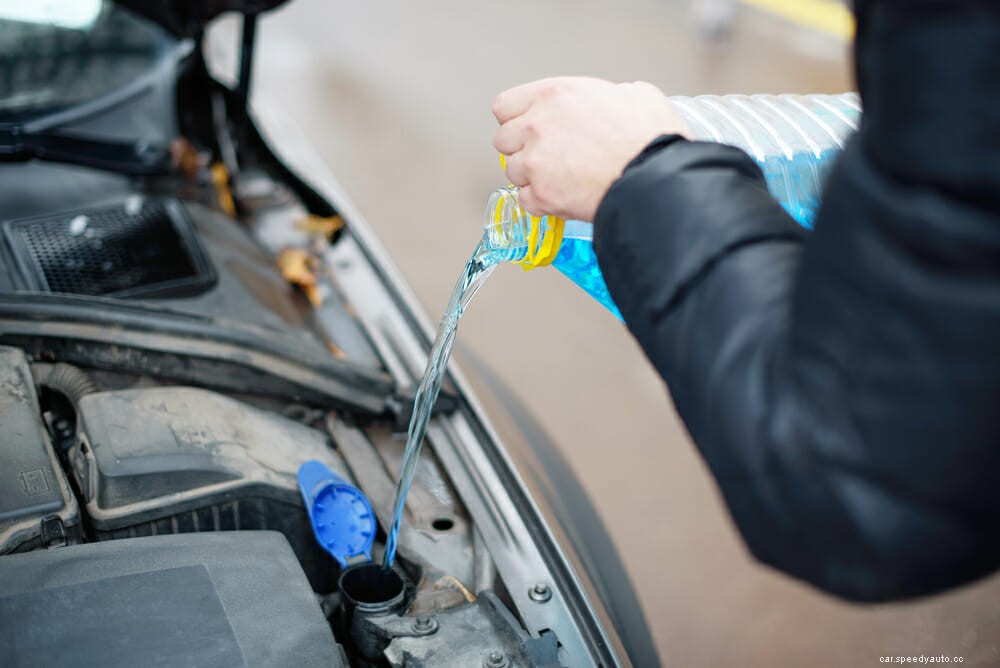
Assuming you need to flush your antifreeze, you first need to determine where you can dispose of it. Otherwise, you’d end up with a bucket full of hazardous chemicals and no way to dispose of them.
If you think that the antifreeze is contaminated and should be changed, try contacting a hazardous waste disposal center or a recycling center. Antifreeze that is mixed with oil and gas can’t be recycled thus it should be taken to a chemical disposal center.
If your antifreeze is just fine and you want to change it, you should try dialing up your local recycling center. Ask if they have means to store it and also the best way to transport it there. Because some recycling centers lack the equipment to store antifreeze properly thus you need to call and check.
Recycling centers without improper storage could cause antifreeze leaks. Under any circumstances do not flush it down your toilet or put it down the drain
Drain the engine coolant using suitable equipment. This includes personal protective equipment such as gloves, goggles, or a full face mask.
Place a drain pan under the valve before opening the valve. Only screw in after all the antifreeze has drained, then feel free to pour the old antifreeze into a re-sealable plastic container and make sure the lid is securely closed.
Once you have it sealed in a plastic air-tight container, you should place it on the floor of your vehicle. Preferably, in the trunk or the back seat. You should also remember to label the container with the date and the contaminants if there are any. And you should avoid spillings at all times.
If the ground soaks up a bit of coolant, it can take several weeks for it to break down. And any chemical particles in the air will take up to 10 days to break down.
When it is in the soil, and if any plant absorbs the antifreeze through its roots, it will kill them or even cause toxicity to the fruits and vegetables of the plant. This can be lethal to humans and animals when this product is consumed.
If you are thinking of pouring down the antifreeze down your drain, you should know that sometimes federal laws in your area might be illegal. Since Glycol is highly attractive to animals, there is a high chance that an animal would stumble over it and it can be fatal for the animal.
Spills are possible and you need to know how to deal with them. Spilled antifreeze should be quickly removed to the ground. The longer you leave it on, the more the ground will soak up the antifreeze.
Baking soda is suitable for small amounts of liquid, while sand is suitable for hard surfaces. Cat litter is highly absorbent and great for cleaning up large puddles. However, because the litter grains are large, they may need to be mixed with sand or other fine material to absorb as much coolant as possible.
Remove dust, sand, or other materials, place the coolant in a protective bag and cover the surface with a paper towel. Leave for a few hours to collect the last leftovers and place them in an airtight trash bag.
They can be left with normal waste, but they should be stored in a safe place out of the reach of children and animals. And also liquid soap can be used to get rid of the stain left by the coolant.
Although Propylene glycol is also found in some foods and cosmetics. It is not considered harmful in small amounts according to the Toxic Substances and Disease Register.
On the other hand, ethylene glycol and methanol are harmful and toxic if ingested. A small amount of antifreeze is enough to poison the body and cause life-threatening problems. There are various explanations for why a person might consume antifreeze.
One reason is self-harm. However, it is also possible to accidentally drink antifreeze. This can happen when antifreeze is poured into a glass or other beverage container and mistaken for a drink. Given these possibilities, it is important to recognize the symptoms of antifreeze poisoning.
Antifreeze poisoning can develop gradually over several hours, so you may not have any symptoms immediately after ingesting the chemical. If you feel comfortable, you can dismiss the incident as a close incident. But the situation is not so simple.
When the body absorbs or metabolizes antifreeze, the chemical is converted into other toxic substances such as glycolaldehyde, glycolic acid, glyoxylic acid, acetone, formaldehyde. The body slowly begins to react to the antifreeze in the system.
The time it takes for the first symptoms to appear varies on the dosage. The earliest symptoms may appear 30 minutes to 12 hours after ingestion, and the most severe symptoms begin about 12 hours after ingestion.
Early symptoms of antifreeze poisoning may include feeling drunk. Other early symptoms include headache, fatigue, incoordination, dizziness, slurred speech, nausea, and vomiting.
As the body continues to break down antifreeze over the next few hours, the chemical can affect the functioning of the kidneys, lungs, brain, and nerves.
Organ damage can occur 24-72 hours after ingestion. You could also develop rapid breathing, convulsions, inability to urinate, and rapid heartbeat. Also, there is a good chance that you could lose consciousness and fall into a state of coma.
If you suspect antifreeze poisoning, you need to get help immediately.
We already looked at how antifreeze could affect humans if ingested. But why shouldn’t you throw it down the drain, or flush it in the toilet? Isn’t that an easy answer to how to dispose of antifreeze?
This will be true if humans are the only living beings on this earth. Even though the antifreeze might be out of sight if you dispose of it using the above methods, it will not vanish. Eventually, it will reach a place where it could threaten the ecosystem.
If animals consume it, they will have the same symptoms and effects as humans. Meaning, they will die.
The same is seen with plants. If the chemicals are absorbed by the soil, it is just a matter of time before it is absorbed into the plants in the area. This will definitely kill the plant. Even if it survives, the poison will remain in its system and will be present in the fruits it produces.
Maybe you could just throw it in a bucket and forget about it. If it is out of reach for any living beings, it might not cause a problem. But the substance will evaporate. This means the air around the place you stored the chemical will be contaminated. So that doesn’t prove to be a valid solution either.
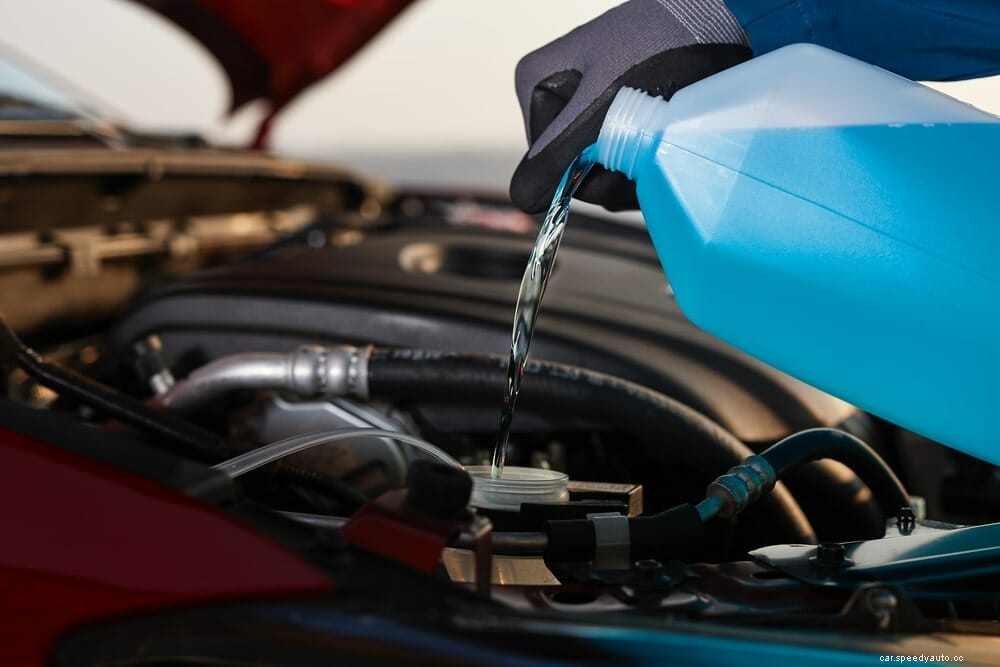
Here are some common questions regarding the methods of disposing of antifreeze.
There is no proper way in which you can recycle antifreeze by yourself. But some automotive shops have special equipment, which they use to recycle antifreeze. The way they work is pretty simple. First, they remove the heavier metal particles from the coolant.
If oil has found its way into the coolant, it will be removed as well. Then they add chemicals to prevent the ethylene glycol from breaking down. Ethylene glycol in itself is not harmful to the environment.
Getting rid of antifreeze from a hard non-absorbent surface like concrete can be tricky. You certainly do not want to get it all over you. To effectively get rid of it, you need to use something to absorb the antifreeze. Cat litter is great at absorbing liquids. But if you do not have it, newspaper or powder will also work.
Once you removed the material that you used to absorb the coolant, you need to get rid of the stain. Soap water should do the trick. Use soap water and rinse the stain of coolant from the area of the spill.
You might have heard that Walmart takes used antifreeze. But is it true?
Some Walmarts do offer this service. But the majority does not. So it is best if you call ahead before you haul your used antifreeze over to Walmart.
There is no specific company that takes antifreeze. So, you need to do your research and find someone who takes antifreeze near you. But usually, an auto shop that deals with oil changes and coolant replacements, has the machinery to dispose of antifreeze. So, you can try contacting an auto shop near you.
O’Reilly’s is known to accept used motor oil, automotive batteries, transmission fluid, gear oil, and oil filters for recycling for free. But in the case of antifreeze, they have mentioned that they do not have the equipment to deal with it. Thus, they do not accept used antifreeze.
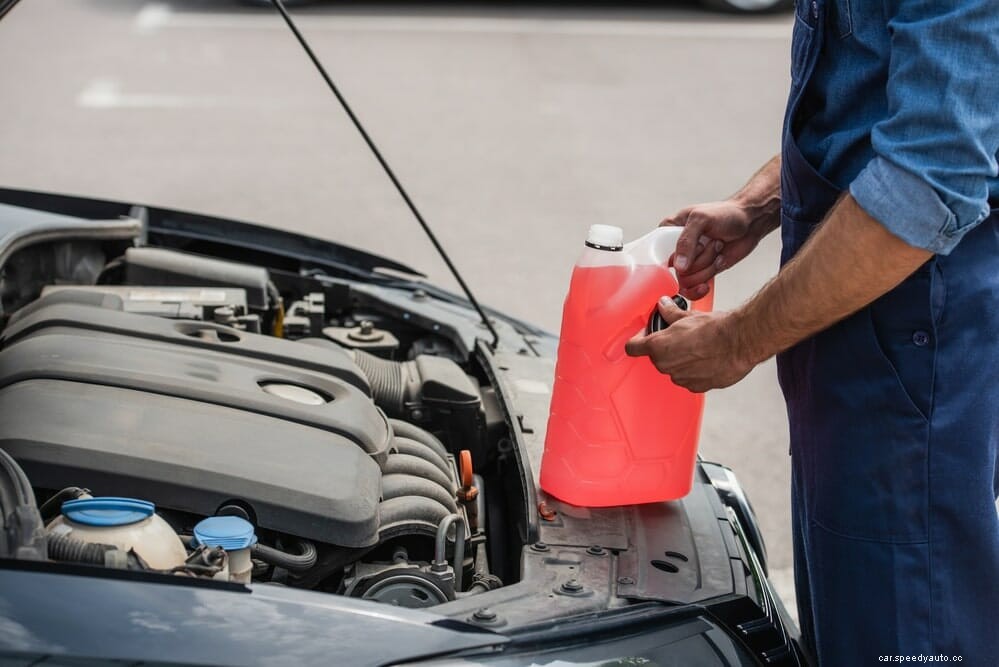
In small amounts, you would get sick and often get back to your feet within a few days. If antifreeze is ingested in large amounts, it will cause heartaches, kidney damage, breathing difficulties, brain damage, and possible death.
If you are doing it yourself, it will cost no more than $50. But if you do not know how to dispose of antifreeze, or do not want to go through the trouble of disposing of antifreeze, you could take your car to an auto shop. This could cost you anywhere from $100 to $200.
Just like every other liquid running through your car, antifreeze also plays an important role in keeping your car running. Unlike many other fluids, which are primarily used as a lubricant, antifreeze serves mainly to maintain the engine temperature.
Though water is a great cooling agent, there are some weaknesses to water that make it unfit to serve as your car’s coolant. But due to the cooling properties of water, antifreeze is added to it, so it can be used as a coolant.
Antifreeze neutralizes the ill effects that can be caused by using water. Thus the mixture of antifreeze and water makes the perfect coolant, but this comes at a cost. Antifreeze is a chemical compound that is really harmful. This makes disposing of antifreeze the right way crucial.
Even though the disposal might be complicated, you still have to replace your antifreeze when necessary. Disposing of antifreeze after the replacement is a very important step and should not be taken lightly.
If antifreeze finds its way inside a human body, it can be fatal. Small doses might cause a lot of trouble but a lot can kill you. So you should make sure not to keep it around at child reach.
Even the environment is at risk if you do not dispose of antifreeze the right way. Therefore, it is imperative that you follow the exact disposal method of antifreeze. As responsible car owners, you should know how to dispose of antifreeze.
