
The level of complexity involved in car maintenance and repairs increases with every year, and we’re all well aware of it. The last thing we need is unnecessary confusion caused by technicalities and people who do not have the knowledge of the subject.
Like the debate whether transmission fluid is an oil, we now have to discuss whether coolant and antifreeze are the same things. The answer is very simple:
Antifreeze is a type of coolant. Not all coolants are antifreeze. This applies not only to vehicle applications but also to general use.
Comparing coolant and antifreeze doesn’t work because antifreeze is a subcategory of coolant. Because antifreeze was made to overcome the inherent disadvantages of using water, they’re the only two coolants we can compare.
In the following table, you can find a simplified breakdown of the main properties of the coolant category and the antifreeze sub-category.
| Category | Coolant | Antifreeze |
| State of Matter | Liquid, Gas, Solid | Liquid |
| Primary Application | Air Cooling, Nuclear Reactors, Refrigerants, Cryogenics |
Internal Combustion Engines |
| Desirable Traits | High Thermal Capacity, Low Viscosity, Chemically Inert, Non-corrosive, Low-Cost, Non-Toxic, Electric Insulation |
Freezing Tolerance, Low Viscosity, Corrosion Inhibition, Low Cost |
| Chemical Composition | Hydrogen, Inert Gases, Halomethanes, Copper, Purified or Heavy Water, Mineral, Silicone, or Transformer Oils, Nanofluids, Molten Metals, or Salts |
Ethylene Glycol, Propylene Glycol, Propylene Glycol Methyl Ether |
Is antifreeze the only coolant present in a vehicle? No, there are several liquids or even gases that at least partially act as a coolant – the brake fluid, power steering fluid, transmission fluid, engine oil, AC fluorocarbon refrigerants (Freon), and even fuel.
Because none of the listed substances are ever referred to as a coolant, using antifreeze and coolant interchangeably is not going to cause any confusion. The only thing you should be aware of is whether you’re buying the right type of antifreeze and if it’s diluted or concentrated.
I was honestly surprised when I saw “experts” claim that antifreeze becomes a coolant only when it’s mixed with water. Antifreeze is a coolant regardless of its dilution, but for use in internal-combustion engines, it should be mixed 1:1 with deionized/demineralized/distilled water
The combination of water and antifreeze actually increases the temperature tolerance range than if 100% antifreeze was used. With the 1:1 mixture, the coolant can tolerate from −34°F up to +265°F, although +230°F is often used as the upper limit.
Tap water should never be used to dilute antifreeze because it contains metals and salts that can harm the internals of the cooling system.
If you find it easier, you can even buy prediluted antifreeze that can be poured directly into the vehicle. These options are usually more expensive partially because of marketing, but also because antifreeze needs to be kept in a more secure container than deionized water.
In the early days of the auto industry, water was the only available coolant. Naturally, you can see why it would be a problem when the temperature drops below 32°F, but it’s also an issue on the higher end as well.
At that time, the operating temperature of vehicles may have been lower, but modern engines run at temperatures between 195°F and 220°F. When you take into account the boiling point of water, there’s little to no room for overheating.
The problem was solved in 1926 when ethylene glycol antifreeze became available. We’ve moved on from the ethylene-based antifreeze in favor of propylene glycol which is less toxic for the environment, but the basic functional principle remains the same.
The following table represents the increase in temperature tolerances of water when mixed with antifreeze.
| Water Percentage | Freezing Point | Boiling Point |
| 100% | 32°F | 212°F |
| 90% | 26°F | 214°F |
| 80% | 18°F | 216°F |
| 70% | 7°F | 220°F |
| 60% | -10°F | 220°F |
| 50% | -34°F | 225°F |
Most manufacturers recommend a 50:50 to 60:40 ratio of water and antifreeze. As we’ve discussed, antifreeze has to be diluted to increase its temperature tolerances, and going beyond 60% antifreeze will have negative effects.
The acceptable mixture proportions aren’t there for the initial coolant change, but for the moments when you a have leak and don’t have both coolant and deionized water available. In those situations, topping off with a quart of either liquid will be acceptable.
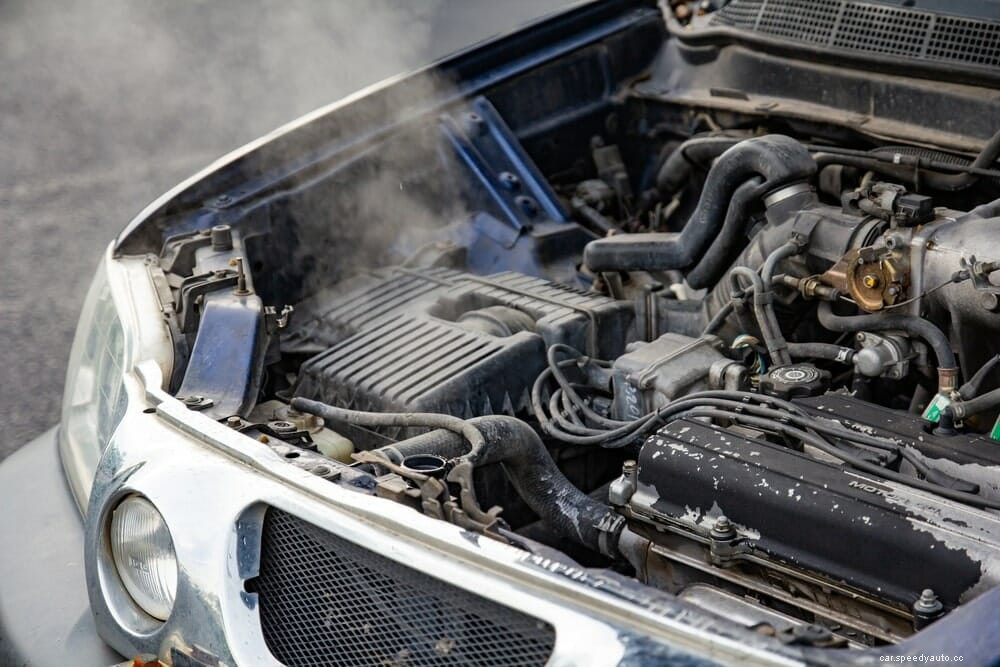
Internal combustion engines emit a lot of heat as a byproduct of fuel combustion. Air-cooled engines existed in the past, most notably in Porsche’s cars and VW Beetle, but the vast majority uses liquid cooling.
The liquid/water cooling system uses the thermodynamic physics laws: when two systems of different temperatures meet, they strive for thermal equilibrium. The colder system absorbs the heat from the hotter system until the two have an equal temperature.
The cooling system in your car consists of the following elements:
There are also other components like the coolant temperature sensor (CTS/ECT sensor) as well as the cabin radiator and compressor, but those are not important at the moment.
What makes the vehicle cooling system brilliant is how the excess heat gets dissipated during the process. The water pump is powered by the serpentine belt and pushes the coolant through a loop. As the coolant passes through the engine block, it will absorb its heat.
The air resistance created when the vehicle is moving forces a large volume of air through the radiator. The radiator itself is a multi-layered mesh that allows the air to flow through and cool the liquid flowing through the pipes.
The now cooled liquid makes its way towards the engine again and repeats the loop.
In case there’s not enough airflow, which happens during a city ride or red light, the radiator fan will compensate. The thermostat is a simple device that expands and contracts based on its temperature to automatically reduce or increase the flow rate of coolant.
The purpose of the coolant is pretty obvious. We’ve all seen the iconic scene of a car parked on the side of the road with white smoke coming out of the hood. The coolant keeps the engine from overheating, but more importantly from damage.
The liquid inside the coolant system is pressurized by the water pump, but the increase in the liquid’s heat pressurizes the whole system. The system’s pressure limit is artificially controlled through the radiator cap, and once it’s exceeded, the cap will burst, letting all the steam out.
The car engineers could easily make the cooling system stronger and capable of enduring greater pressure, but that’s not the point.
The system fails when the coolant becomes too hot, which means that the engine is already overheating. By pushing it further, the engine will warp valves, blow the head gasket or even warp cylinder heads.
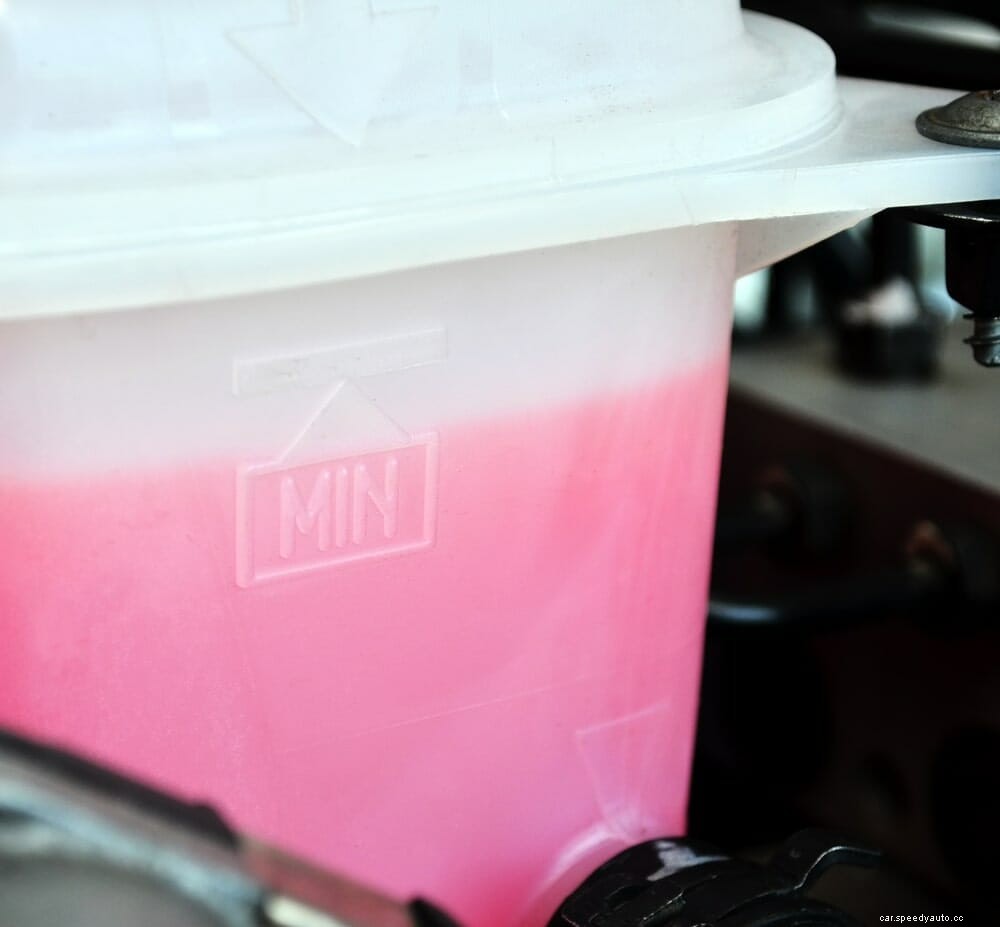
The previously explained safety measures only work if the system has the right amount of coolant. If the coolant levels are below the minimum, the liquid will have to heat up more to reach the bursting point, which could lead to engine damage.
Not only that, but the lack of coolant can create an air pocket in the system, or worse, the engine, and cause a catastrophic failure.
Preventing this is incredibly easy and all you need to do is occasionally check the coolant levels and top up if needed. The expansion tank can be easily identified by the color of the liquid inside it and the warning signs on the cap.
Look at the tank from the side and compare the fluid levels to the min and max markings. If it’s below the minimum, gradually add some deionized water, antifreeze, or ideally both until the level goes between the two markings.
Do not overfill and never open the cap until the engine has cooled down. As we’ve discussed, the pressure builds up because of the heat, and by opening the cap, you’re allowing it to escape through a burst of boiling-hot coolant and steam, causing serious burns to the hands and the face.
I’ll repeat it once more, do not open the coolant cap when the system is hot.
Antifreeze has also been named for its primary purpose, but its significance is twofold. Not only is it highly resistant to freezing, but it also has a higher boiling point than water, making it the superior coolant.
To understand why antifreeze is important, let’s talk about what happens to the engine when coolant freezes. Liquids expand by 9% in volume when they turn solid. The natural quality of rubber hoses will keep them safe, but the radiator, water pump, and most importantly the engine block will not be as lucky.
The coolant trapped in the radiator may burst the copper piping while cranking the engine will instantaneously break the water pump if it’s not already broken.
The engine block is made with precise tolerances, and the laws of physics are clear. The coolant solidifies and expands, pushing on the coolant passages in the engine block until they crack.
There are only a few scenarios that are as bad for the engine as coolant freezing over, which is why you should know how to measure the temperature tolerances of the coolant in your engine.
The process is incredibly simple and all you need is a refractometer.
Use the provided pipette to draw a small amount of coolant from the expansion tank and drop it on the refractometer lens. Close the lens cover and look through the scope while aiming at a light source. The line where the two colors meet is the temperature limit of your coolant.
You could also use the classic suction antifreeze tester, but I’ve recently learned that it doesn’t accurately measure the freezing temperature of propylene-based antifreeze.
The refractometer will also let you measure the freezing point of the washer fluid as well as the condition of battery acid, which makes it a better option in the long term.
The general rule is that cars built after 1998 use silicate-free OAT (organic acid technology) antifreeze.
As a defined coloring standard doesn’t exist, the best way to pick antifreeze is to check what the manufacturer recommends by looking in the owner’s manual or searching online.
You’ll find various tables and graphs showing how different colors are used for different chemical compositions, but in reality, there is no defined rule as to which color antifreeze should be. It’s not 100% accurate, but the inorganic antifreeze with silicate is painted blue or green, while organic antifreeze is painted orange or red.
Not only can you add antifreeze, but you must also do it to ensure optimal cooling of the engine and to prevent the coolant from freezing.
As we’ve discussed in this article, antifreeze has higher temperature tolerances on both sides of the spectrum and it’s the superior coolant to pure water. You should mix concentrated antifreeze with deionized water in a 1:1 ratio for the best effect.
Antifreeze leaks underneath the car are a clear indicator that you’re going to need more antifreeze in the system. You can also easily tell if you’re running low by looking at the markings on the expansion tank. Lastly, you can use a refractometer to measure the freezing point of the coolant and add more antifreeze if necessary.
The primary car coolant is a 50:50 mix of concentrated antifreeze and distilled water, so in case you’re running low and need a temporary top-up, you can use either, but ideally, both to retain the right antifreeze to water ratio.
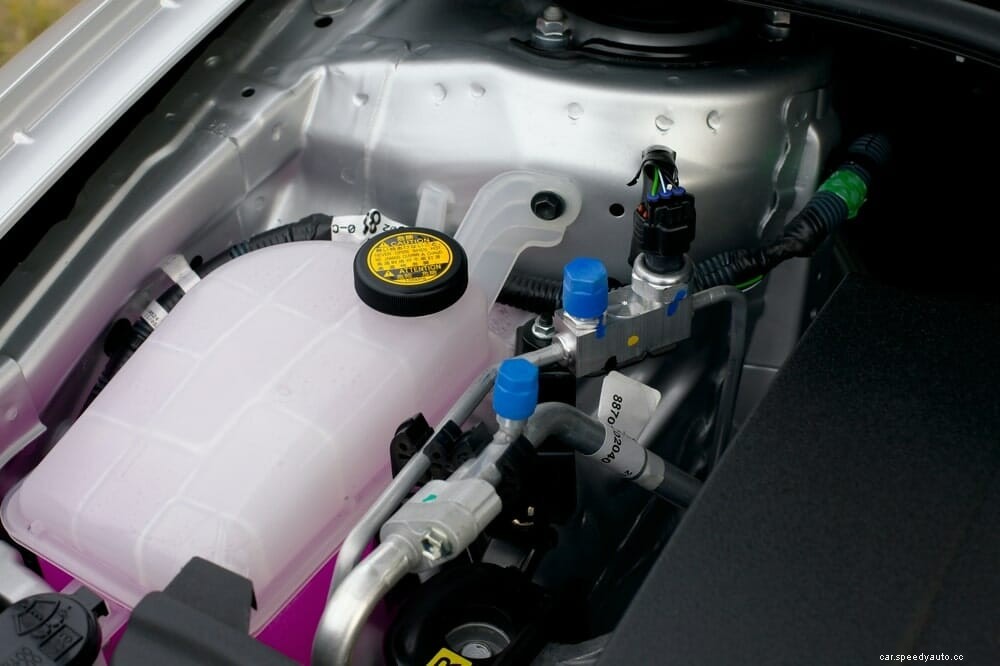
Antifreeze is added into the expansion tank, a see-through plastic bottle.
There’s a cap on top of the bottle that has high-temperature warning signs, and the color of the liquid inside the tank could only be mistaken with washer fluid, but the two have very distinct smells and feel under the fingertips so you cannot make a mistake.
Some say that antifreeze should be changed every 30,000 miles while others claim it can last much longer. The problem with antifreeze is that it degrades over time and loses its corrosion-inhibiting properties. I base my antifreeze changes on time rather than mileage and do it every 3 to 5 years.
The coolant symbol looks like a thermometer floating in the water. In a way, it resembles a key with three teeth pointing to the right. Underneath the hood, the expansion cap is marked with caution marks and it advises you to read the manual.
It also has a container with arrows pointing up towards the cap, where a hand is X-ed out, signifying not to open the cap when the coolant is hot.
You can top up the coolant without flushing, but you should still stick with your initial antifreeze change cycle. When you’re topping up, try to get the 50:50 antifreeze to water ratio for the most optimal mixture.
You can try, but I wouldn’t advise it. Even topping up with tap water is better than running low, as the engine needs all that liquid to properly cool. Lack of coolant will lead to engine overheating or even significant damage.
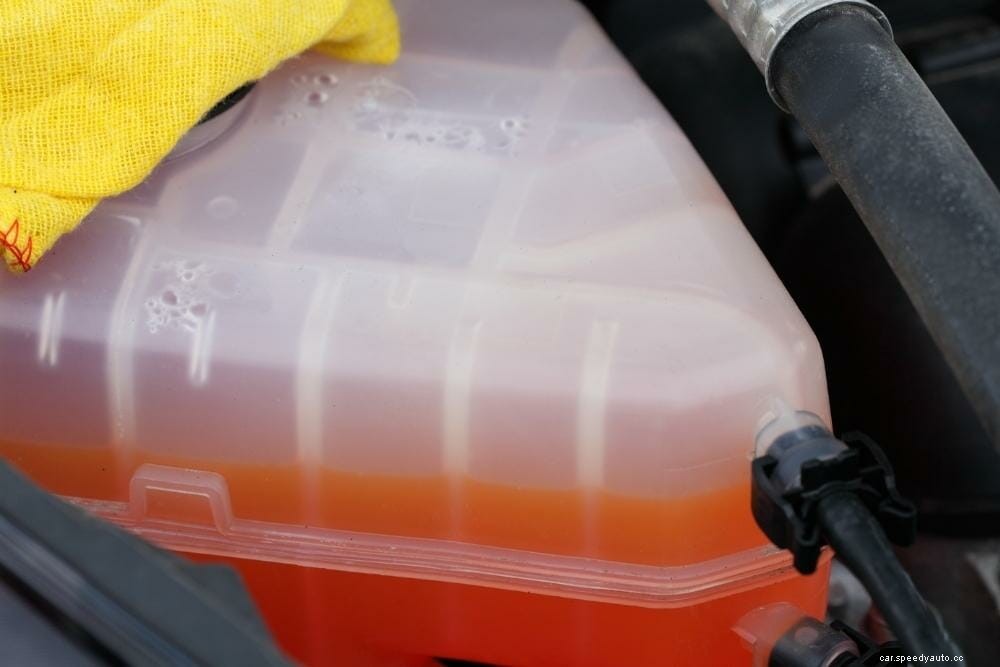
Even though strict color standards do not exist, coolant colors matter. Mixing green and red antifreeze is never advised because there’s next to no chance that the two types share the same chemical composition.
Make a note of what type of coolant your manufacturer recommends (IAT, OAT, HOAT, etc.) and then you can by type or by brand.
Concentrated antifreeze must be mixed in a 1:1 ratio with water, but only deionized/demineralized water should be used. Tap water has metals, salts, and minerals that can deposit in the cooling system and cause problems if used long-term.
Filling the coolant system entirely with water is not advised, especially not with tap water. You could use deionized water to top up in case you’ve got a leak, but you should restore the antifreeze-water mixture back to normal once you’ve resolved the problem.
The hose should be firm when the engine is running as the water pump circulates the coolant through the system. If there’s no pressure in the radiator hose, the common causes are a lack of coolant and an air pocket, but there could also be some mechanical issues like a faulty fuel pump or a thermostat stuck open.
Under no circumstances should you attempt to add coolant to a hot car. The warning signs on the expansion tank’s cap are not a joke. People have been seriously burned by the burst of boiling-hot coolant and steam coming from the tank/radiator.
The safe way to open the cap is to wait for the engine to cool down, and place a large cloth over the cap to keep your hand safe.
Concentrated antifreeze costs roughly $20 per gallon, which is usually all you need for a full coolant change, as you’ll combine it with as much deionized water. A coolant flush at home can be done for next to no cost, but a dealership or an independent professional may charge between $50 and $200 for the job.
Antifreeze is a type of coolant, but in terms of automotive application, the two terms mean basically the same thing. The coolant has to be either 100% prediluted antifreeze, or 50% concentrated antifreeze and 50% deionized water.
Don’t mix antifreeze colors and always use the type recommended by your vehicle’s manufacturer.
