
This is a common issue encountered by many car owners. Whenever you hear an unusual noise being emitted from your car, you know that something is wrong with it. The same can be said about the noise when braking at low speed.
More often than not, if you hear noises when braking, it means that your brakes aren’t functioning properly. Let’s look at why your brakes are emitting these noises and how can you get them fixed.
Your engine produces the energy that allows you to propel your car forward at high speeds. Going fast is just half the job of your car. It needs to come to a halt as well. This is why brakes are introduced into the car.
Even though there are countless safety features in your car, the brakes are the primary safety feature that keeps the passengers safe.
The principle on which the brakes function is friction. The force transfer to the brake pads might vary, but ultimately when the brake pads engage, the car is stopped using friction.
In most vehicles, the brakes are engaged using a hydraulic system, and in most modern cars, disc brakes can be seen. Usually, all four wheels of a vehicle consist of brakes. In some vehicles, you’d see disc brakes on all four wheels.
On others, the rear wheels would have drum brakes while the front wheels are fitted with disk brakes. The front wheels do the most work to stop the car. So, they are often fitted with disk brakes.
Most modern cars have a hydraulic braking system. So, to understand how the braking system works, let us focus on the hydraulic braking system.
The force you apply onto the pedal with your feet needs to be transferred to the brake pads. Not only does it needs to be transferred, but it also needs to be amplified. First, amplification of force is done by means of mechanical leverage.
The force is multiplied numerous times when you press the pedal using your leg.
Then, the hydraulic system comes into play. A piston enters the cylinder as you push the pedal and forces the hydraulic fluid out of the cylinder. By a system of brake hoses and lines, the hydraulic fluid is spread to the entire braking system.
The spread of hydraulic fluid sends an equal force to all brake pads. As the brake pads are pushed by this force, they come in contact with the wheel. Then friction is created between the brake rotors and the brake pads which stops the car.
This is the entire process of stopping a car through brakes. Any one of these components can malfunction. When this happens, it often generates noise when braking at a low speed.
There are a few types of noises that you could hear when braking at low speeds. Different noises are often caused by different problems. So, differentiating one noise from the other will allow you to more accurately identify the cause of the problem, which will make repair procedures easier.
This is one of the worst noises that you could hear. There is always a serious problem associated with grinding noises from the brakes. This is not a problem that you ignore and keep on driving either. If you hear grinding noise when braking at low speeds, you should not continue driving.
Grinding noise is often followed by major damage to your brake rotors and calipers. You can minimize the damage by getting the sound checked and fixed quickly. If you do continue to drive ignoring the grinding noise, there is a good chance that you will lose your brakes quickly.
Grinding noises might create more damage than other noises. But squeaking noises are often the most irritating. This is often caused by low-quality brake pads. Low-quality brake pads tend to have large metal flakes on them.
When they come into contact with the brake rotors, they create a squeaking or scraping noise.
The squeaking noise is not the only issue that you will face due to low-quality brake pads. The low-quality brakes will also affect your brake rotors. So, if you hear squeaking noises you need to check the quality of your brake pads.
Worn breaks could also emit a similar sound. If this was the case, the brake’s wear indicator will let you know about the state of the brake. Using that, you could identify, when to get your brakes replaced.
This is often the result of rust build-up on your brake rotors. If you leave your car parked in a wet or moist area for a long period, you might start hearing a squealing noise when braking at a low speed.
This is caused when a layer of rust covers the rotors. When rust comes into contact with metal, it creates a squealing noise.
If you notice a squealing noise when braking at low speeds after your car has been sitting without being driven for a long period, there is not to be bothered about. As you apply the brakes a few times, the rust will slowly start to clear.
Eventually, the squealing noise would disappear.
Now you know how to differentiate one noise from another. These noises can be derived through different causes. To fix the problem, and stop the noises that are emitted from your brakes, you first need to identify the cause. Only then can you think about fixing the problem.
Let us look at some common reasons why you might be hearing a noise when braking at a low speed.
This is the common reason for hearing noise when braking at low speeds. Brakes work through friction. Due to the friction, the brake pads wear out.
Break pads are made from a mixture of elements such as copper, graphite, and iron. This is the layer that comes into contact with the rotor to create friction when braking. When this layer wears out, the outer metal cover comes into contact with the rotor.
Since this is not the material that used to come into contact with the rotor, you will hear an unusual sound when the outer metal layer is in contact with the rotor.
This emits squeaking noise. Often, the worn brake pad indicators will also light up. The brake pads are the only surface that is meant to come in contact with the rotors.
When the metal surface comes into contact with the rotor, there is a chance that the rotor might get damaged. So, if you do not get your brake pads replaced when they are worn out, you could end up having to replace the rotors as well.
The brakes of your car are so close to the road, that they are constantly bombarded with impurities. Most of those impurities are blocked out by protective covers, but some foreign particles tend to find a way through.
These particles get lodged between the brake pads and the rotors. When the brakes are engaged, they come in contact and create an unusual noise.
Different particles of different sizes may emit different noises. So, there is no way to conclusively tell which type of noise this might cause. You could end up hearing grinding, squeaking, or squealing noise when braking at low speed.
Replacing the brake pads might not be necessary for this situation. You could try disassembling the brakes and having them cleaned.
A worn-out rotor is caused by other maintenance errors that you might make. If you use low-quality brake pads or if you’ve been using worn-out brake pads, you could end up scratching and damaging your rotor disks.
The wear and tear will affect the surface of the rotor in a way that they are no longer flat. So, when the brakes are engaged with worn-out or damaged rotor disks, you might hear squeaking sounds.
You could damage your rotor as you attempt to clean your car. Brakes tend to heat up a lot after a drive. If you try to wash your car with cold water and if the water comes into contact with a hot rotor, the rapid temperature change could damage the rotor.
It is hard to predict what kind of damage your rotors might suffer. So, you could end up hearing weird noises when braking at a low speed. You might also notice vibrations when you press on the brake.
Brake pads have been prepared using a variety of different materials since automobiles were introduced. Brake pads can heat up to 600 to 700 degrees Celcius or 1100 to 1300 degrees Fahrenheit.
This indicates that the brake pad needs to be able to withstand scorching temperatures.
Finding an ideal material for brake pads is not easy. Due to this, numerous materials have been experimented with on brake pads. Materials such as asbestos, kevlar, ceramic, and metal blends are some of the materials that were candidates for brake pads.
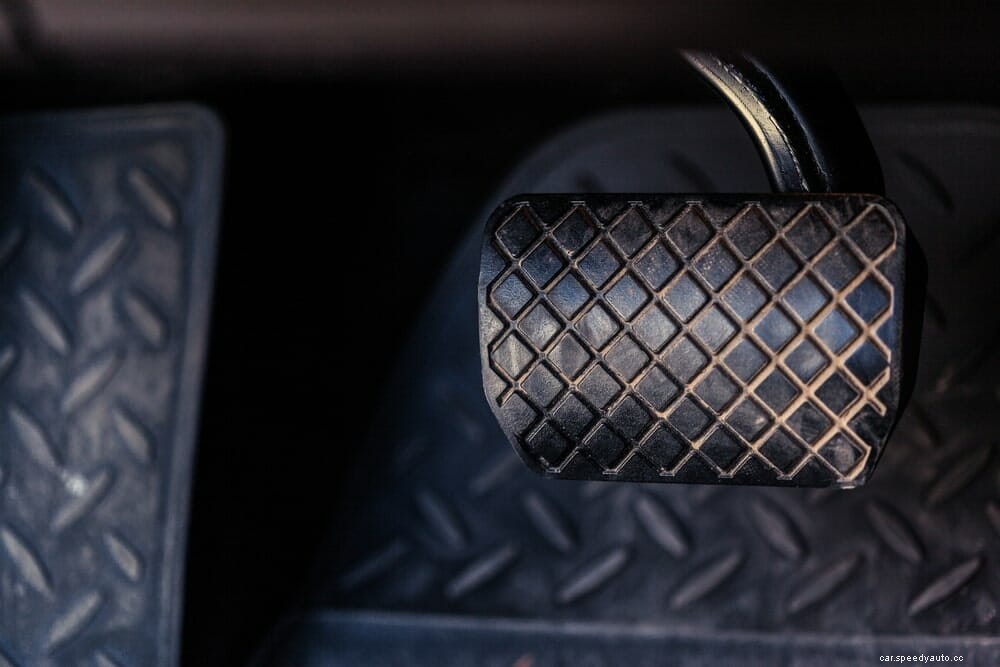
Today, except for asbestos, brake pads made out of other materials are available. The sounds that these materials emit vary drastically from one another. Usually, kevlar and ceramic pads produce much less noise compared to other brake pads.
So, if you recently changed brake pad materials, you might hear noise when braking at low speed.
Shims are thin rubber strips or a metal adhesive that is placed between the caliper and the brake pads to reduce the sound emitted when braking. These tend to get damaged or wear out with time.
When the shims don’t function as they are supposed to, you start to hear more noise than usual when braking.
If your shims are made out of metal, you might hear grinding noises as well. This happens when the shims come into contact with the rotor. Metal-on-metal contact generates the grinding noise.
Get your shims replaced as necessary if they are worn out or damaged.
For a system that is based on friction, you might be wondering, where does lubrication come in?
Though the main components of the braking system do not need lubrication, there are some components in your braking system that require lubrication. The caliper screws and bolts need to be lubricated as needed.
Lack of lubrication in these components will lead to grinding noises or squeaking noise when braking at a low speed.
With all those metal components inside the braking system, there is a lot of room for rust. It doesn’t matter where rust settles, it can cause havoc on your car. For you to hear noises when braking, rust to be formed on your brake rotors.
If you leave your parked on a moist or wet area for a long period, rust will build up. When there is rust on your rotors, you will hear a squealing noise when pressing the brakes. Since the rotors get scrubbed by the brake pads, the rust will clear itself out.
First, you need to diagnose the issue. The easiest way to do this is by distinguishing the noise that you might hear. Though it won’t directly pinpoint the cause of the noise, it will limit the number of suspects. This is why we looked at the different types of noises earlier.
There aren’t many ways to fix faulty brakes. Though the noise might narrow down the list of suspects, you still have to get it repaired.
Usually, unusual noises are heard when your brake calipers are worn out. The best way to deal with this problem is with a physical inspection. Remove the tires and inspect the brake pads.
While you are at it, inspect the rotors as well. Check for signs of wear and damage. If there are non, you have nothing to worry about.
Now proceed to check the shims. You rarely see damaged shims. But if they are damaged, get them replaced. Finally, lubricate the caliper screws and bolts if they need lubrication.
Now that the inspection is done, you can work on the solution for the noise. If you notice anything wrong with these components, get them replaced.
But what if everything is fine and no components are worn out or damaged?
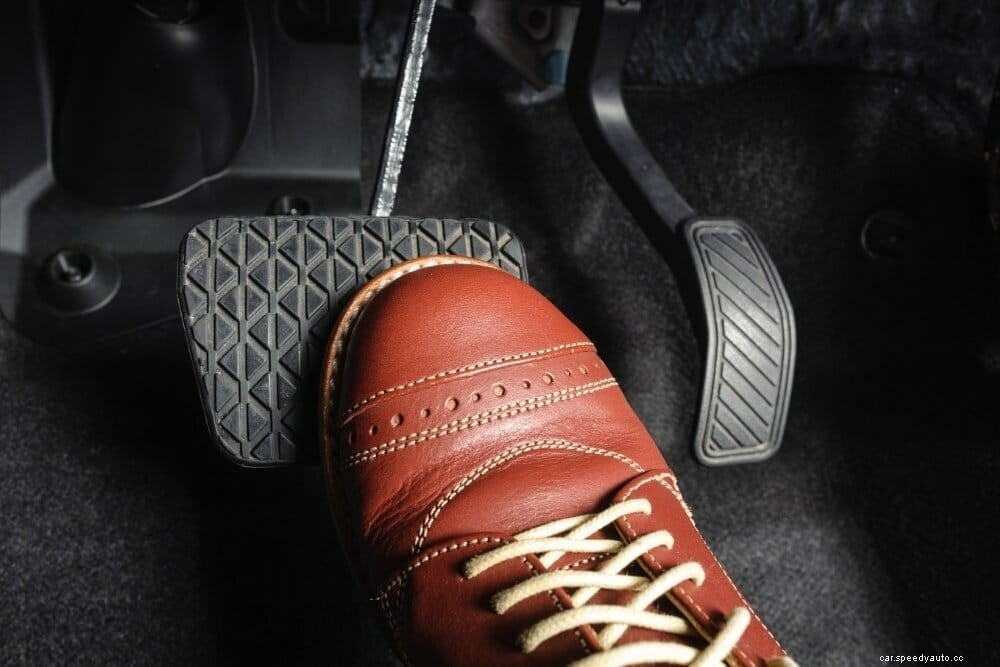
If the components aren’t to blame, then the problem can be caused by loose parts. Try wiggling the components by hand. They shouldn’t wiggle when you try to wiggle them by hand. If they do, you need to tighten those components.
Loose components do create weird noises when braking at low speeds. If you already disassembled the brake pads, clean them to make sure there is no dirt stuck on them.
As you put everything back together, apply dampening paste. Dampening paste is a water-based compound that significantly reduces vibrations. This is an effective solution for reducing noises when breaking.
Once you apply the paste, leave it for 2 to 3 hours to dry before reassembling your brakes. This should solve the problem of noise when braking at a low speed. But if it doesn’t, you need to get your brakes checked by a professional.
Having your brakes in peak condition is imperative to make driving safe. By properly maintaining your brakes, you can increase the life span of the components that make up your brakes. Proper maintenance will definitely save money in the long run.
So, how do you maintain brakes?
Brake fluid is a crucial part of the braking system. Like any other fluid, brake fluid requires constant attention. Examine your brake fluid levels every 3 months and top it off as necessary. Apart from that, the brake fluid needs to be replaced every 2 years or 30,000 miles.
The life span of brake discs depends on a lot of factors. Usually, it is determined by your driving style and the roads that your drive-in. So, there is no way to guess how frequently you need to replace your brake disks.
Inspect your brake discs regularly and replace them when needed. Break discs tend to last for about 100,000 miles.
Finally, get your rotors and brake pads regularly inspected. Brake pads need to be replaced every 50,000 miles. Make sure to replace brake pads before they damage your rotors.
By maintaining your brakes in the following ways, you could ensure that you do not run into any braking trouble while driving.
Here are some of the most common questions regarding noise when braking at low speed.
When the brake fluid is clean, it should be clear with a yellow tint to it. As long as it is in the brake fluid reservoir, it should remain the same color. When you see a change in color, that is when you need to consider replacing brake fluid.
With a few different choices, you might be wondering what is the best choice for your car.
Bestsellers in automotive replacement brake pads are made of ceramic. They can withstand the heat, they are silent and they are not affected by rust. Another good option would be organic brake pads.
The life span of brake pads is dictated by your driving style and the roads you drive in.
Ceramic brake pads are more expensive and considered a luxury choice. But they make up to their price tag with their durability. Ceramic brake pads tend to last around 75,000 miles. While organic brake pads last between 30,000 and 50,000 miles.
If you are looking for a complete brake repair, that is pads, rotor, and caliper replacement, you should expect to pay anywhere from $400 to $1000.
On the other hand, if you are only replacing the brake pads, your costs could be anywhere between $250 to $400. This is the cost to replace the pads for all 4 wheels.
A set of brake pads costs around $80. They often come in sets of two. So the rest of the cost goes towards labor. You can save a lot by replacing the brake pads yourself.
Yes, the brake fluid needs to be flushed. If the fluid is left unflushed for a long period, it can get impure. The rubber in the valves of the system will deteriorate. These sediments end up clogging the hoses or abstract the flow of brake fluid.
You need to make sure that you flush your brake fluid every 2 years or every 30,000 miles.
The easiest way to check this is through a physical inspection. Check the discs by looking at the surface of the brake disc. Observe whether the disk is smooth or filled with grooves.
You could also observe the noise when braking. If your brake disks aren’t functioning properly, you will hear a squeaking sound when braking. Excess vibration will also be present when applying the brakes.
The brakes are the primary safety feature in your automobile. You need to make sure they are properly functioning at all times before taking your vehicle out for a drive.
If you hear a noise when driving at low speed, it indicates that something is wrong with your brakes. Depending on the noise, you could narrow down the possible causes. While some problems are manageable, some issues will force you to pull over.
You need to know the different noises that your bakes might emit so that you’d be able to make that judgment. Once you figure out the problem, you need to work on the solution. The best way is to disassemble your brakes and run a physical inspection.
You should never ignore the problem if you hear a noise when braking at low speeds. Immediately work on the repairs. If you are unable to fix the issue, get your brakes inspected and fixed by a professional.
