
Have you ever rushed to a gas station because your low fuel light was on, only to discover your tank was nowhere near empty after all? Sometimes a driver is alerted that their fuel is running low when in reality they have plenty of gas left in the tank.
If you are curious why this happens or want to stop the fuel light randomly turning on in your car, we share all the information you need to know in this article.
Before we get into what causes the low fuel light to come on when the tank is full, let’s first look at how your car monitors the amount of gas in the tank.
To keep track of how much fuel is in a car, every vehicle has a fuel level sensor. This sensor system is made up of three key components: a float switch, a variable resistor, and a wiper. The float switch is made from foam and it floats over the top of the fuel inside the fuel tank.
Attached to the float switch is a variable resistor, this metal board can sense the height of the fuel and pick up on any variations. There is also a small wiper attached, the purpose of this is to move over the resistive material and across the resistor board.
When the fuel level inside the fuel tank changes, the wiper will move across the variable resistor and the voltage across the metal rod will change. If your fuel tank is full, the small wiper will point to low resistance and when the tank is empty the wiper will point to high resistance.
The fuel gauge is preprogrammed to know that less resistance equates to a tank full of gas and vice versa.
When the wiper on the sensor indicates high resistance, your low fuel light will ignite on the dashboard. Once you fill your tank back up with gas, the sensor will have less resistance and will alert your fuel gauge accordingly.
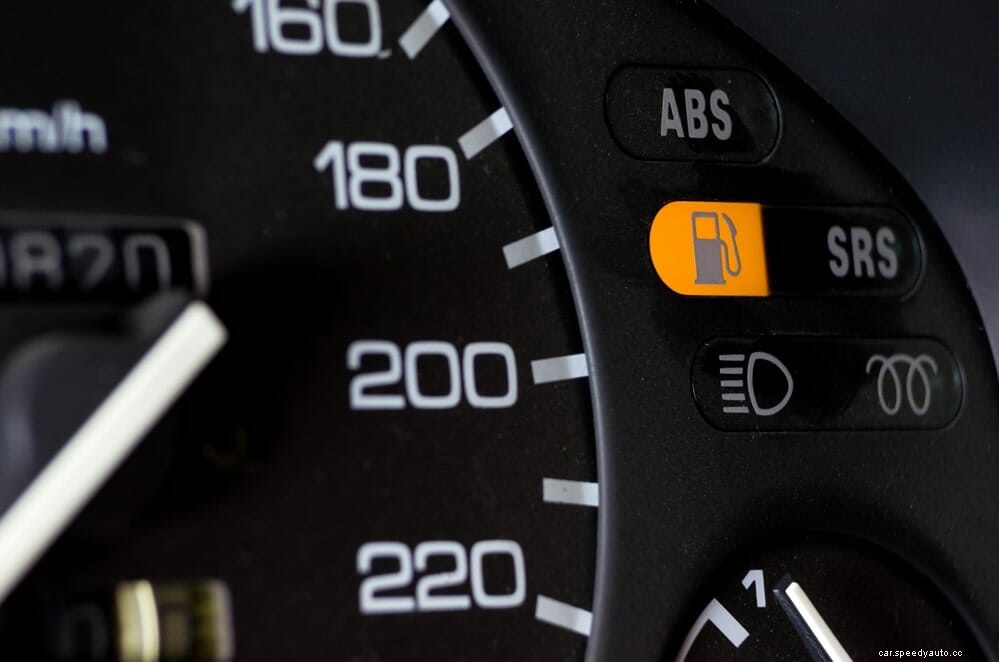
Drivers can rightly feel completely confused when they have only just filled up their vehicle and the low gas light is already showing again. Now we have explained how the fuel level sensor works, we can explain in more detail why the gas light comes on when you have gas.
Issues with the sensor are often to blame for the low gas light coming on when it doesn’t need to. Here is a list of the most common reasons why this may be happening:
The variable resistor is made up of a variable resistance board and a metal needle. Over time, the small metal lines on the needle can become dull and wear away due to corrosion. This damage can occur simply because of age but cheap gas and harmful fuel additives can also be to blame.
If the lines on the needle corrode too much, they may not be able to touch the resistance board, which is an essential step in sending accurate readings to the fuel gauge.
The float sensor may be damaged and not working correctly with the variable resistor. If one part of the fuel level sensor system is damaged or malfunctioning, it can result in incorrect readings being sent to the fuel gauge in the dashboard.
The problem may not be with the sensor in the fuel tank, there may be a fault with the fuel gauge itself. The fuel gauge is preprogrammed to receive readings from the sensor in the fuel tank. However, if your fuel light is on when your tank is reading as full, there may be a problem with the gauge that needs a professional diagnosis.
The fuel tank has a small ventilation hole at the top. Occasionally this hole can become blocked and this can lead to damage to the fiberglass tank. A blocked ventilation hole can cause the fiberglass tank to shrink, this can bend the metal needle that moves across the variable resistance board.
When this happens, the sensor will not be able to send accurate readings to the fuel gauge.
Damage to the fuel sensor inside the tank is often the main cause of the low fuel light coming on when it doesn’t need to. The fuel sensor will send readings to the fuel gauge and if the sensor is damaged, the readings will not be correct.
To prevent damaging your car’s fuel level sensor, be sure to do the following:
Cheap gasoline can damage the metal parts of the fuel sensor, in particular, the needle and thin prongs on the variable resistance board. Low-quality gas can also contain water, this can cause rust and corrosion to build upon the metal parts.
If your low fuel light has come on, don’t keep driving for miles on end and hope your car will keep working on sheer willpower alone. When you run your car on the dregs of the gas left in the tank, the fuel at the bottom can resemble sludge.
The thick consistency of the fuel at the bottom of the tank can damage the fuel level sensor as it moves over the surface.
Blockages in the ventilation hole at the top of the fuel tank can cause problems for the fuel level sensor. It may be beneficial to regularly check that the small hole at the top of the fuel tank hasn’t become blocked with dirt or built-up debris.
By following the steps above, you should be able to keep your fuel level sensor in full working order. However, this information is no good to you if your sensor is already malfunctioning, but you should keep this advice in mind for the future.
If your low fuel light is coming on when you know there is fuel in the tank, here is a method you can use to try and solve the problem:

Step 1 – Remove the fuel tank assembly. You may need to seek professional advice on how to do this without causing any damage to your vehicle.
Step 2 – Using an Ohmmeter, connect the red and black cables to the two terminals on the top of the fuel tank assembly. You will need to research your vehicle to learn which two terminals you need to connect the ohmmeter to.
Step 3 – Make sure the Ohmmeter is on the correct setting – it should be displaying either ‘Ohm’ or the Greek letter for Omega.
Step 4 – Make sure the fuel sensor float is pushed down and note down the reading that is displayed on the Ohmmeter.
Step 5 – Next, move the float sensor up. This replicates the action that happens when fuel is added to the tank. As you move the sensor up the reading on the Ohmmeter should decrease.
Step 6 – If the two readings are as you would expect, the fault may not be with the fuel level sensor. Your fuel gauge may have an issue that needs a professional diagnostic.
Step 7 – If the reading on the Ohmmeter is the same when the sensor is up and down, there is likely a problem with the sensor and it needs replacing. You can either replace your sensor at home by following YouTube tutorials or consulting forums for your specific car model, or you can take your car to a mechanic.
Step 8 – If you don’t want to rush to replace the sensor, try cleaning it carefully with a small brush and rust remover. Record the reading again, if there is no difference to your first attempt then a sensor replacement is likely necessary.
Step 9 – This process may sound a little complicated but once you know what you are doing, using the Ohmmeter is not difficult. If you find visual guides more useful, here is a tutorial showing how to fix a fuel level sensor:
Driving without a working fuel tank sensor can be risky. If you don’t know how much fuel is in your tank, you could potentially break down at any moment!
Also, running your car on very little fuel is not good for your car’s health as the engine will be trying to run on the dirt and sludge that has built up at the bottom of the fuel tank.
The quickest and easiest way to turn the low fuel light off is to go and get some gas. However, if the light comes on when you know there is fuel in the tank, there may be an issue with the fuel level sensor.
If you can’t get the fuel light to turn off, check your fuel level sensor and all of its components. If the sensor is in full working order and your low fuel light still won’t go off, a trip to see the professionals should be your next step.
It is possible to fix a fuel level sensor. If the small metal wires on the variable resistor are damaged, you will need to carefully remove them and attach new ones. It is important you purchase the correct sized wires, otherwise, you will have difficulty connecting them to the resistor.
Before fixing the new wires, carefully clean all of the parts of the sensor and remove any built-up grime. You will need to test the sensor after it’s repaired to check all is working as it should, you can use an ohmmeter to do this.
Your car’s make, year, and model will determine how much a fuel level sensor repair will cost. Parts can cost up to over $200 and you will also need to pay labor fees. The only accurate way to know how much it costs to fix a fuel sensor would be to contact your local mechanic and ask for a quote.
The repair work will be a lot cheaper if you do the work yourself, but if you don’t have the correct skills or knowledge you may end up causing more problems.
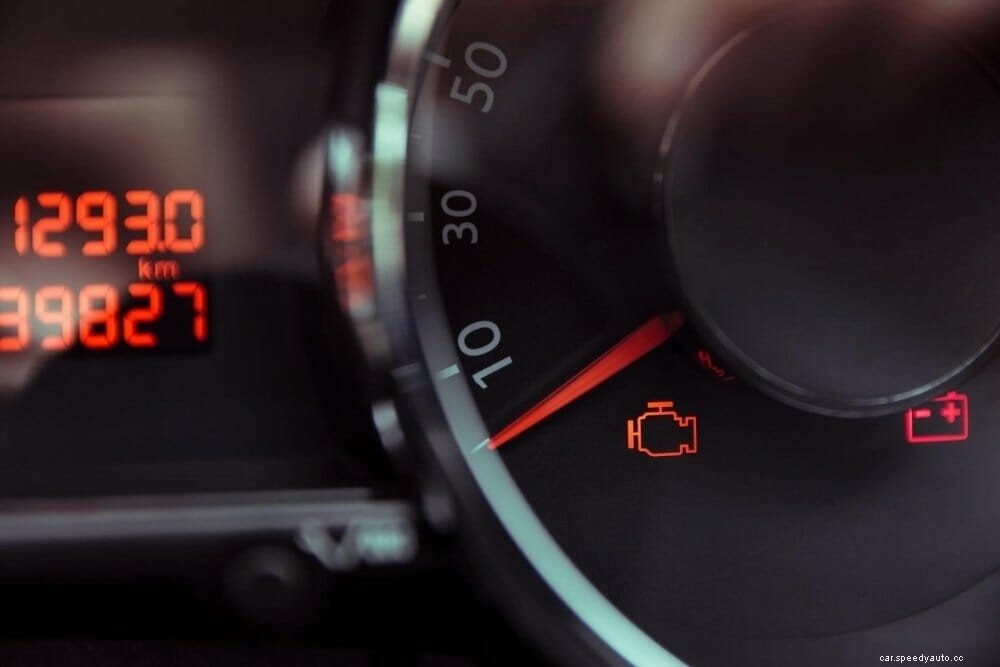
Yes, running your car on low fuel can trigger the check engine light to turn on. When you don’t add gas to the tank, your car will run to the bitter end just using the sludge and dirt at the bottom of your fuel tank.
This is not good for your engine and may result in your check engine light illuminating on the dashboard. It may not be the low fuel itself causing the check engine light to come on, a loose gas cap may be the real culprit.
The low fuel light and the fuel gauge work together and if the gauge is malfunctioning this may cause the light to come on. Issues with the fuel gauge in the instrument cluster can be linked to a faulty fuel level sensor.
Problems with the fuel sensor can also trigger the low fuel light to come on unnecessarily. The fuel light may come on if the gauge is broken but if the sensor is causing the problem, you may not be able to trust the accuracy of the fuel readings.
Cars will not just break down the moment the fuel light comes on. Often, vehicles will still run for around 50 or so miles before they completely run out of fuel and break down. While your car will keep running for a while after the fuel light comes on, this does not mean you should do so.
Continuing to drive when your car is low on fuel puts your engine at risk of running on the old fuel at the bottom of the tank. This fuel is often full of dirt and is not good for your car’s engine. If you want to make your fuel last longer, try to drive as economically as possible.
It is not wise to head out on any long journeys if your fuel light is on and you have no money for gas!
Seeing the fuel light turn on when you have just filled your car up with a gas can be really annoying and confusing. Often, this issue is down to problems with the fuel level sensor in your vehicle’s fuel tank.
In this article, we have shared why your low fuel light is on when your tank is full and we have provided you with a few fixes to this problem. We hope this information is useful and you are able to fix the sensor and get rid of that annoying fuel light in no time at all.
