
Driving a car that has a faulty idle is a dangerous game of applying gas and brakes to keep it running. It may be manageable if it’s only occurring when the engine is cold, but consistent issues with idle are not a problem you should ignore.
If your car won’t stay running without applying gas, the likely causes are the idle air control valve, fuel injectors, air filter, or any number of sensors. This guide will show you how to identify the cause, and fix it without taking your vehicle to a mechanic.
Before you start going through the list of potential causes, I strongly suggest picking up an OBD2 scanner first. You can use it to read the error codes and figure out exactly what the problem is in minutes. It will save you a lot of time and money, as ruling out causes without the scanner typically involves replacing parts one by one.
The idle air control valve is directly responsible for controlling the amount of air that goes into the cylinders. When gas is not applied, the throttle body closes, so the air has to travel through the IAC valve. A bad valve will cause an improper air-fuel mixture that can choke the engine.
It should be noted that the idle air control valve is controlled by the electronic control unit (ECU). If the data received by the ECU is incorrect, it could send the wrong signal to the IAC.
How to Replace the Idle Air Control Valve
Replacing the idle air control valve is a simple task, as it’s attached to the throttle body by just two screws or bolts.
Engine temperature is directly connected to the temperature of the coolant, so a sensor monitors its condition and sends data back to the ECU. When it fails it can throw random temperature estimates, and some even send a constant -40°F regardless of the actual temperature of the coolant.
The ECU sends a signal to the IAC valve to adjust airflow and further enriches the air-fuel mixture by sending more gasoline into the cylinders. This combination will flood the engine and cause stalling and the smell of gasoline.
How to Replace the Engine Coolant Temperature Sensor
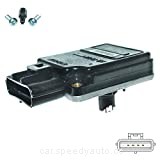
The MAF sensor is responsible for monitoring the amount of air passing through the intake. It’s positioned between the throttle body and the air filter and can have an effect on the amount of air actually passing through the system.
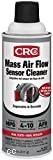
The mass airflow sensor can foul from imperfections that pass beyond the air filter, so cleaning it first may be enough to fix the problem. It’s a sensitive component, so you should only use a specialized MAF cleaner, as oils and corrosive substances in general-purpose cleaners can easily damage it.
How to Replace the Mass Air Flow Sensor
| Title | Price | Buy | |
|---|---|---|---|
 Top
Top | CRC 05110 Mass Air Flow Sensor Cleaner - 11 Wt Oz. | ||
 Top
Top | Walker Products 245-2045 Mass Air Flow Sensor | ||
 Top
Top | CRAFTSMAN Screwdriver Set, Assorted, 8-Piece (CMHT65075) |
Problems with the throttle position sensor present themselves in a number of ways, including rough acceleration, lack of power, jerking, and rough idling and stalling. It’s unlikely for the TPS to be the cause of your issue, but if you’re also experiencing other symptoms, you should replace the TPS.
How to Replace the Throttle Position Sensor
This is a bit of a long shot, but as it’s incredibly easy to inspect and repair, I found it appropriate to include the air filter on the list. The symptoms of a dirty air filter include an increase in fuel consumption, loss of power, the smell of fuel, and rough operation as the engine struggles to create the right air-fuel mixture.
How to Replace the Air Filter
If the fuel pump is going bad, you’ll experience power loss, especially when accelerating, low fuel pressure, surging throttle, and a decrease in gas mileage. A pump that has completely failed will even prevent the vehicle from starting.
The first sign of a failing alternator is the battery light turning on. It’s followed by dimming dashboard and headlights, distorted audio from the stereo, whining noise, and complete shutdown of the vehicle as to the battery completely depletes.
The problems with ignition coils are similar to those experienced with faulty spark plugs: misfires, rough idling, poor fuel economy, and overall loss of power, especially when accelerating.
If your car won’t stay running unless you step on the gas, you shouldn’t worry. Scan for error codes to get a better idea of what is causing the issue, then follow the simple steps to replace the faulty part. The most probable cause is the idle air control valve or the engine coolant temperature sensor, so pay extra attention to those two components.
Find more related topics here:
Car Won’t Start After Getting Gas
Can You Pump Gas With The Car On?
How Many Miles Is A Quarter Tank Of Gas?
