
Elevated idle can be normal when you’re cold-starting your car, especially during the winter. However, a high idle is not the same as a rough idle that eventually smooths out. We’ll explore the potential problems your engine is having that would cause such behavior and also how to fix them.
Rough idle can be caused by a weak ignition system, bad wiring harnesses, failed coolant temperature sensor, bad mass airflow sensor amount, and other possibilities.
The first thing you should do is confirm when the symptoms occur. The engine can idle rough all the time, stall when accelerating, jerk, and have an unresponsive throttle.
We’re dealing with a specific case – the engine starts rough but smooths out after a while. To narrow down your search, monitor the coolant temperature gauge. If the rough running becomes less prominent as the temperature increases, ceasing once the coolant temperature becomes optimal, then the problem occurs when the engine is running cold.
There are a lot of reasons why an engine would start out rough when cold, some relating to carburetor engines, other to direct injection systems. In the following section, I’ll explain how to troubleshoot and find out what’s causing the problem.
OBD2 scanners are an extremely useful tool in identifying what is causing rough running that smooths out. For just $35, you can get a basic scanner that is capable of reading and interpreting error codes.
Most of the cheaper OBD2 scanners are marketed as engine scanners that are not capable of identifying problems with the transmission, ABS, and other systems. If you want a reader that will cover all the systems, you’ll need to spend at least $250.
A cold engine requires a richer air-fuel mixture to compensate until it warms up. The temperature sensor monitors the coolant temperature and sends the signal to ECU to adjust the air-fuel mixture. The idle air control valve regulates the amount of air going into the cylinders, with fuel injectors responsible for the other half of the mixture. When the compression reaches a certain point, the spark plug ignites the mixture to create energy.
The coolant temperature sensor is responsible for monitoring coolant temperature and sending the information back to the ECU. It actually has nothing to do with the thermostat valve, as the valve is self-regulating. The driver also receives information about coolant temperatures through the temperature gauge on the dashboard.
When the temperature sensor fails, it will cause the temperature gauge can go up and down while you’re driving. If the thermostat valve is functioning properly, the engine will maintain proper temperature, but not the air-fuel mixture.
When you start the engine, the temperature sensor will not send the correct signal to the ECU, and the fuel will not be enriched. The engine is not supposed to run on a regular mixture when it’s cold, causing rough operation.
Replacing the coolant temperature sensor is one of the easier tasks. Depending on the engine layout and your skill, you could replace the sensor without even draining the coolant liquid. Still, I would recommend draining some, if not all of it to work with an empty system to approach the task slowly and with care.
| Title | Price | Buy | |
|---|---|---|---|
 Top
Top
Top
Top
Top
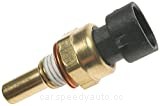
Top | ACDelco Professional 213-4514 Engine Coolant Temperature Sensor | ||
 Top
Top
Top
Top
Top
Top | Wekster Wide Mouth Fuel Funnel with Handle - Large Plastic Automotive Funnels, Long Flexible Spout Extension, Removable Mesh Screen Filter for Water, Gasoline, Coolant, Transmission, Engine Oil | ||
 Top
Top
Top
Top
Top
Top | TEKTON Stubby 1/4 Inch Slotted High-Torque Screwdriver (Black Oxide Blade) | 26621 | ||
 Top
Top
Top
Top
Top
Top | Lumax LX-1628 Black 6 Quart Plastic Drain Pan. to Collect The Oil in Oil Changes. The Rugged, Oil Resistant All-Purpose Plastic Pan Will not Rust or Dent. Easy Cleaning. |
Steps To Replace The Coolant Temperature Sensor:
If you’re idling, the throttle valve is closed as you’re not pressing the gas pedal. The air coming through the intake bypasses the throttle valve and goes through the idle air control valve. There, the ECU adjusts the valve to let the optimal amount of air through. A cold engine requires less air and more fuel, which is regulated through the valve, or a choke on the carburetor engine.
Malfunctioning IAC valve will only cause issues when idling because the primary throttle valve is closed off. If the engine is running rough on idle even after heating up, it’s a strong indicator that the IAC valve is malfunctioning.
You’d be surprised at how easy it is to replace the IAC valve. If the engine manufacturer left ample room to access the valve, the whole process can be done in a couple of minutes. Depending on how the valve is mounted on, you’ll need either an open-head wrench, a Phillips head screwdriver, or a hex screwdriver.
| Title | Price | Buy | |
|---|---|---|---|
 Top
Top
Top
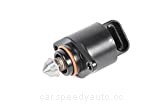
Top | GM Genuine Parts 19333273 Idle Air Control Valve | ||
 Top
Top
Top
Top | ABN Combination Wrench Set – 16 Pc Raised Panel SAE Wrench Set with Wrench Roll Up Pouch, Black Spanner Wrench Set | ||
 Top
Top
Top
Top | CRAFTSMAN Screwdriver Set, Assorted, 12-Piece (CMHT65044) | ||
 Top
Top
Top
Top | DEWALT Screwdriver Bit Set with Nut Drivers, 71-Piece (DWMT73808) |
Steps To Replace The Temperature Sensor:
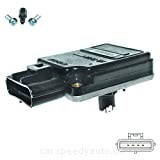
The Mass Air Flow (MAF) sensor is located between the intake manifold and air filter and calculates the amount of air passing through. It works on a hot-wire principle, where a thin piece of wire is electrically heated to a certain temperature.
When idling, a small amount of air is passing through the intake, so the wire doesn’t need a lot of electricity to heat up. However, as you step on the gas, more air will flow through the system, cooling the sensor down. This, in turn, causes a more electrical current to flow towards the wire to heat it back to the specified temperature. These are the basics of MAF sensor operation.
Fouled or failed mass airflow sensor will cause a number of throttle-related issues: stalling, choking, unresponsive throttle, poor acceleration, and rough idle. Sometimes, cleaning it can be enough to restore all functionality, but if it continues to cause problems, you’ll have to replace it.
| Title | Price | Buy | |
|---|---|---|---|
 Top
Top | CRC 05110 Mass Air Flow Sensor Cleaner - 11 Wt Oz. | ||
 Top
Top | Walker Products 245-2045 Mass Air Flow Sensor | ||
 Top
Top | CRAFTSMAN Screwdriver Set, Assorted, 8-Piece (CMHT65075) |
Steps to Replace Or Clean The Mass Air Flow Sensor:
When I was researching the topic to check my facts, one unexpected cause consistently appeared – cracked head and head gasket. Several owners positively identified the head gasket and cracked head as the cause, so we have to take them seriously.
Symptoms of a cracked head are loss of compression and power, drop in coolant levels and changes in its temperature, drop in oil level, and smoking exhaust pipe among others. Fixing the engine head and gasket is a job for a mechanic due to the complexity and finesse required to successfully finish the task.
I’ve recently struggled to seal a vacuum leak that was causing the turbocharger to cease function at a certain RPM. Some DIY and two mechanics later, the problem was still not solved, at least not entirely.
Vacuum leaks can cause a number of issues, including rough running of a cold engine. As the engine heats, so will the hoses and metal connectors, sealing the vacuum leak, and restoring smooth operation.
Identifying the exact spot where the leak is occurring is a very frustrating process, but the following video has a brilliant solution to the problem. All you’ll need is a spare hose, hose clamp, and a cigar.
Fuel injectors are significantly more precise in their delivery of fuel to the engine than the carburetor, but the core function is the same – inject fuel into the cylinders to achieve the right air-fuel mixture for optimal ignition.
While it’s likely for the fuel injector to be the cause of the rough operation, the problem will be consistent and not smooth out over time. Finding a new carburetor can be challenging, while fuel injector replacement is expensive, so before you go to the mechanic, try a fuel additive first.
Seafoam and other engine cleaning solutions do a great job of cleaning the fuel intake systems and cylinders, so it wouldn’t hurt to try them out. One to three tanks of gas combined with fuel additives should be enough to thoroughly clean the system, and restore optimal engine operation and some power.
The ignition problems with the ignition system can originate in bad spark plugs, ignition cables, distributor caps, or ignition coils. Modern systems have moved away from the distributor caps toward ignition coils that attach to individual spark plugs.
When there’s a problem in the system, you’ll experience a number of ignition-related issues, such as misfires, unresponsive throttle, and failure to start the vehicle.
As long as spark plugs haven’t seized due to carbon build-up, replacing them should be an easy task. The rest of the components require some or no tools at all to replace, so instead of paying a mechanic, you can do the job yourself.
| Title | Price | Buy | |
|---|---|---|---|
 Top
Top | ENA Set of 8 Curved Boot Ignition Coil Pack Compatible with Ford Lincoln Mercury 4.6L 5.4L V8 Replacement for DG508 C1454 C1417 FD503 1L2U12029AA I2LU-12A388-AA C1417 DG473 DG481 DG491 | ||
 Top
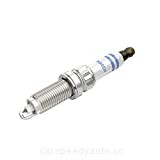
Top | Double Platinum Spark Plug - Up to 3X Longer Life for Select BMW X5 X6 550i GT xDrive 650i 750i 750Li 760Li and Rolls-Royce Dawn Ghost Wraith (Pack of 1) | ||
 Top
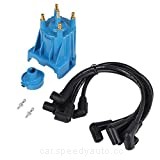
Top | Ignition Tune Up Kit with Distributor Cap and Rotor and Spark Plug Wires Set Replacement for 3.0L 4cyl MerCruiser Engines Made by GM with Delco EST Ignition Systems - Replace 811635Q2, 816761Q14 | ||
|
Top | DEWALT Screwdriver Bit Set with Nut Drivers, 71-Piece (DWMT73808) | ||
 Top
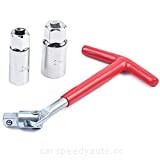
Top | MIKKUPPA Spark Plug Socket Wrench, T-handle Universal Spark Plug Wrench 16mm (5/8") & 21mm (13/16") Remover Installer | ||
 Top
Top | Anti Seize Spray Lubricant | Aluminum | Thread Compound | Bolt Grease | Automotive | Sieze | Lube | Never Cease Temp | Spark Plug | Paste | Antisieze | Neversieze | 13 OZ Aerosol Can | BustApart |
Steps To Replace Ignition Components:
Like we’ve discussed in the guide, a rough start signifies a problem with the air-fuel mixture. The engine requires more fuel and less air when it’s cold, a mixture that later returns to normal as the engine warms up. Problems with air or fuel distribution, as well as coolant and air sensors can lead to a sub-optimal mixture that causes the rough start.
A faulty idle air control valve will result in an incorrect amount of air being sent into the engine for combustion, causing a rough idle. It is also possible that the engine mounts have worn or broken down which can cause excessive vibrations when idling.
Rough idle, difficulty starting the vehicle, misfire, and engine surging are some of the common symptoms of bad spark plugs. You may also experience an increase in fuel consumption and a lack of power when accelerating.
When the fuel pump fails completely, you will not be able to start the engine as fuel won’t reach the engine block. Before that happens, you may experience power loss, engine surge, engine stutter, and decreased fuel economy.
This depends entirely on what is causing the problem, but let’s go with the most probable cause, which is a bad spark plug. Spark plugs cost $5-20 apiece, and you’ll need to replace the entire set. The number of spark plugs correlates to the number of cylinders your engine has, with some vehicles taking two spark plugs per cylinder.
Next, you’ll need a socket set with an extender or a specialized spark plug wrench. The cost of labor would set you back at least $100, while the cost of tools, including even the spark plugs, can turn out to be less than that. Follow the steps provided in this guide to learn how to replace spark plugs.
The symptoms of a faulty starter can falsely be attributed to the battery. To avoid confusion, check if the battery by setting the ignition to the On position and turning the lights and radio on. If they work, that means that the problem is neither the battery nor loose battery cables.
The most common symptom of a failing starter is a clicking noise that can be heard when you turn the ignition and of course the inability to start the engine. You can try to temporarily fix the issue by tapping the back of the starter with a hammer, but keep in mind that you’ll have to replace the starter soon to avoid getting stranded on the road.
A rough start that is followed by a smoothing of the engine operating can be caused by a number of failed components, but if you approach the problem methodically, and with the right tools, you’ll be able to identify, and in most cases repair the problem yourself.
Here are some other guides on starting your car:
How To Start A Car After Running Out Of Oil
How To Start A Car With A Bad Ignition Switch
Why Does My Car Only Start In Neutral – But Not Park?
