
Removing the crankshaft pulley can be a daunting task. Many people try to remove it using a puller, but this often leads to damage to the pulley or the crankcase.
The easiest way to remove a crankshaft pulley without a puller is by using a strap wrench. The more secure way is to use a pipe wrench in combination with other tools, like using a breaker or cheater bar.
This article will show you how to remove the crankshaft pulley without a puller. This is a much easier and less risky way to do it. Follow these steps, and you will be able to remove the pulley in no time!
Well, that is precisely the question most have when they first see one. A crankshaft is the part of an engine that propels (or turns) the drive system or some other rotary system, which in turn makes your car move.
It’s more commonly known as the “long skinny thing” on a car engine, but it goes by many names; main shaft, propeller shaft, camshaft… you get the idea.
A crankshaft basically works like this: The piston travels up and down inside an enclosed cylinder (for you non-specialists out there), which creates suction at the top of each stroke and forces air/fuel mixture into it at the bottom dead center.
As it reaches the top dead center, the piston begins its downward travel, and this is where the crankshaft comes into play.
Almost like a cam light switch, each stroke of the piston compresses air/fuel mixture in all of the connected cylinders simultaneously, making every rotation of said shaft good for one complete up/down cycle per cylinder.
The crankshaft is connected to the transmission through a series of gears. The engine itself has its own set of gears that connect it to the crankshaft as well, but they’re hidden from sight by a metal plate known as a timing belt or timing chain cover.
Because each cylinder shares exactly one piston and one corresponding crankpin, the rotation is uniform from every individual cylinder (which gives you that smooth running feel).
Another role of the crankshaft is transforming this rotary motion into reciprocating linear motion by means of connecting it to your car’s clutch/torque converter, and ultimately transferring it to your car’s wheels.
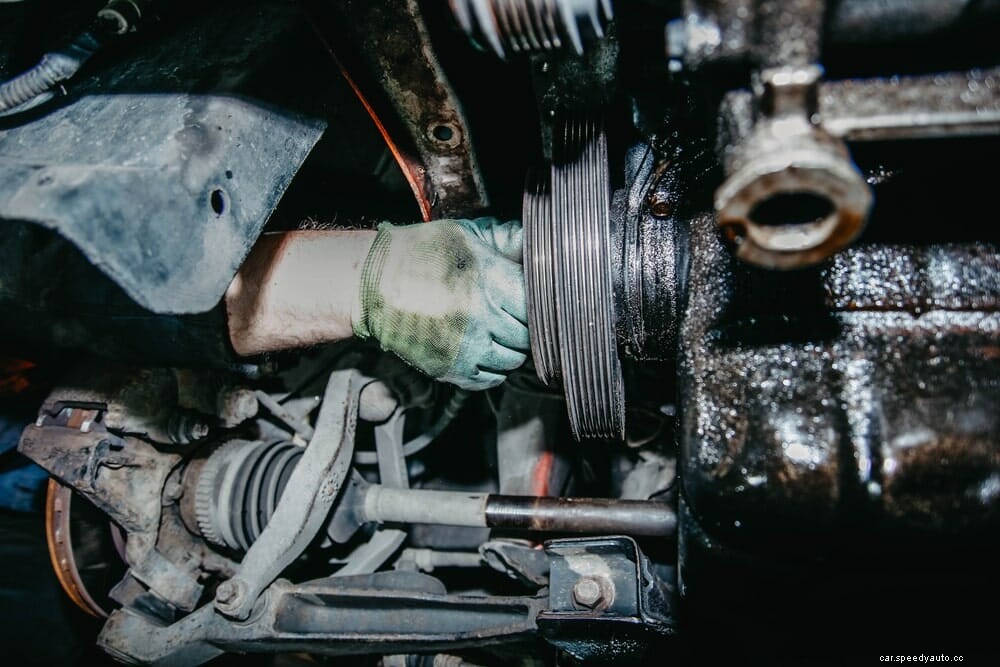
A crankshaft pulley is the large, round wheel that’s bolted to the end of the crankshaft. Its primary function is to transmit power from the engine to accessories like the alternator, air conditioning compressor, and power steering pump.
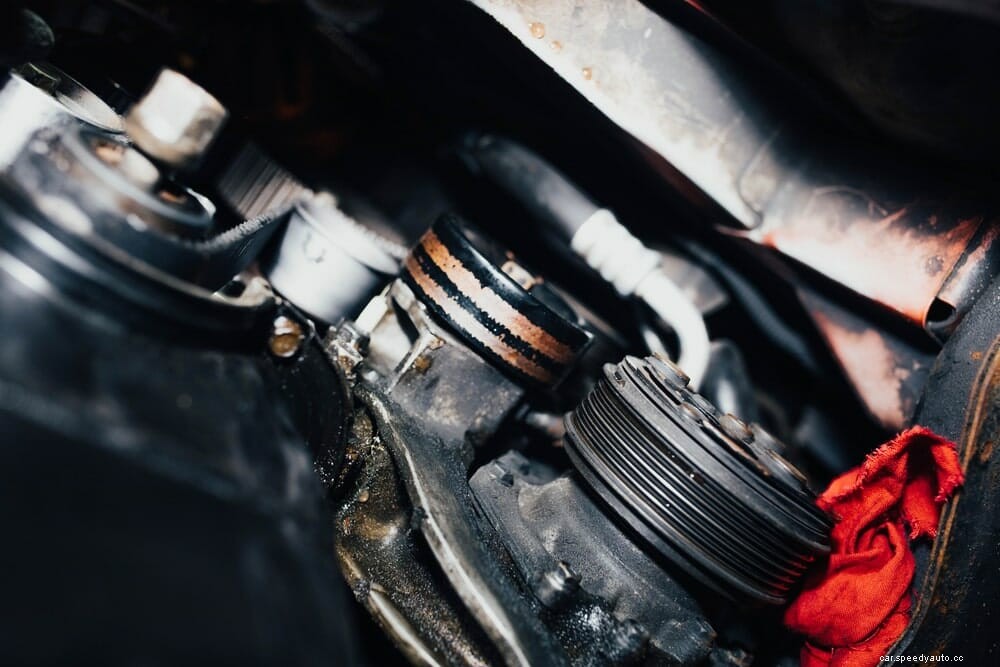
The crankshaft pulley is a key part of the engine that helps to keep everything running smoothly. It sits on the end of the crankshaft and is responsible for turning the belt that powers all of the other accessories in the engine. This includes the alternator, water pump, and power steering pump.
If your car experiences problems with any of these components, it’s likely that the crankshaft pulley is to blame. In some cases, the pulley can become loose or worn out and need to be replaced.
Symptoms of a bad pulley include a squealing noise coming from the engine, problems with charging or cooling systems, and difficulty steering.
If you’re experiencing any of these issues, it’s a good idea to have your car inspected by a qualified mechanic. They will be able to determine if the crankshaft pulley is the root of the problem and recommend a solution.
In most cases, this involves replacing the pulley with a new one. However, in some cases, the entire crankshaft may need to be replaced.
There are a few reasons why you might want to remove the crankshaft pulley. Maybe you’re replacing the belt or one of the accessories, or maybe you’re just doing some routine maintenance and want to give everything a good cleaning.
Whatever the reason, removing the crankshaft pulley can be a difficult task if you don’t know how to do it. That’s where this article comes in. We’ll show you how to remove the crankshaft pulley without using any special tools or equipment.
In most cases, no. A puller is a tool that’s specifically designed for removing the crankshaft pulley, but it’s not always necessary. There are a few ways to remove the pulley without using a puller.
There are a few ways to remove a crankshaft pulley without a puller. One way is to use a strap wrench. The strap wrench will fit around the pulley, and you can use your hands to twist the wrench. Another way is to use a pipe wrench.
The pipe wrench will fit over the pulley, and you can use your hands to twist the wrench. If the pulley is too tight, you can use a breaker bar to help you twist the wrench. You can also try using a cheater bar if you have one.
A cheater bar is basically a piece of metal or wood that is longer than the wrench that you are using. This will give you more leverage when trying to remove the crankshaft pulley.
Remember, if the pulley is too tight, you can use a breaker bar or cheater bar to help you remove it. Be sure to wear your safety gear when removing the crankshaft pulley. Safety first!
The first way to remove a crankshaft pulley without a puller is by using a strap wrench. This is the easier of the two methods and it does not require any special tools.
Step One – Loosen the bolts that hold the pulley in place. There are usually three or four bolts that hold it in place.
Step Two – Put a strap wrench around the pulley and tighten it as much as possible. Make sure to keep the straps parallel to each other.
Step Three – Use a hammer to hit the end of the wrench. This will help loosen the pulley from the crankshaft.
Step Four – Remove the wrench and remove the pulley from the crankshaft.
Step One – Put on your safety gear.
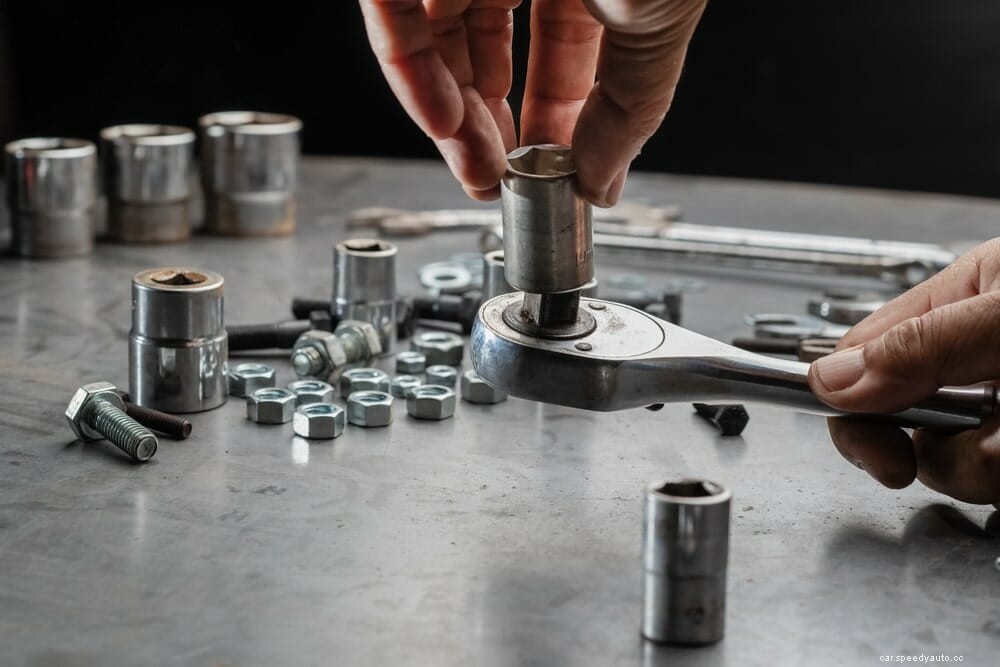
Step Two – Place the breaker bar over the crankshaft pulley.
Step Three – Use your hands to twist the breaker bar.
Step Four – If the pulley is too tight, use a cheater bar to help you twist the breaker bar.
Step One – Put on your safety gear.
Step Two – Place the cheater bar over the crankshaft pulley.
Step Three – Use your hands to twist the cheater bar.
Step Four – If the pulley is too tight, use a breaker bar or cheater bar to help you twist the cheater bar.
Step Five – Remember, if the pulley is too tight, you can use a breaker bar or cheater bar to help you remove it.
Step Six – Be sure to wear your safety gear when removing the crankshaft pulley. Safety first!
Congratulations! You have successfully removed the crankshaft pulley without a puller.
In case you didn’t remove the crankshaft pulley, be sure to visit a professional so he can help you with that!
The second way to remove a crankshaft pulley without a puller is by using a pipe. This method requires some special tools, but it is a more secure way to remove the pulley.
Step One – Put a pipe over the crankshaft and tighten it as much as possible. Make sure to keep the pipe parallel to the crankshaft.
Step Two – Use a hammer to hit the end of the pipe. This will help loosen the pulley from the crankshaft.
Step Three – Remove the pipe and remove the pulley from the crankshaft.
Congratulations! You have now removed your crankshaft pulley without a puller! If you followed these steps correctly, then you should not have any damage to either the pulley or crankcase. Be sure to replace any bolts that were removed during the process.
It is not recommended to drive without a crankshaft pulley. The crankshaft pulley is responsible for keeping the engine belts in place. Without it, the belts could come loose and cause serious damage to your engine.
There are a few key ways to determine if your crankshaft pulley is damaged and in need of replacement. One way is to inspect the surface of the pulley for any signs of wear, cracking, or other damage. If you notice any abnormalities, it’s likely time for a new pulley.
Another way to tell if your crankshaft pulley is damaged is to listen for strange noises while the engine is running. If you hear a rattling or humming noise, it could be an indication that the pulley needs to be replaced.
Some common symptoms of a bad crankshaft pulley are noise coming from the engine, vibration, and loss of power. If you are experiencing any of these symptoms, be sure to take your car in for a diagnostic.
The lifespan of a crankshaft pulley can vary depending on the make and model of the engine, as well as the type of driving conditions it experiences. In general, a crankshaft pulley can last anywhere from 30,000 to 100,000 miles before it needs to be replaced.
The cost to replace a crankshaft pulley can vary depending on the make and model of your vehicle, as well as the parts and labor required for the job. However, on average, you can expect to pay between $200 and $300 for a new crankshaft pulley.
If your crankshaft pulley is damaged or worn out, it’s important to replace it as soon as possible. A broken or malfunctioning pulley can cause serious engine damage, so it’s not something you want to put off.
A crankshaft pulley bolt is not reverse threaded. It is important to use the correct bolt when installing a crankshaft pulley, as using the incorrect bolt can cause damage to the engine.
The crankshaft pulley bolt should be tightened to the manufacturer’s specifications in order to ensure proper engine function. Improper installation of a crankshaft pulley can lead to decreased engine performance and even engine failure.
When replacing a crankshaft pulley, it is important to use the correct parts and follow the manufacturer’s instructions. Failing to do so can result in costly engine repairs.
If you are unsure whether or not your crankshaft pulley bolt is reverse threaded, it is best to consult a mechanic. A professional will be able to diagnose the issue and make the necessary repairs properly.
Trying to fix the problem yourself can lead to further damage and increased costs. Leave the repair to the professionals, and your engine will be running like new in no time.
Removing a stuck crankshaft pulley can be a difficult task. The first step is to try and loosen the pulley with a breaker bar. If that doesn’t work, you can try using a wrench or an impact gun.
If those methods don’t work either, you can use a hacksaw to cut through the pulley. Be sure to wear safety goggles when doing this, as there will be sparks flying. Once the pulley is cut free, you can use a puller to remove it from the crankshaft.
If the pulley is damaged, you can try to repair it with a welder. Be sure to use a quality welders rod and to weld the pulley in a well-ventilated area. If you don’t have access to a welder, you can try to find a replacement pulley at a salvage yard or online.
Replacing a crankshaft pulley can be a challenging task, but it’s important to do it properly in order to ensure the longevity of your engine. By following these instructions, you can safely remove and replace a stuck crankshaft pulley.
We hope that this article was helpful in showing you how to remove a crankshaft pulley without a puller. If you have any questions or comments, feel free to leave them below. Thank you for reading!
