
You might have seen specialized socket sets used primarily for removing O2 sensors. They obviously make the process of removing an O2 sensor easier, but this is not a job that you’d be doing frequently.
So investing in a socket set to remove an O2 sensor might not seem like the best idea. Can you remove an O2 sensor without a socket? If so, how to remove the O2 sensor without a socket?
The oxygen sensor is also called the air-fuel ratio sensor. This is because the function of the O2 sensor is to maintain a favorable air-fuel ratio. The O2 sensor gauges the amount of oxygen to fuel ratio received to the engine.
It measures the amount of oxygen in the exhaust and feeds the information to an onboard computer known as the ECU or Engine Control Unit.
With the data provided by the O2 sensor, the engine control unit is in charge of adjusting the fuel supplied to the engine. The appropriate fuel-air ratio is required to get the best performance out of your engine.
Not only that, but an accurate air-fuel ratio will also increase fuel efficiency.
The O2 sensor is supposed to keep the engine running smoothly and efficiently. For this, we need a phenomenon called stoichiometric combustion. This is where the fuel that enters the engine is completely burnt.
Chemists use the greek symbol λ (lambda) to indicate the stoichiometric ratio. Due to this, you might have seen the O2 sensor referred to as a lambda sensor.
The air-fuel ratio is read by the O2 sensor using a chemical process. There are 2 parts to the O2 sensor. One resides inside the vehicle’s exhaust system. The other half is placed outside the vehicle exposed to air.
The O2 sensor is coated with platinum. This platinum coating reacts with oxygen to produce an electrical charge. The O2 sensor gets 2 readings. One from the part that is in the exhaust system and one from the oxygen in the environment. The electrical produced by these 2 parts will be different. This current difference creates a voltage.
The voltage is transmitted through a wire to the ECU. The ECU uses the data which comes in the form of a voltage to determine the air-fuel ratio in the combustion chamber. Thus it adjusts the fuel intake as needed.
Not only does the O2 sensor help the engine to be more efficient and perform better. But by assisting complete combustion, it reduces the number of harmful gasses emitted into the environment. O2 sensors were made mandatory in the early 1980s by the United States Clean Air Act.
You do not need to worry about how to remove an O2 sensor without a socket if your O2 sensor is working fine. Only when your O2 sensor is showing symptoms of failure, you should consider replacing it.
Now that you have an idea of how the O2 sensor works, let us look at the symptoms they show as they are about to fail.
Whenever the check engine light in your dash illuminates, it indicates that something is wrong with your car. In the case of an O2 sensor failure, the check engine light will illuminate. The check engine light alone cannot let you know what is wrong with your car.
For this, you need an OBD2 code reader. By reading the error codes, you will be able to identify the cause of the problem. This will help you identify whether the light is illuminated due to a bad O2 sensor.
You might already know the difference between a flashing check engine light and a solid check engine light. Just to remind you, a flashing engine light indicates a much more serious problem. Continually driving when the check engine light is flashing is not advisable.
As mentioned earlier, the O2 sensor is a critical component of the exhaust system since it monitors the amount of unburnt oxygen exiting the engine through the exhaust. This is the reason why the most common reason for a flashing check engine light is a bad O2 sensor.

A faulty O2 sensor will not accurately read the amount of oxygen leaving the exhaust. So, how does this reduce your fuel efficiency?
Assume that your O2 sensor provides false data to the ECU. The O2 sensor might say that there is too much oxygen leaving the exhaust to the ECU. With this data, the ECU will start to send more fuel into the engine to balance the air-fuel ratio.
Now, the amount of fuel inside the engine is too much and there is not enough oxygen to completely ignite the fuel. This is called a ‘rich fuel mixture’. So the excess fuel that enters the engine is wasted. This causes poor fuel efficiency in your ride.
If there is excess fuel in the engine, you will notice black smoke coming out of the exhaust. Though the O2 sensor is the most common culprit, there are a few other reasons why you might be seeing black smoke out of the exhaust.
Regardless of the reason, you need to get your car checked.
This is somewhat the opposite of the problem mentioned above. Again the error that the O2 sensor makes when reading the oxygen levels is to blame.
In the earlier mentioned issue, the O2 sensor sends information to the ECU saying the oxygen leaving the engine is high. Here it sends the false data, indicating that the oxygen leaving the engine is low.
The ECU processes the data ad decides that the engine is getting too much fuel. Therefore, the ECU reduces the amount of fuel that enters the engine. Due to the lack of fuel, the engine starts to perform poorly. This is called a ‘lean fuel mixture’.
This might increase your fuel efficiency slightly, but the reduction in power that your engine produces can be felt. Accelerating and keeping up at high speeds starts becoming harder.
This could also start causing misfires. Misfires happen when one or more cylinders are unable to combust the fuel-air mixture at the right time. you will notice that your car is hesitant to accelerate and RPM levels will start to fluctuate.
You might also hear popping noises when your engine misfires. Engine misfires are not only a hit on your car’s performance, but they can also damage your engine.
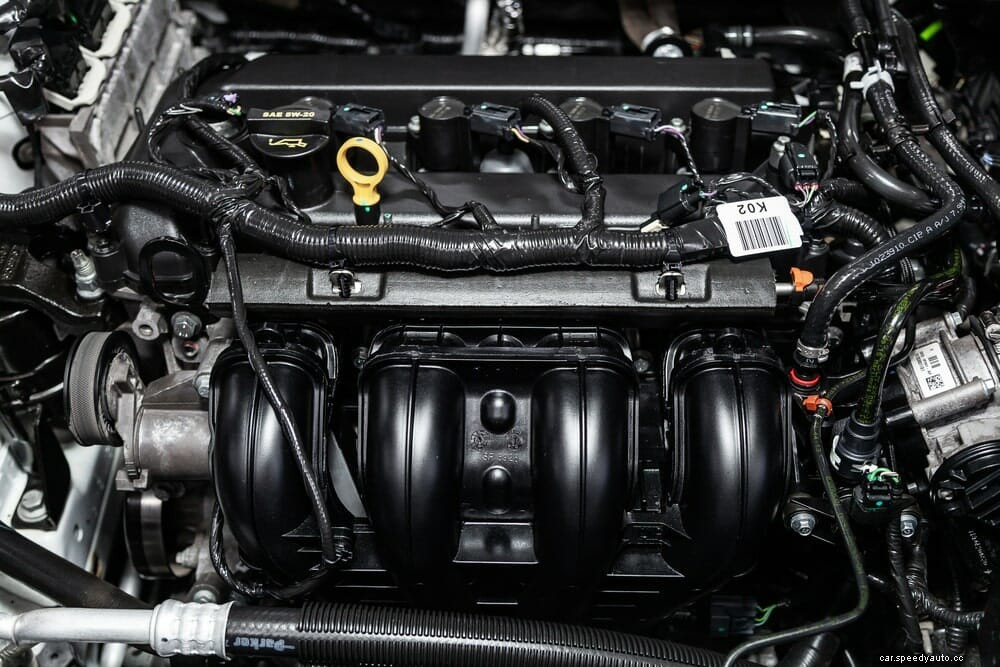
This is another issue that you’d notice when your engine is burning more fuel than usual. When more fuel is burnt when your car is at idle, the excess energy produced results in excess vibrations in your car, thus causing rough idling.
In normal conditions, your car idles at around 800 RPM even when the AC is on. As long as your RPMs are under 1000 at idle, your engine is fine.
But if your engine is receiving a rich fuel mixture the RPMs would be greater at idle. The needle might also start to fluctuate more than usual. If this happens when the engine is at normal temperature, then there is something wrong with your car and you need to get it checked.
Now that you know the symptoms of a failing O2 sensor, you know when to consider replacing an O2 sensor. Fortunately, you do not need to buy a specialized O2 sensor socket set for the procedure. But, how to remove an O2 sensor without a socket?
The process might be slightly difficult without the specific socket, but you will be able to manage it. Plus the extra work you put in is worth it.
So let us get into it.
Okay, maybe you noticed that your car is idling rough. So, you immediately point your finger at the O2 sensor and get it replaced. Maybe you are right, but there is a chance that the issue is not caused by the O2 sensor and it is caused by some other fault in your car.
If this were the case, you just wasted a lot of time, effort, and money. Thus, before you take any other action, if you suspect that your O2 sensor is faulty, you need to get it checked using an OBD2 scanner.
An OBD2 scanner plugs onto your dash and reads the error codes given by the onboard computer. Different codes correspond to different issues in your car. Once you identify the error code, you can pinpoint the cause of the issue.
And if the issue is caused by the O2 sensor, then you can work on getting it replaced.
The O2 sensors are located along with the exhaust system of the car. This is a part of the car that heats up a lot as the car runs. Working on a hot car will only result in injuries and mistakes.
If you recently took the car out, then let it cool for about 30 minutes. Wear protective clothing before you start.
Now you need to lift the car up. This is an optional step, but we suggest that you follow it. Lifting the car provides more room to move around under it which will allow you to work more comfortably.
Use a jack to lift up the car and wedge your back tires so that your car doesn’t move around. Working under a lifted car can be dangerous if the car is not stable. So make sure that the car is stable before reaching for the O2 sensor.
Most vehicles manufactured after 2000 consist of 4 O2 sensors. You will find 2 near the engine and 2 near the catalytic converter. Look for the first sensor near the engine. It looks similar to a spark plug with a black wire coming out of it.
The plug is often attached to the exhaust pipes. The second O2 sensor is located right behind the catalytic converter.
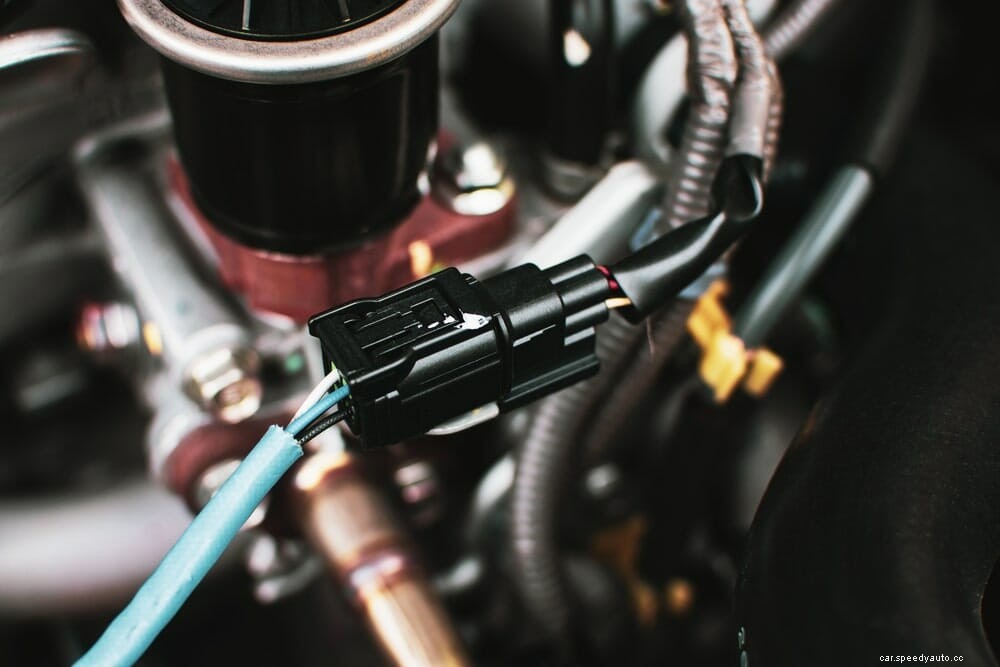
Now you need to disconnect the electrical connection that runs to the O2 sensor. If you follow the wire, it will end in a plastic plug. There is a tab that you need to push down on in order to remove the cable.
Sometimes, removing the cable is hard. It might be tempting to cut the wire and solder it when installing the new sensor. But with some new sensors, this might not work. So, do not cut the wire.
Now you need to remove the O2 sensor. Removing the O2 sensor can be tough. Worn-out sensors tend to get stuck. Sometimes due to the heat passing through the region, the O2 sensor tends to get welded on.
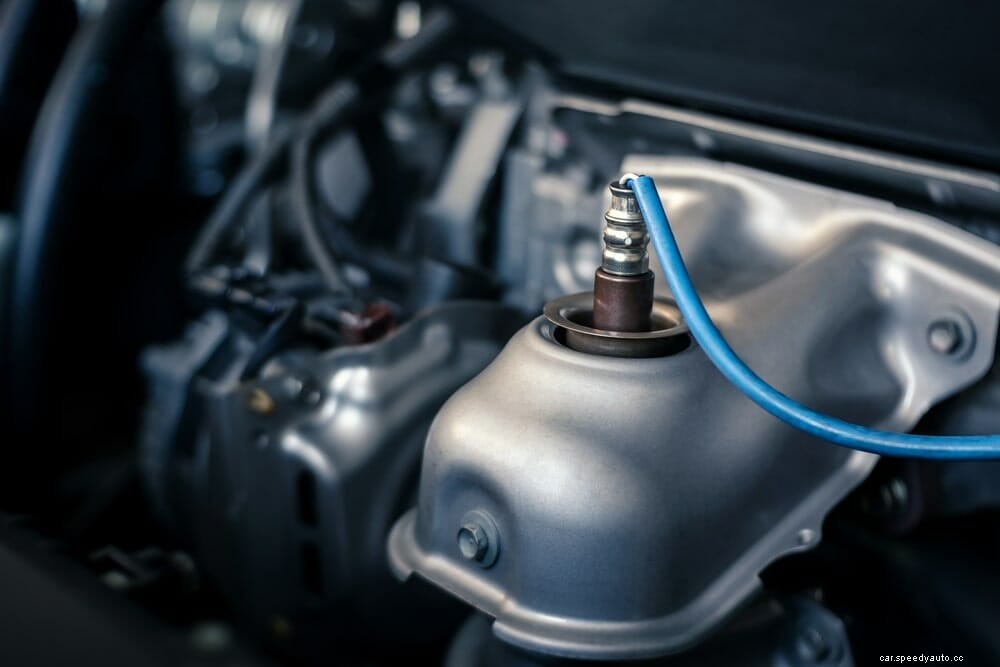
To assist the process of removing the old O2 sensor, you can use something called penetrating oil. Add the lubricant at the opening where the oxygen sensor plugs into the exhaust line. Wait for a few minutes until the lubricant soaks up.
If the sensor is still giving you a hard time, try applying the penetrating oil a few more times.
The easiest way to remove the O2 sensor is using a 3/8 inch ratchet wrench with a 7/8 inch oxygen sensor socket. But you asked, how to remove an O2 sensor without a socket, so let us look at an alternative.
If you do not have the wrench of the size mentioned above, use a flat-combination spanner. If you are unable to move the wrench, try using a hammer to give it some extra force.
If you still find it hard to remove the O2 sensor, use a heat gun to heat up the surrounding area. Unlike a torch, a heat gun doesn’t have open flames which can be dangerous. The heat will expand the sensor making it easier to remove.
When you buy a new sensor make sure to choose the right kind of O2 sensor that fits your car. Different models have different types of O2 sensors. If you do not know the exact type that fits your car, wait till you remove the O2 sensor before buying the one.
Then you’d be able to compare the old sensor and the new sensor side by side and make sure that they are an exact match.
You might notice a bronze-colored gel inside the pack when you buy a new sensor. If you are wondering about the purpose of that substance, it is a lubricant. Apply the lubricant onto the new sensor’s threads. That is the grooves that are present near the tip of the sensor.
Turn the sensor clockwise to tighten it into place on the exhaust line. If you added enough lubricant, it will go in smoothly. Using the wrench you used earlier, give it the final turn to secure it in place.
Now all you need to do is to connect the electrical connector back into its place. Push the plug in place to connect the cable. Make sure that the cable is not in contact with any component inside your car that heats up.
Before you do anything else, make sure to double-check the changes that you made. Check whether you have tightened the O2 sensor enough. When you are fighting the sensor, you should make sure not to overdo it as well.
If you tighten the sensor too much, you might damage the threads. Though this will not prove to be an immediate issue, you will regret it when you try to remove it next time.
Now lower the car and make sure that the problems are solved. If your car was idling rough, the change would be noticeable immediately. You can take your car out for a drive to make sure that your engine is working perfectly.
You might see that your check engine light is still illuminated. The way to clear the check engine light differs from car to car. In some cars, turning the engine on and off 3 times should clear the error. If not you would have to use the OBD2 scanner to manually clear the codes.
Here are some of the most commonly asked questions about, how to remove an O2 sensor without a socket.
O2 sensor sockets sets have a range of prices. You can get one for $25, and you might also see some marked for $100. Both serve the same purpose, but the quality and the extra accessories that you get will vary.
So, is it worth buying? It depends. If you are planning on doing repairs yourself frequently, it might be worth it. Or if you do not have the necessary equipment to perform the repair procedure, then you might consider buying an O2 sensor socket set.
On the other hand, if this is a once-in-a-lifetime repair and if you have a flat-combination spanner you might not need it.
Yes, you’d be able to drive short distances without a functioning O2 sensor. But how short? The O2 sensor is a crucial part of your car. Driving without is not a good idea. So, if you are in a situation where you need to drive without an O2 sensor, keep the drive as short as possible.
As mentioned earlier, the onboard computer needs the data given by the O2 sensor to manage the air-fuel ratio. Without it, the ECU won’t be able to adjust the mixture as necessary.
Apart from the low engine performance and reduced fuel efficiency, it will also damage the engine. When the ECU gets false readings, it will send more fuel than needed to compensate. This will lead to clogged plugs and could stall the car.
The O2 sensor is not a component that fails frequently. But like anything else, the O2 sensor will also fail at some point. The O2 sensor has a lifespan between 60,000 miles and 90,000 miles.
The repair costs for an O2 sensor can vary drastically according to the car you drive. It could cost anywhere between $100 to $500.
The part itself costs around $20 to $100. Unless you have a luxury car or sports car, the price is at the lower end. Labor takes around 30 mins to an hour. Depending on that labor charges would vary.
The nut on the O2 sensor is 22mm. So the socket size is 22mm. The ideal wrench for the job is a 7/8 inch wrench.
Penetrating oil is a low viscous oil that is used to free rust from mechanical parts. The O2 sensor does succumb to corrosion. This makes it harder to remove. The penetrating oil will remove the rust from the sensor making it easier to remove.
The O2 sensor is a critical component in your car. Like any other component, the O2 sensor does eventually wear out. A worn-out O2 sensor needs to be replaced. If not it will create a series of problems that will progressively worsen. This could lead to more engine damage.
There are many symptoms that you should be on the lookout for. Thick black smoke out of the exhaust is one of the most common symptoms of a failing O2 sensor.
If you suspect that your O2 sensor is failing, you need to use an OBD2 scanner to confirm the problem. If the problem is in your O2 sensor.
You can save a lot of money by doing the repairs yourself. This is one of the less complicated repairs associated with car ownership.
If you are wondering, how to remove an O2 sensor without a socket, and if that is even possible, you have nothing to worry about. You can manage just fine with the tools in your toolbox.
