
Hey there I’m Matt. Today we’re going to talk about what could be happening to your car if the Low Tire Pressure light is on but the tires are fine.
Technology is like having an extra set of eyes, ears, and limbs on virtually everything around us. This also includes the cars we drive. We can thank technology for LED lights, Wi-Fi, smartphones, and wireless Bluetooth connections, which are standard equipment on most modern cars.
When US Congress passed the TREAD act to help drivers recognize the importance of tire safety, all vehicles made after 2006 were mandatory equipped with a marvelous piece of technology to monitor the tire pressure continuously as you drive. We still suggest you always keep a portal tire inflator in the trunk just in case!
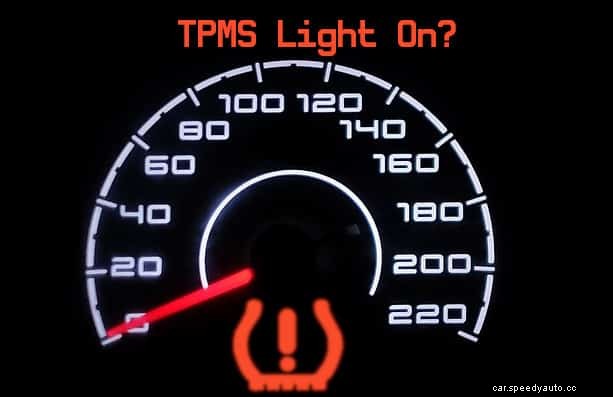
The TPMS or Tire Pressure Monitoring System is a humble yet impressive piece of engineering. Depending on the make and model of your vehicle, the TPMS can directly or indirectly monitor the tire pressure and trigger an indication light on the dashboard if the system detects low air pressure. In most cases, the TPMS indicator will illuminate if the existing tire pressure drops 25% below the recommended value.
But there are times when technology can prove irritating to say the least. Nothing irks me more than a car with an illuminated low tire pressure light even if the tires are completely fine.
Just last week I was working on my friend Jake’s Honda Accord and the TPMS light was lit up like a Christmas tree… with orange lights… even though that’s not very Christmas’y’ 🙂
The tires didn’t only look fine, but I double checked each tire using an analog tire pressure gauge. Every tire was inflated to 35 psi, and yet the tire pressure light is still ON.
Please don’t get me wrong. I love technology and couldn’t live one day without my smartphone and tablet. I love to wirelessly stream music while I drive using Bluetooth. But if there’s one piece of in-car tech that I loathe the most, it would have to be the TPMS.
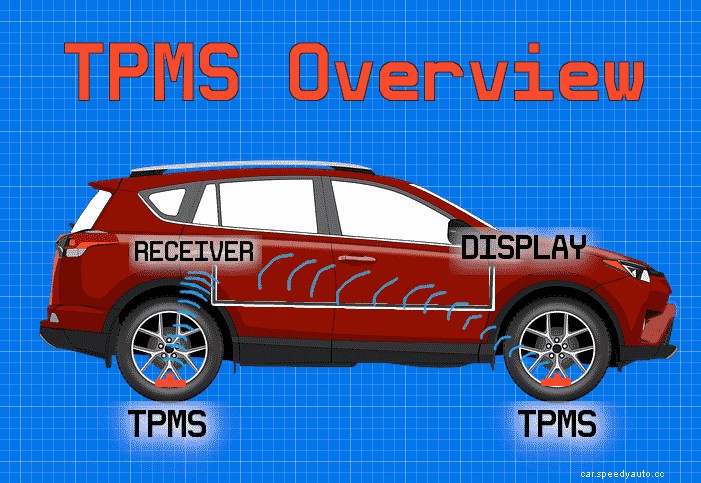
It is important to understand how a typical TPMS works. The system consists of pressure sensors and a digital receiver. The pressure sensors are small electronic boxes that are carefully mounted in each wheel. The sensors will continuously monitor the tire pressure in real-time on each wheel.
There are two general types of tire pressure monitoring systems:
Which of the two systems are better? I like the indirect TPMS system the most. The wheel sensors on a vehicle equipped with direct TPMS are prone to wear and damage. The sensors can also malfunction if the wheel encounters a serious pothole. Sensor damage can also occur when replacing or servicing the tire.
I also found out that indirect TPMS systems requires fewer resets over the life of the vehicle. In most cases, you don’t have to do anything at all since the system works flawlessly every time you turn the key or push the starter button.
But if the low tire pressure light is ON but the tires are fine, there are two things you need to consider.
Autel makes an OBDII TPMS tool which are helpful in troubleshooting these issues.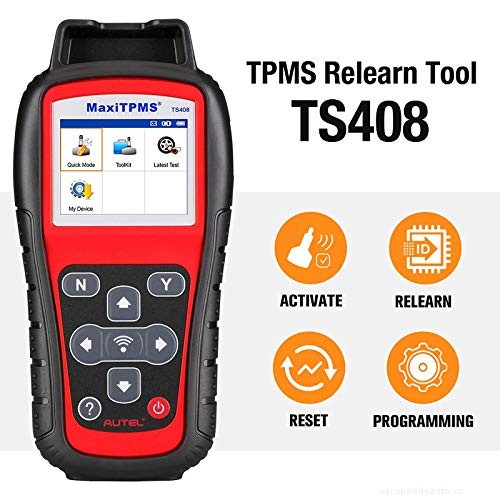 Buy from Amazon
If the low tire pressure light is ON and the tires seem fine, you can:
Before anything else, it is best to confirm the problem.
Step 1: Start the vehicle and take it for a short drive.
The low tire pressure warning light should illuminate for a couple of seconds after starting the engine. The light should turn OFF immediately.
If the low tire pressure warning light remains ON, drive the vehicle preferably to the nearest gas station or tire shop so you can check the air pressure of each tire.
In most cases, the warning light may be triggered by a tire that is 10% to 15% low in air pressure. Cold or icy weather also has a tendency to lower the air pressure inside the tires. Taking the car for a short drive will heat up the tires and increase the tire pressure.
But if all the tires are properly inflated and warmed up and the low tire pressure warning light is still ON, proceed to the next step.
Step 2: Reset the TPMS.
Now is the perfect time to whip out that owner’s manual. Depending on the make and model of your vehicle, the TPMS reset button is typically located on the console or inside the glove box.
After locating the TPMS reset button, here are the things you need to do:
If your vehicle is equipped with TPMS, don’t make it a habit to reset the system each time the low tire pressure warning light is ON.
The system is designed with your safety in mind. Technology is moving at an unbelievable rate and the TPMS sensors will improve with each new model. But in order to make the most with what you have, you should make it a habit to check the tire pressure every time you get inside the car.
Do not rely on the TPMS to monitor the air pressure of the tires. Even a short visual inspection is enough to confirm the presence of a flat.
Here’s a handy tip: always keep a small tire pressure gauge inside the glove box just in case. This simple tool will allow you to check the actual tire pressure even before the TPMS kicks in.
Pro TipIf your TPMS light remains on, it might be time to take it to the shop where they’ll have a special tool to “re-learn” the sensor. You can grab one of these tools online, but they aren’t cheap. I’d suggest looking into the Autel TS501.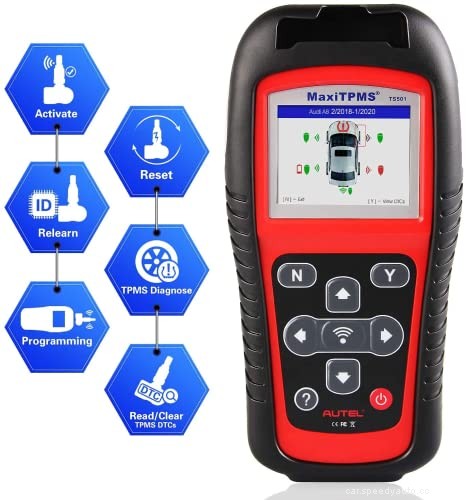 Autel MaxiTPMS TS501
$225.00
Buy on Amazon
Autel MaxiTPMS TS501
$225.00
Buy on Amazon
The tires are the only parts of your car that touches the road. Overinflated or underinflated tires will cause more harm than good.
Driving with overinflated tires will result in premature tire wear, funky handling, and a stiff ride. Want to know why it’s important to have a digital tire gauge? The TPMS warning light will not light up if the tires are overinflated. You can end up driving many miles on overinflated tires and cause significant wear and tear without you even knowing it.
On the opposite end of the spectrum, driving with underinflated tires is one of the leasing causes of tire failure. If the tire pressure is too low, there will be too much of the tire that is touching the road, which basically means the tire will be rolling with a higher surface area than is originally intended.
This will result in higher friction, which in turn will create too much heat inside the tire. Heat will not only lead to premature tire wear, but it can also lead to tread separation and tire blowouts.
There are times when driving with underinflated tires is beneficial, such as when driving over snow, ice, or loose gravel and sand. But when driving over smooth tarmac, the general rule is to maintain the proper tire pressure so you can drive in safety and comfort.
If your vehicle is equipped with TPMS here’s some maintenance tips:
It happens to the best of us. It doesn’t matter if you drive a car, truck, or SUV. There are times when the low tire pressure light will turn ON even if the tires are fine. Your best recourse is to manually check the pressure of each tire to confirm the problem. After this, you can simply reset the TPMS to get rid of the low tire pressure warning light on the dash.
