
When you look up the Autozam AZ 1 engine, the first thing you’ll notice is the number: 657cc. For anyone used to V6s and turbo fours, that sounds tiny—almost laughably so. But in the world of Japanese kei cars, that little engine is more than just a spec on paper. It’s integral to what makes the AZ-1 feel alive, fun, and surprisingly engaging behind the wheel.
The Autozam AZ-1 is powered by the Suzuki F6A engine, a 657cc turbocharged inline-three originally developed for kei cars. While the car wears Mazda badges, the engine itself is Suzuki-sourced, a common practice among Japanese manufacturers during the kei-car boom of the early 1990s.
Mazda chose this engine because it was compact, lightweight, and compliant with kei regulations, making it ideal for a mid-engine layout. Its small physical size allowed engineers to package it behind the seats without compromising balance or drivability.
Do you wonder why the AZ-1 engine is so small? The AZ-1’s engine size is a direct result of Japan’s kei car regulations, which were designed to promote affordable, efficient vehicles. At the time, kei cars were limited to a maximum displacement of 660cc, along with strict exterior size limits.
To remain legally classified as a kei car, the AZ-1 had to stay within these boundaries. That’s why its engine displacement sits at 657cc, just under the legal cap. Rather than fighting these rules, Mazda embraced them and engineered the AZ-1 around the limitations, turning constraints into defining features.
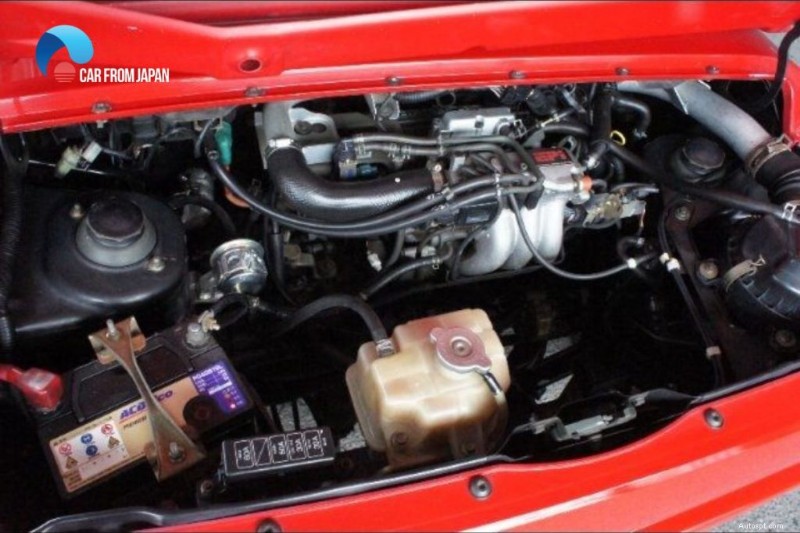 What truly separates the AZ-1 from most kei cars is where the engine is placed. (Photo: carfromjapan.com)
Here’s a clear, easy-to-read breakdown of the AZ-1’s engine specs:
These figures may look modest, but they were the maximum allowed under kei regulations, and they perfectly match the AZ-1’s lightweight design.
What truly separates the AZ-1 from most kei cars is where the engine is placed. Instead of sitting up front, the F6A engine is mounted behind the driver, giving the AZ-1 a true mid-engine, rear-wheel-drive layout.
This positioning improves weight distribution and balance, allowing the car to feel more stable and responsive than many front-engine kei cars. Mid-engine layouts are extremely rare in the kei segment due to cost and complexity, which makes the AZ-1’s configuration especially unique—even today.
On the road, the AZ-1 engine feels eager and responsive. The turbocharger helps compensate for the small displacement, providing usable torque across city speeds and enough punch to stay engaging on winding back roads.
Because the car weighs only about 720 kg (1,587 lb), the engine doesn’t need big power numbers to feel lively. Throttle inputs are immediate, the engine revs freely, and the close-ratio manual transmission keeps the driver involved. It’s a reminder that driving enjoyment isn’t always tied to horsepower.
The Suzuki F6A engine in the Autozam AZ-1 has a generally solid reputation for reliability when properly maintained. At this point, however, age is the biggest factor, as all AZ-1s are now over 30 years old. Rather than design flaws, most ownership concerns come down to wear and upkeep.
Common ownership considerations include:
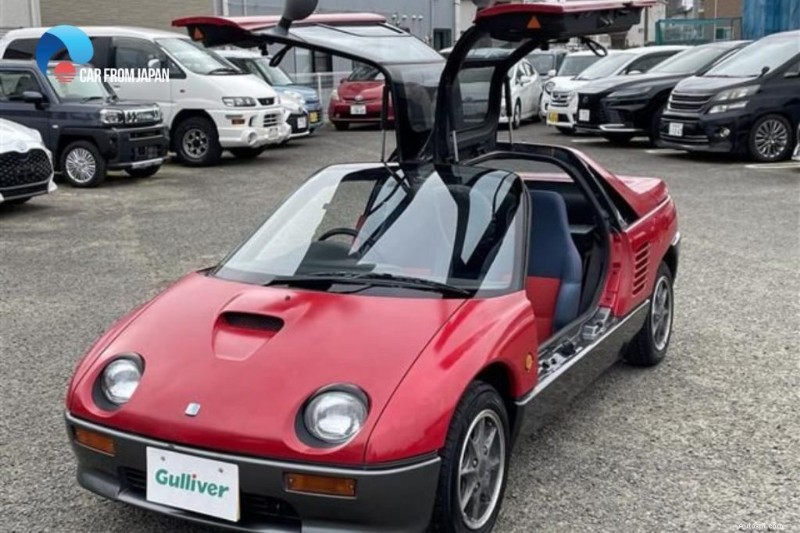 The Autozam AZ-1 is powered by the Suzuki F6A engine (Photo: carfromjapan.com)
Like many early-1990s engines, the F6A relies on rubber components that naturally degrade over time. Vacuum hoses, coolant lines, and seals can harden or crack if they haven’t been replaced, potentially leading to leaks or inconsistent engine behavior. Refreshing these items is often one of the first steps in long-term ownership.
The turbocharged F6A benefits greatly from regular oil changes and proper warm-up habits. When cared for, the turbo can remain reliable, but neglected engines may show signs of wear after decades of use. Keeping oil quality high is key to preserving boost response and longevity.
Cooling is especially important in the AZ-1 due to its mid-engine layout. Radiator condition, coolant hoses, and fans all need to be in good shape to manage heat effectively. A well-maintained cooling system helps protect both the engine and turbocharger from long-term stress.
One advantage of the F6A engine is its widespread use in other Suzuki kei models. Because of this, replacement parts are still relatively accessible, particularly through Japanese suppliers. This makes maintaining an AZ-1 more practical than owning a car with a one-off engine design.
Overall, the AZ-1’s engine responds well to preventive maintenance and thoughtful care. When looked after properly, the F6A remains a dependable and fitting powerplant that complements the AZ-1’s lightweight, driver-focused character.
The Mazda Autozam AZ-1 engine proves that displacement doesn’t define character. Built to meet kei car rules, paired with a mid-engine layout, and matched to an ultra-light chassis, this small turbocharged three-cylinder delivers far more personality than its size suggests.
For enthusiasts who value balance, engagement, and clever engineering, the AZ-1’s engine isn’t a compromise—it’s the point. And that’s why, even decades later, size still isn’t the whole story.
