
Snow, ice and sleet — not to mention the chemicals used to melt them — can wreak havoc on your vehicle. Properly thawing your car when winter delivers its worst is important to prevent long-lasting damage and keep you safe while driving.
Start with a properly operating heater. If the engine is not getting up to the proper operating temperature, the defroster will be much less effective. Set the climate control to full defrost rather than bi-level. This will direct the maximum airflow at the windshield.
If your car has the option, the defroster should be on the fresh air setting rather than re-circulated air.
Get tips on how to defog your car windows here.
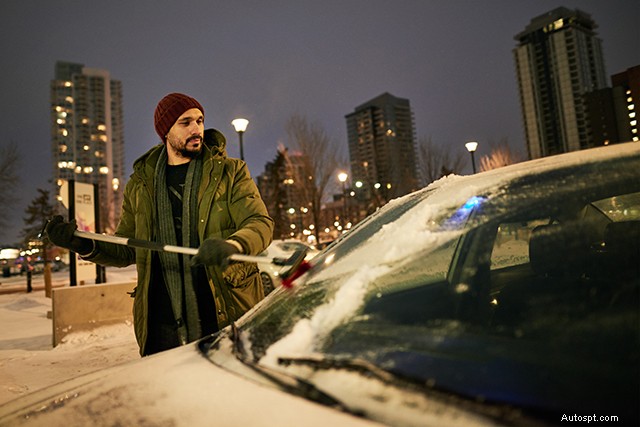
Use a long-handle snow brush or snow broom (sometimes called a snow rake). Clean from the middle and push or pull the snow. Doing this before the snow turns into ice will prevent damaging the paint.
Clean the entire car — hood, roof, lights and license plates.
Salt (sodium chloride) and other road chemicals (magnesium, calcium chloride and other brines) can cause accelerated rusting.
To prevent this, you should clean any accumulated salt off your vehicle as soon as practical. Flushing with clean, fresh water is ideal. During winter, an occasional undercarriage wash will help wash away any built-up salt, sand or other road deicing chemicals.
If your car is covered with sticky brine, salt or other chemical substances, don’t park the car in the garage. The warmer air will speed up the corrosion process. Wash and dry the car before putting it in a garage. Touch up any paint damage or scratches before it starts to rust.
If you are able to open the door and get in, do so and start the car. This will allow the vehicle to warm up and begin to melt the ice.
Do not use sharp products — and never use a shovel. A strong plastic ice scraper will do just fine. Another option, once the car starts to heat up and lightly thaw, is banging on the ice with the snow broom to loosen the ice. You can also use an aerosol deicer spray on the glass but be aware this is mostly alcohol and may remove wax from the paint.
Never pour hot water on the door. Although this may get you into the car, you have just added more water that will likely freeze again.
First, make sure to try all the doors. If it’s an SUV, even try the hatch. You may find one door that you can get in. Don’t yank on the door handles as they can break. Try banging your hand along the edge of the door, which may free up the ice. You can also spray deicer on the door and handle. Or just wait until the sun comes out if that’s an option.
Once you get the door open, wipe down all the rubber gaskets to remove any moisture and then spray the gaskets with silicone. This will displace any moisture and prevent door freezing. You should ideally do this a couple of times per year.
This article has been updated and republished from a previous version.
Last updated on December 22, 2025 by AAA Staff
