
Recently, Volkswagen announced that the automaker will increase e-Golf’s daily production from 35 to 70 cars.
“To meet higher demand for the e-Golf, production capacity at the Transparent Factory is to be increased. From March 2018, production is to increase step-by-step from 35 to 70 vehicles per day. The plant will switch from single-shift operation to 2-shift operation in the course of this change.”
This equals to a monthly production increase from roughly 1.050 cars to 2.100, which still seems very unambitious when compared to production targets of the Tesla Model 3, Nissan Leaf or even Hyundai IONIQ Electric.
Anyway, the Volkswagen e-Golf’s production increase is scheduled to start from March 2018 because that’s when the new Samsung SDI battery cell plant in Europe (Hungary) will start operating.
The new Samsung SDI factory will not only produce the 120 Ah BEV2 battery cells to be used in the BMW i3, but also the PHEV2 type to be used in Volkswagen plug-in cars. However, it’s still unknown if the cells will keep the current capacity of 37 Ah or finally be upgraded to 50 Ah, which would result in a 48,4 kWh battery for the VW e-Golf.
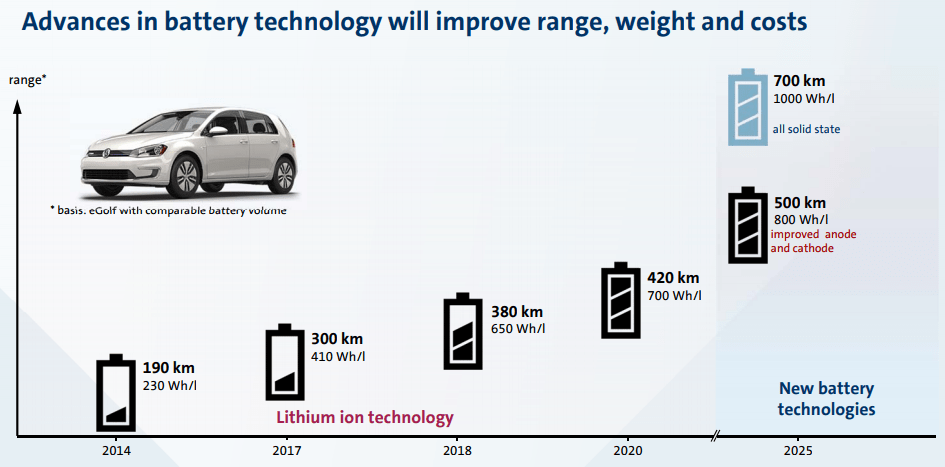
Advances in battery technology will improve range, weight and costs by Volkswagen
As a side note, Samsung SDI already unveiled its plans to produce 60 Ah PHEV2 battery cells, which would make possible a 58 kWh battery for the e-Golf…
Anyway, Samsung SDI have showed their 50 Ah PHEV2 battery cells in April last year and said the following:
“Samsung SDI exhibited various types of cells and modules including 37Ah, 50Ah, 94Ah, 120Ah, and more. 50Ah cell has improved capacity by 35% compared to 37Ah cell, and 120Ah by 28% compared to 94Ah. In particular, 37Ah and 50Ah cells, and 94Ah and 120Ah cells are applied the same standard type modules, respectively. Standardizing module type makes it easy to standardizing car design, so it’s an advantageous feature.”
Considering that the Volkswagen e-Golf will only be replaced by the ID Hatchback in late 2019, it definitely needs an upgrade to keep up with the Nissan Leaf e-Plus (longer range version) and the Tesla Model 3. A 48 kWh battery, a more powerful 152 kW electric motor and a price adjustment could help the e-Golf to survive the upcoming arrival of the two big boys…
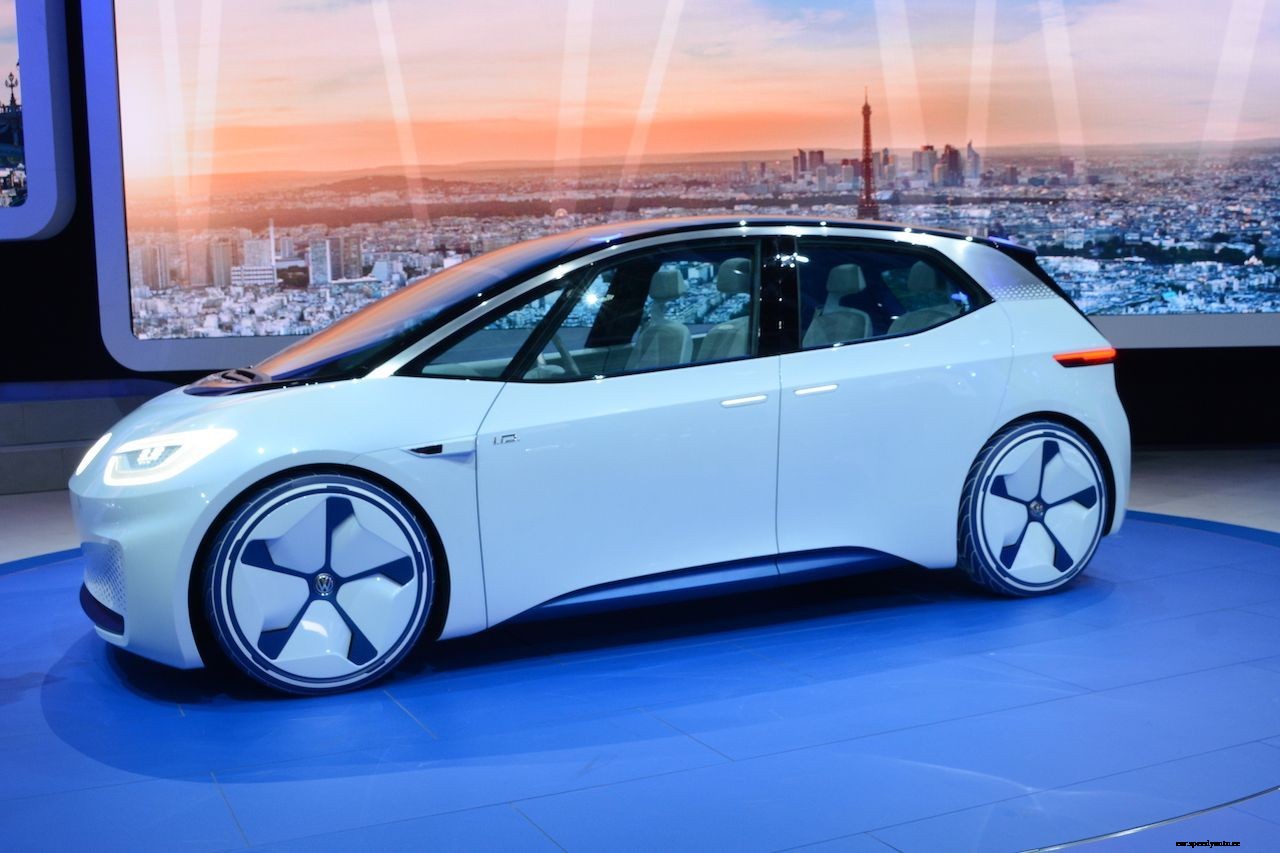
Volkswagen I.D. concept electric car at Paris
What do you think?
