
Starting in March this year Hyundai will start producing the Kona Electric in its Czech manufacturing plant to supply the European market. With growing demand for electric cars from European consumers and stricter EU emissions regulations for automakers starting this year, Hyundai’s decision to increase production and reduce delivery times isn’t a surprise.
Let’s see the press release.
Starting in March 2020, the company will introduce the Kona Electric in its Czech manufacturing plant, as well as increasing existing supply from its Ulsan plant in South Korea. This will drastically reduce delivery times for customers in Europe.
The decision to additionally produce the Kona Electric in Europe was made in order to better serve Hyundai’s European customers. Since going on sale in 2018, demand for the Kona Electric has surpassed expectations, and the increased capacity is intended to keep up with rising demand.
For 2020, Hyundai will provide over 80,000 units of zero-emission vehicles to European customers, including Kona Electric, IONIQ Electric and the NEXO fuel cell car. With this development, Hyundai expects to become the biggest provider of zero-emission vehicles in Europe in 2020.
Korean automakers such as Hyundai and Kia have been constantly criticized by European customers of having extremely long delivery times for electric cars. Nonetheless, it’s also recognized by the EV community that the Korean automakers produce some of the best electric cars now available such as the Kia e-Soul, Kia e-Niro, Hyundai IONIQ Electric and Hyundai Kona Electric.
We are listening to our customers and have made this decision in order to meet the growing demand for our electric vehicles. With more and more people becoming concerned about the impact of their choice of car on the environment, we see a huge potential for EVs in the European market. This reflects our progressive mindset and will reinforce our position as a leader in future mobility.
Said Dong Woo Choi, President and CEO of Hyundai Motor Europe HQ.
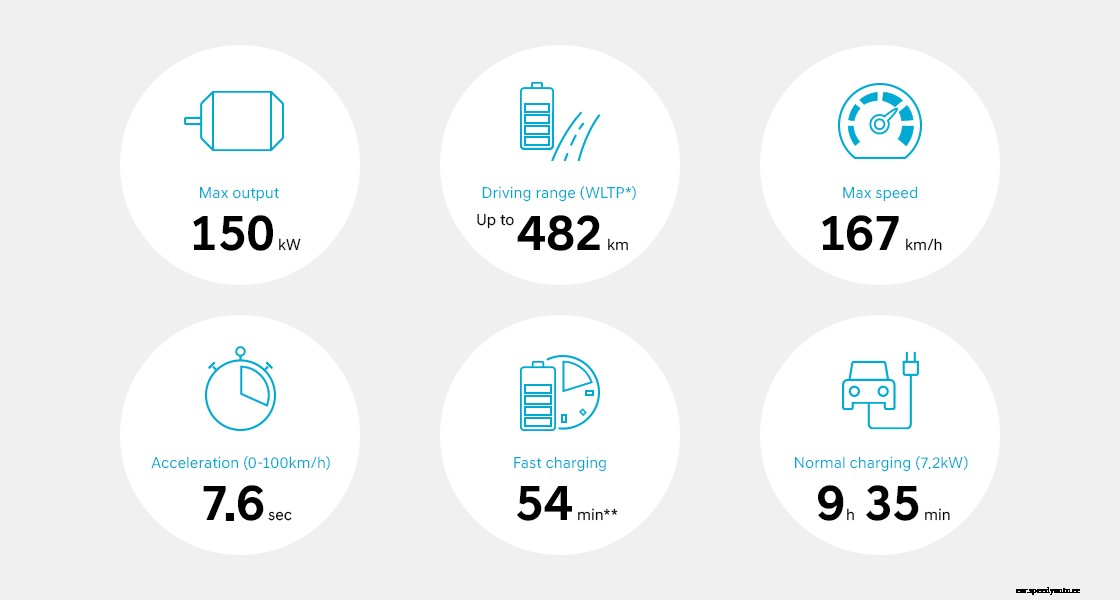
Hyundai Kona Electric highlights
The Hyundai Kona Electric is a hatchback with a WLTP range of 482 km (300 miles) that strongly appeals to the European market. Hyundai could have made it the best selling electric hatchback in Europe last year if it wanted to.
However, this year it’ll more difficult to achieve that feat, since it’ll have the competition of the new Renault ZOE, PEUGEOT e-208, Opel Corsa-e and Volkswagen ID. 3.
The Tesla Model 3 is an electric sedan that was clearly designed for the North American market and still managed to be the best selling electric car in Europe last year with almost 100.000 units sold. Tesla won the title, not only because the Tesla Model 3 is indeed a great car, but mostly because the legacy automakers didn’t offer appealing alternatives.
Anyway, starting this year Europeans will have the possibility to order good electric cars in the hatchback form – which they prefer – without suffering from extremely long waiting times. However, I think that legacy automakers will only increase the production of electric cars to minimal levels, enough to avoid EU emissions fines. We won’t see legacy automakers producing enough electric cars to challenge Tesla until 2022. In 2022 Volkswagen could take the lead with the ID. brand…
What do you think? When will legacy automakers catch up with Tesla? Before or after 2022?
