
In early March – at the Geneva International Motor Show – Nissan was proud to announce that in Europe the new Nissan Leaf already had more than 19.000 orders. At the time Nissan said that “one new Nissan LEAF is being ordered in Europe every 12 minutes, making it the region’s fastest-selling electric vehicle.”
Unfortunately for Nissan, it was in Europe where the #rapidgate spread and some orders started being cancelled. Nissan had to do something about it…
Now, to convince customers to maintain their orders, Nissan started increasing the prices for the Leaf in Europe.
Below you can see the price change in Portugal.
Prices in February, 2018 (Portugal)
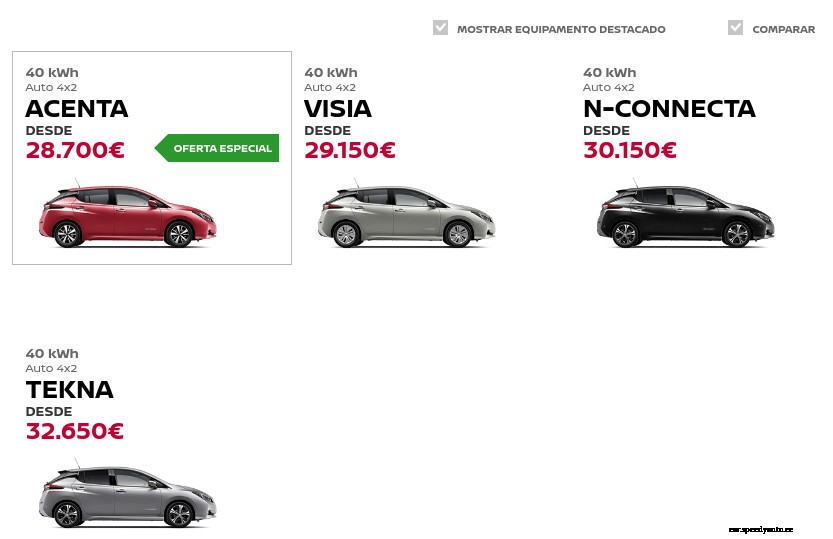
2018 Nissan Leaf price in Portugal by February, 2018
Prices in April, 2018 (Portugal)
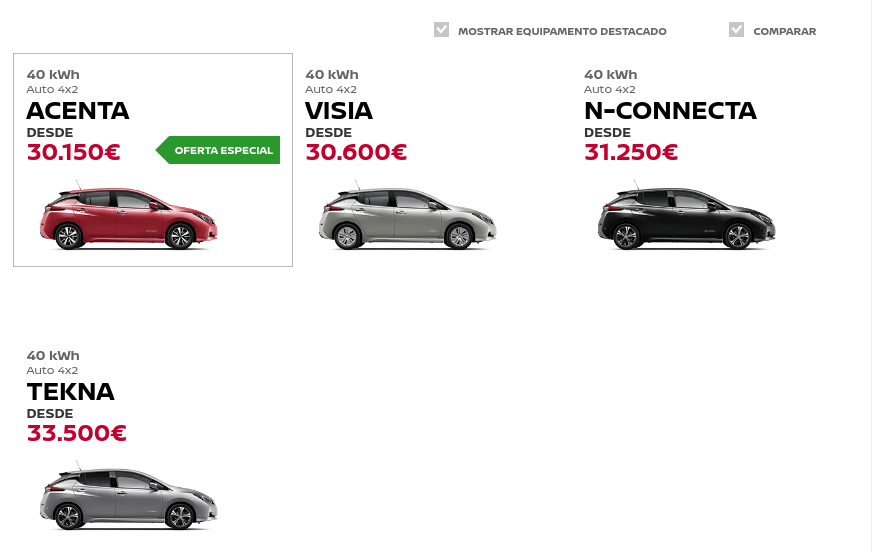
2018 Nissan Leaf price in Portugal by April, 2018
In the United Kingdom, where the European Leaf is built, it also got a price increase.
With this strategy Nissan seems more worried about keeping current orders than getting new ones. Considering that by now there are probably more than 20.000 orders for the Leaf in Europe, this might be a smart strategy. This way customers who already ordered the Nissan Leaf get the feeling that they got a great deal – and forget any possible rapid charging issue.
The other thing that Nissan should do is to prioritize deliveries to countries that have colder climates, because when summer arrives, people driving the 2018 Nissan Leaf at highway speeds in Portugal or Spain could have their first fast charge limited to 22 kW.
Considering that 2.339 Nissan Leaf units were registered in Norway last month, it seems that’s what the automaker is doing.
As a side note, I always recommend white electric cars because their excellent ability to reflect light and solar radiation make them safer (more visible) and cooler (better for the batteries). Now I can also add that by being cooler they can also charge faster…
Joking aside, I think that the real issue here is lack of information. It’s not a huge problem that an electric car in some occasions is limited to charge at 22 kW, but the customer needs to be aware of that. As I wrote before, I think that Nissan should under-promise and over-deliver by stating that the Leaf can “fast” charge at 22 kW or more, this way customers could have nice surprises instead of disappointments.
Anyway, I think that increasing the price and prioritizing deliveries to colder countries is a smart move until the most-awaited 2019 Nissan Leaf finally arrives.
What do you think?
