
One of the worst nightmares a car driver has is his car not starting. One of the most common issues is a dead battery, which can be easily replaced without the help of a mechanic.
But in most cases, a car battery can be saved without using a lot of money. The first and easiest fix is to check if your car battery still has water in it. Let’s find out how!
A car battery stores the electrical charge generated by your engine during operation and distributes this current through all devices which need it when they’re turned on, including but not limited to headlights, radio, ignition system, allowing you to run your vehicle’s different accessories while the engine is turned off.
However, some vehicles such as hybrids and electric vehicles only rely on the battery for power while others such as diesel engines can use it in conjunction with a generator, all dependent on the make and model of your vehicle. In this case, we will focus on regular car batteries used in internal combustion engines.
You may have heard that there are plates or grids in batteries. These are conductors through which electricity flows. The material for these conductors can be either metal or carbon depending on the type of battery you’re using.
Another thing that you might have noticed is the holes that are punched into the sides of a battery cell. These are vent holes that allow hydrogen and oxygen gasses to escape from the battery during use, which prevents them from building up and causing an explosion.
If you look at a diagram of a car battery, you will see a “+” sign on one end and a “-” on the other. This is how electricity flows out of your car battery; through those plates mentioned earlier where electrons come off as it discharges (the negative plate gives up electrons).
That’s why your car slows down when its battery starts to go dead; there isn’t as much power left in that battery to keep your engine running.
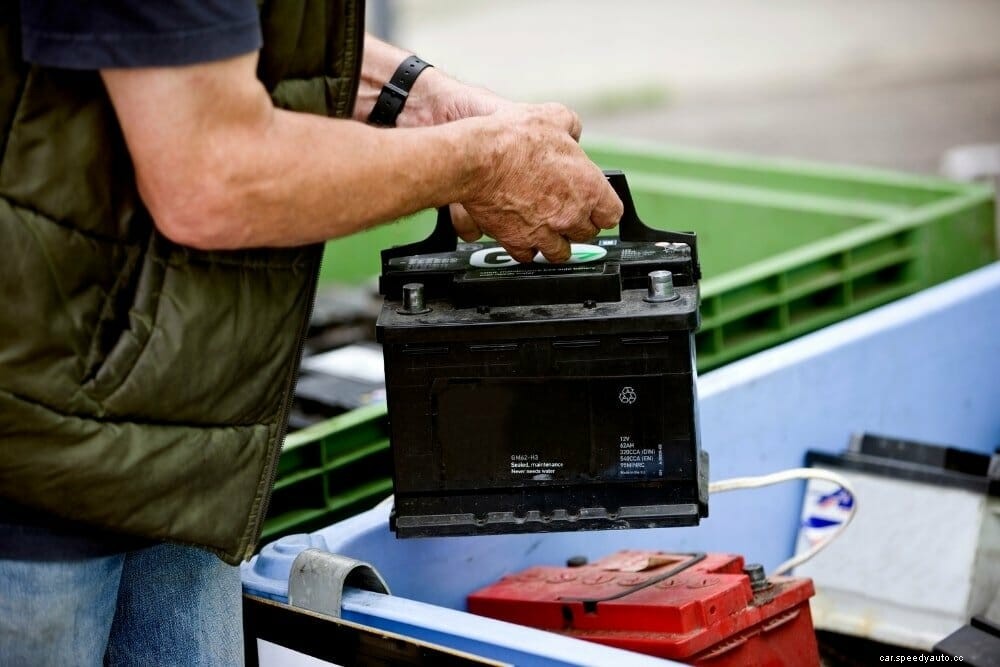
Now we know what goes inside of our batteries; we need to know what causes them to go dead. As you drive, your alternator charges your car’s battery by converting mechanical energy into electrical energy. When the battery is low on acid, it can’t hold as much of a charge, and power gets drained from your vehicle’s electrical components (i.e., lights).
For example, when you leave your headlights on overnight and try to start up your car in the morning, you probably hear a clicking sound instead of the engine roaring to life like you were expecting. That’s because those functions that draw power from those batteries are now disabled until enough juice comes back into the system.
Battery fluid helps keep everything running smoothly inside of your battery by providing an electrolyte through which electricity can flow freely between plate groups (this allows chemical reactions to take place).
Batteries are only allowed so much electricity to flow through them before they give out. That’s why you never want to leave your headlights on overnight; if the battery is drained of all its fluid, it can’t store as much electricity and won’t be able to start your car in the morning.
Don’t run a car with a dead battery for more than 30 minutes, because you could cause damage to your alternator and it wastes fuel. Some batteries may say that automatic shut-off occurs at 12.4 volts but that is not always the case depending on where you get your battery from.
If you have been told that your battery has gone bad because it will not hold a charge then you should take that battery to an auto parts store and get it tested. If the testers determine that your battery is good (above 80% charged) then it might be your charging system that needs to be replaced.
For starters, there are two types of charging systems used in today’s cars:
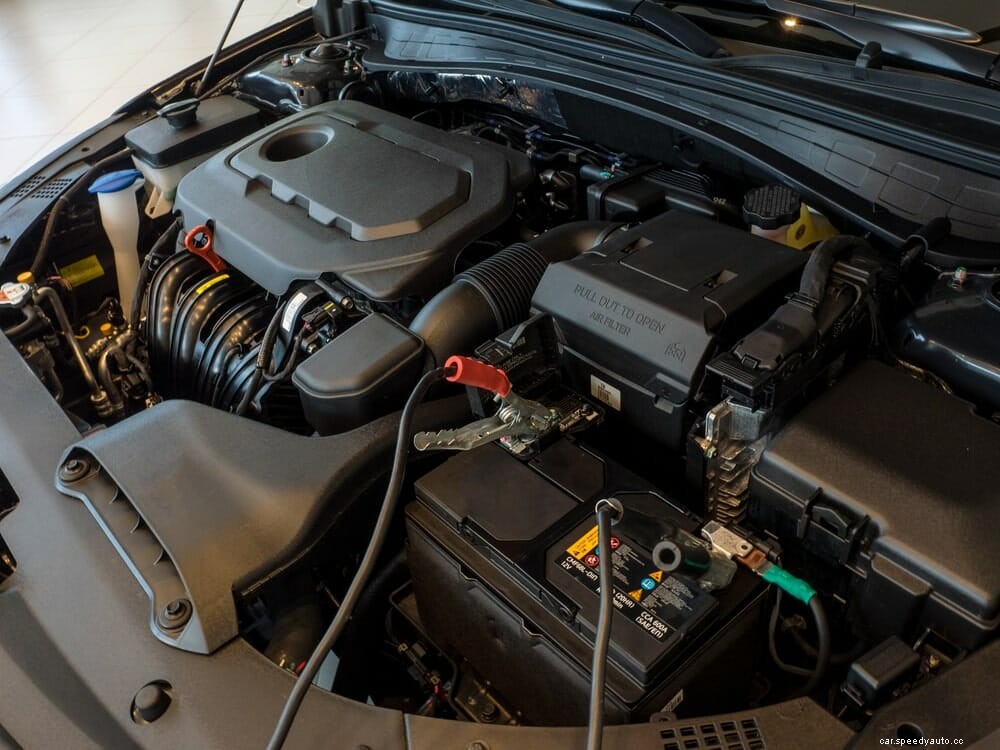
An alternator system is an older method of recharging your car battery. All it does is charge the battery by allowing electricity to flow out of it through a wire that goes into your car’s electrical system (the wire then passes electricity back into the battery).
Today’s car batteries contain something called “passive negative feedback” which will cut the power off if too many current flows through them; this keeps them from overheating and causing damage to other parts inside the vehicle during use.
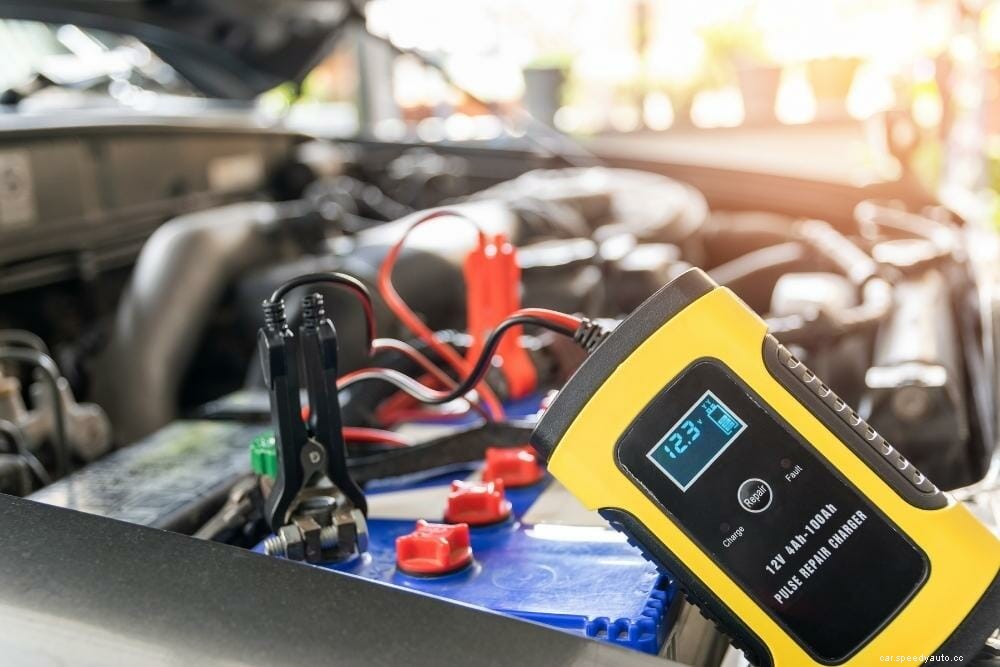
The smart chargers, on the other hand, are completely automated; they sense when the battery has enough fluid and then cut off accordingly.
What happens if a battery runs out of water? Well, actually quite a lot. If you leave an old or nearly dead car battery sitting around without putting distilled water in it, the lead plates inside will corrode and dissolve away. The acid (sulfuric acid) turns into nasty gases like hydrogen sulfide and sulfur dioxide.
These sulfurous gases will build up in the battery and eventually start leaking out of it. In fact, a battery that is nearly dead or has been left for a while without water can actually explode while you are trying to revive it.
Batteries are only good for so many cycles, which is why they don’t last forever. A cycle simply means that the battery goes from fully charged to discharged then back to fully charged again, or in other words it has gone through one complete charge-discharge cycle. When you leave a car battery sitting around unused for too long it will die and you will need to get a replacement.
It is possible for sulfate crystals to build upon the plates that slow down the charging process and increase corrosion. Corroded plates can expand and cause battery acid leakage and gas which eventually causes the battery to fail completely. Sometimes batteries end up corroding all over because of hydrogen gas accumulation.
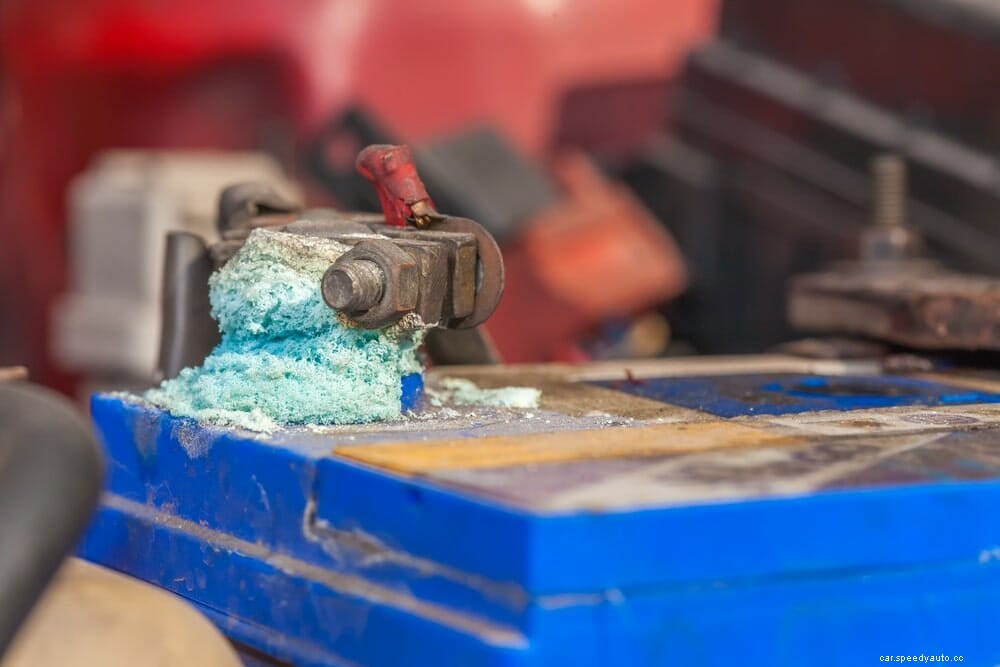
If you check your car battery and it has a white or blue-green powder on it, that means it has corrosion. Be sure to clean it off with a vinegar/water solution before charging the battery up. This will reduce corrosion by converting some of the sulfate crystals back into electrolytes, which is good for the batteries.
Car batteries are water tanks stored in metal boxes. If you remove the cap, your car battery will slowly lose its charge and go flat if not recharged. Furthermore, when you recharge it, you add only pure (distilled) water to top up the electrolyte solution lost through gassing or spilling out.
This means that car batteries can’t last forever; over time they need to be replaced with new ones containing enough electrolytes and distilled water for years of service.
But why do car batteries run out of water? Why don’t we simply keep topping them up with pure (distilled) water every now and then to avoid their early demise?
The answer is that the liquids inside a car battery are very reactive and can cause considerable damage if they come into direct contact with each other or anything else. The distilled water we add to car batteries simply reacts with the reactants already inside, producing hydrogen and oxygen through electrolysis – as described below:
2H 2 0(l) + 2e- → H 2 (g) + 2OH-(aq)
Water molecules lose an electron (chemical symbol e-) when charging/discharging the battery via an external electrical circuit. This same reaction also produces gas molecules of hydrogen (chemical symbol H ) throughout the process by which a power source stores energy in the chemical form before releasing it again later, during the process of discharging.
Now, this reaction produces one water molecule for every two electrons it accepts/donates, so the decomposition reaction above will continue until you have twice as many hydrogen gas molecules (H 2, or H 2 ) molecules in the solution as there are water molecules.
Once this happens, any further reaction stops because you can’t have three substances in a chemical equation indicated by an arrow pointing towards the right-hand side.
Depending on the concentration of electrolytes present in your car battery’s liquid solution when charging/discharging rates are not equal.
In other words, when they are out of balance-, the charged solution created during recharging may be either acidic or alkaline in nature due to extreme heat generation and outgassing of hydrogen and oxygen, which is why it’s so important to keep distilled water levels topped up.
The electrolyte concentration in a car battery solution varies according to whether charging or discharging is taking place at the time. It also depends on such factors as the number of hours connected to a power source; temperature, ambient pressure, and humidity conditions within the battery box itself.
Car batteries are designed with vents under their caps for this very reason -to expel gases generated during the charging/discharging process- but if you overcharge your battery or leave it connected to an external power supply for too long without checking its water levels, hydrogen gas molecules will find their way through these vents into your battery box.
Once there, they will come into contact with the reactants inside your car battery and form water again – which is why you need to check distilled water levels, top them up if necessary and reseal your battery caps/terminals properly every now and then.
Overcharging is the most common ground for a battery running out of water. When a battery is over-charged, an excess of current is stored in it, which causes the electrolytic level to increase rapidly and abnormally.
Temperature also plays a significant role in water loss as well as surrounding climate impacts its capacity. In cold weather, you will notice reduced battery capacity and vice versa.
It can cause the dissolving of water in the battery and lead to permanent damage to your car’s electrical system if not drained properly after a car has been run on a steep road or has been parked on a slope.
An unmatched battery charger can also lead to water loss. It might be providing more or less voltage to the battery than required. It can result in the dissolution of water and destroy your battery in a couple of hours.
Reduced usage is also a common reason for water loss in cars. As a car remains untouched for a long period of time, the battery assumes no activity and goes into self-discharge. It leads to the loss of electrolyte levels in batteries that results in insufficient voltage levels.
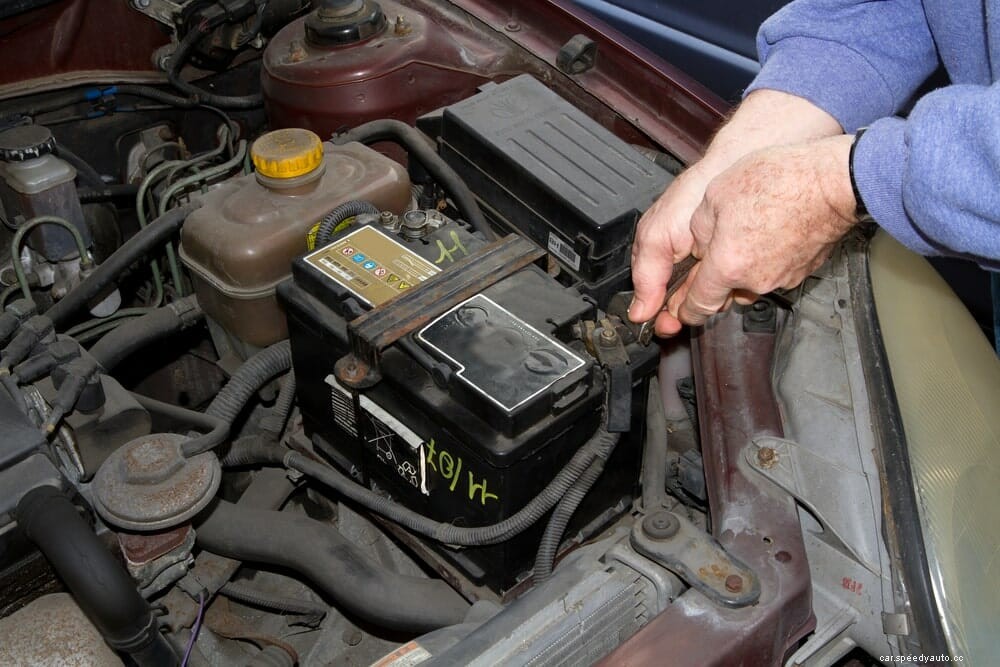
You must not drain out the fluid from a car battery if it has been completely dried up.
In such cases, you have to take your car battery immediately to the nearest recycling station or automotive repair shop so as to dispose of them in an effective manner as per environmental standards.
It is one of the simplest things that everyone should know how to do. You fill water in your car battery by removing the cell caps and flushing it thoroughly with distilled water. After refilling, you must re-install the caps back accurately after a gap of a quarter turn. It ensures a proper seal and prevents the spilling of electrolytes all over again.
Battery water generally comes in two forms: distilled water or tap water that has been treated with a mineral solution (usually sodium silicate) that helps control the buildup of lead sulfide on plates during normal use.
It is important to keep batteries hydrated because it keeps them from running out of electrolytes; this keeps your electrical system working properly by preventing damage caused by excessive heat (which usually leads to battery explosions).
If you use tap water to refill your car’s battery, be sure that it has not been treated with anything other than the proper chemicals. Using plain tap water without any treatment can actually cause more harm than good because it can cause corrosion on plates and clog pores that are there to carry fluid into the battery.
What happens when a battery becomes corroded? It loses capacity which leads to battery failure; meaning, your car’s electrical system stops working altogether.
If you’ve ever had someone tell you “this is why batteries die” or something along those lines, chances are they think it has something to do with overcharging them (and this may have been true in the early 1900s), but thanks in part to modern technology, that’s not the case anymore.
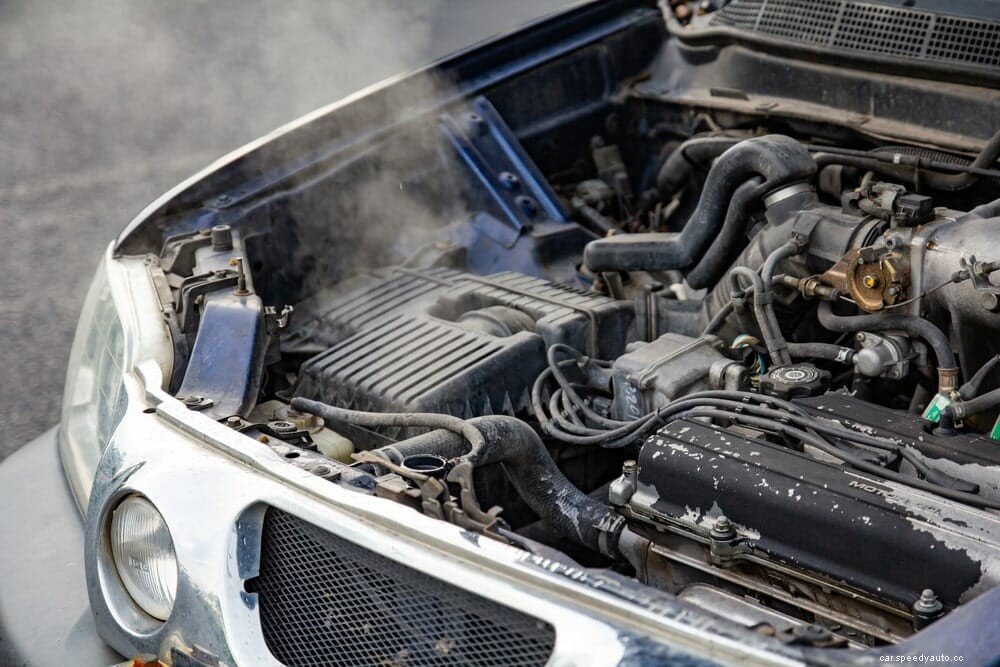
Car batteries can leak or even explode if safety precautions are not taken seriously during installation, storage, and use, but these types of accidents are rare due to new safety measures being implemented on top of mandatory regulations regarding distribution and sale.
Note that any chance of explosion is nullified as soon as you disconnect the battery from your vehicle, due to the fact that car batteries don’t explode unless under extreme conditions.
A car battery can be charged/discharged at a rate of about 400 amps in the first minute, falling to 60-80 amps within an hour and then stabilizing below 20 amps after 6 hours.
This means that if your battery charger is set at 6 amps, it will take 6 hours for your car battery to get fully charged -and no less than 1.2 minutes to get discharged- while anything above 10 amps will shorten this time significantly.
Replacing one dead 12v car battery costs between $50 and $120 depending on if the store or the mechanic buys the old battery from you. Don’t forget that there are other related expenses such as labor and taxes which may slightly increase the total investment.
Yes, a car battery can catch fire if it’s not maintained properly due to overcharging, but this is highly unlikely as long as you check its water level and electrolyte concentration levels regularly, disconnect it from your vehicle before performing any repairs or maintenance on your engine.
Also, ensure that nothing flammable is being stored next to the battery in question and always have a fire extinguisher nearby just in case.
A dead 12v battery usually indicates that its voltage has reached zero -0- volts, meaning that there’s no power left from within its cells for use so it needs to be replaced ASAP, or else your vehicle won’t start.
Note that a car battery may go from being fully charged at 12.7 volts to being completely discharged at zero -0- volts in a span of 10 years so don’t expect it to last forever if you use a low-quality battery that is not designed for deep cycling.
Car batteries are designed to withstand a certain amount of water loss, but even then it is possible for the electrolyte levels to become too low over time. This can lead to poor performance, corrosion issues, and ultimately damage to the structure of the battery. Without proper maintenance, the high voltage will start leaking through separators causing them to short out.
Combined with sulfation buildup this eventually leads to permanent damage that cannot be fixed without replacing components within the battery itself which means you have just got yourself an expensive repair on the way!
Check out some of our posts about car batteries:
Who Makes Champion Batteries?
How Long Does a Car Battery Last?
Can A Car Battery Die While Driving?
