
Tie rods are an important part of the steering system in a car. Compared to other components of the car, a tie rod does not attract a lot of attention.
Therefore a lot of people aren’t familiar with what they do, do they need to be replaced, or what are bad tie rod symptoms. But just like everything else in your car, tie rods will eventually wear out.
A tie rod is a device that connects the steering knuckle steering rack in your car. It is a component of your car’s steering mechanism. The tie rod connection allows the wheels to move when the steering wheel is turned.
A tie rod is made of an inner end and an outer end. The outer rod connects to an adjusting sleeve. This allows it to make adjustments in the length of the tie rod which helps set the alignment angle in a vehicle.
We call this system a rack and pinion system. Within this system, we have a long tube that connects both the wheels, known as the rack. which is a long cylindrical rod.
The top of the rack has groves, so it can house a gear track. This is the pinion gear. This is then connected to the steering wheel. When the steering wheel turns, the pinion moves, thus moving the rack.
Let’s assume that you are turning your steering wheel to the left. For the car to turn left, both the tires should turn in the same direction. But they do not show the same motion. The left tire will turn outside of the vehicle while the right tire will turn towards it.
This is where the tie rods come into play. The rack and pinion system will put force on the left wheel. This force is given through the tie rods, therefore the tie rods will push the wheel outwards. In the meantime, the tie rods on the right wheel will pull it inwards.
As the name suggests, the tie rod is in charge of connecting two components together. When the tie rods, tie these components together, they begin to move in sync.
Tie rods aren’t simply a couple of tubes. They are made up of several small parts, or in other words, they are operated through a number of other smaller components.
When we say tie rod failure, it doesn’t necessarily mean that the tubings snap in two. Instead, the problem could lie in a much smaller part that is connected to the tie rod. When these parts fail, it also means a tie rod failure.
Let’s look at some of the components connecting the tie rod to the steering system.
Ball joints are a type of bearing that is placed on either end of the tie rods. These joints take a lot of pressure that is exerted by the tie rods. They also reduce the vibrations that you feel while driving.
Ball joints mainly fail, due to stress. When you are driving through paved roads, they do not absorb a lot of pressure. But if you are someone who constantly drives through rugged terrain, your ball joints are subjected to a lot of pressure. This is the primary reason why they fail.
Just like other parts in your car, tie rods are covered with protection as well. You will be able to find plenty of bushing in your tie rods.
The primary role of the bushing is to avoid exposing the tie rods to the elements. Dirt, dust, and moisture can damage tie rods. The bushing keeps these impurities away from the tie rods.
Another use of bushing is to absorb impacts. The bushing can be found in either rubber or plastic. Either way, it helps absorb impact and spread the impact that the tie rods might take. This way they act as a layer of protection.
Though lubricant is not necessarily a part of the tie rod, for the tie rod to function lubrication is necessary. Tie rods are lubricated using grease. They reduce the friction between components and keep movements of the tie rod as smooth as possible. They prevent wear and damage to the tie rod.
These are the main components that either make up your tie rod or help it function. A tie rod failure could come down to any of these components.
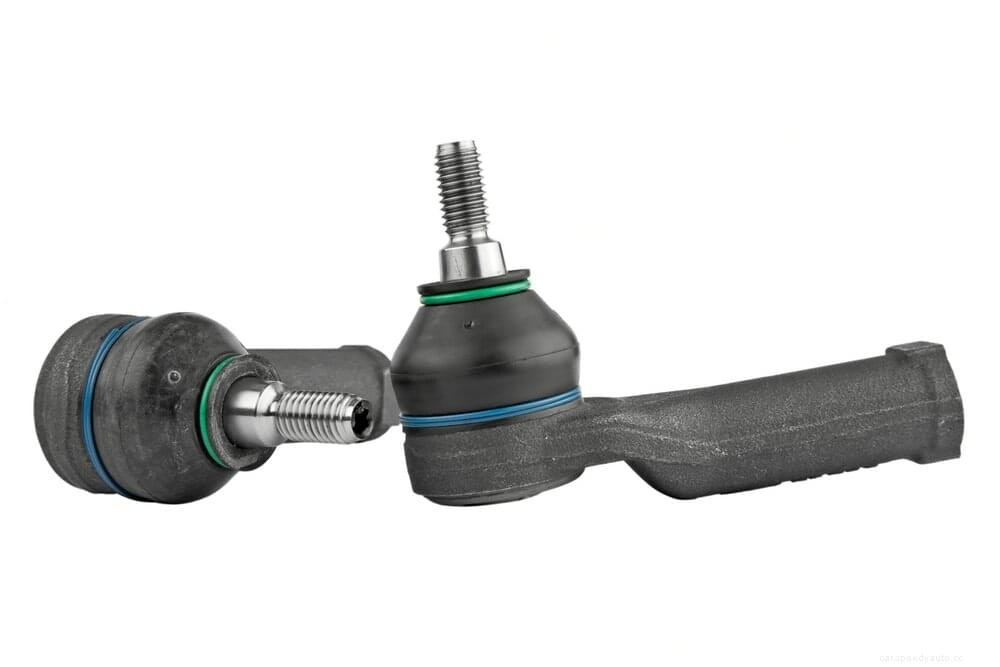
Now that you know which components often fail, we can move towards the symptoms of these failures. These symptoms are an indicator, that your tie rods need to be replaced.
Tie rods aren’t supposed to fail. They are made to take all the beating bashing that comes with driving around. Some drivers rarely require a tie rod replacement. The engine often gives out way before tie rod. But some drivers need replacement every few years.
Since tie rods are an integral part of the steering system, you need to know when they are not working properly. After all, the steering is the only source that allows you to control your car. A functioning steering wheel can be the difference between life and death.
Obviously, you do not want to drive around with a tie rod, that is not functioning. So how do you know when to replace your tie rods. Thankfully, there are some common symptoms that you will encounter if your tie rods are failing.
One of the bad tie rod symptoms is vigorous vibrations and shaking. This happens when the tie rods loosen.
A loose tie rod will not have a strong connection in either end. This allows the tie rods to move around. Similar to the way how the motion of the steering wheel is sent to the tie rod, the motion of the tie rod is sent to the steering wheel. A shaking tie rod will cause the steering wheel to vibrate and shake at the other end.
The problem will get worse with time. And it will more evident when you are driving at high speeds or taking sharp turns.
When your tie rod is not up to par, you will hear some pleasant noises as well. Generally, a faulty tie rod will emit a clunking or squeaking noise. These are noises that often occur when metal grinds on another metal surface.
The issue is that you cannot exactly pinpoint where the sounds are coming from. Your car is basically made out of metal. Any other metal component that’s loose could also emit the same noises. But if you hear these noises only when cornering, chances are it is your tie rod.
This often happens due to the lack of grease. Without the grease, there will be friction present between metal components. This causes a squeaking noise.
On the other hand, if you hear a clanking noise, where it sounds like two metals are bashing against each other, chances are something is wrong with the bushing. Even lose components can make a similar sound.
Since tie rods help maintain the position of the wheels, a faulty tie rod will directly affect the wheel alignment. If the tier rod is worn off, chipped, or broken it will mess with the wheel alignment.
You might notice that your car is veering off course. This often happens only in one direction either left or right. But when this happens you will have to make constant adjustments to keep the car in your lane.
If you suspect that the alignment is not right there is a way in which you can test it out. Point your wheels straight, or at least you will have to keep your steering wheel positioned straight. Now drive down the road.
If your alignment is right, your car will go straight, but if there is a miss alignment at the front wheels the car will veer aside.
You do not notice this easily if you do not do this test. When you are driving as you do normally, even if your car veers slightly, you will adjust it subconsciously. Unless there is a major misalignment you will not notice it.
Another bad tie rod symptom is uneven tire wear. If your vehicle tires are properly aligned, they should wear evenly. If you notice that your left tire is balder than your right or vice versa, that could mean that your front wheels are misaligned. And this happens due to a bad tie rod.
Apart from this aspect of tire wear, you should also look for which part of the tire has more wear. If your car has nothing wrong with it, the middle of the tires will have the most wear.
If the wear in your tire is not centered and the sides of the tires are experiencing more wear, it could also mean that your tie rods are bad. It again comes down to wheels out of alignment. To test these you can employ the same tactics we used earlier.
This is one of the most common bad tie rod symptoms. It is hard to imagine a loose steering wheel. A loose steering wheel will not mean that you can rip out your steering wheel, but your steering wheel will move more freely.
Though this is not the exact thing, when this happens to you, the steering wheel will be much easier to move. Though it is easier to move, turning the steering wheel will be less effective. If you cannot imagine this happening, do not worry. If this happens to you, you will feel the difference immediately.
Continuing to drive with a loose steering wheel is risky. You could end up losing your steering completely.
Other than feeling the steering wheel vibrate, you might also feel that the entire car is vibrating. This is because tie rods are connected to the suspension. If the tie rods loosen, it will cause parts of the suspension to loosen. This will cause the entire car to vibrate.
Another reason why your car is vibrating excessively can be uneven tire wear. This is also induced by a faulty tie rod.
Usually, when your car starts to vibrate due to a busted tie rod, it means that your tie rods are a near-complete failure. Losing your tie rods means losing your steering. So if you feel like the excessive vibrations are caused by faulty tie rods, you need to get it checked immediately.
Now that you know when you need your tie rods replaced, we can start breaking down the costs. There is no exact value for a tie rod replacement cost. There are many variables, that can affect the final cost.
Ultimately it depends on your car. You have to remember that tie rods are an integral part of the steering system. They should be functioning properly in order for you to safely drive your car. So no matter how much they cost, you need to make sure you get the repair done.
Let us look at how much you should expect to pay for a tie rod replacement.
The cost for parts differs according to the car you drive. Usually, high-performance cars and luxury cars need the costliest tie rods.
But still, most tie rods cost between $40 and $120. As mentioned luxury and performance cars stick to the higher end of the spectrum. Apart from that, you should also remember that inner tie rods tend to cost more than outer tie rods. So depending on which one is damaged the cost might vary.
In some cars, you will be able to purchase tie rods as a set. Meaning, if you need a replacement done, you need to spend on both the inner and outer tie rod. If this were the case, again the price of parts will be at the higher end of the given range.
Now that you have the parts, let’s focus on labor charges. Usually, labor charges are what punch a hole through your wallet. Thankfully, that is not the case with tie rods.
Replacing tie rods usually takes around 30 to 45 minutes. So labor charges are relatively lower than many other repairs. But how much exactly? Auto repair labor charges can drastically vary from place to place. In one state it can be $45 to $170 on another. Since the pay is on an hourly basis, this will not cost a lot.
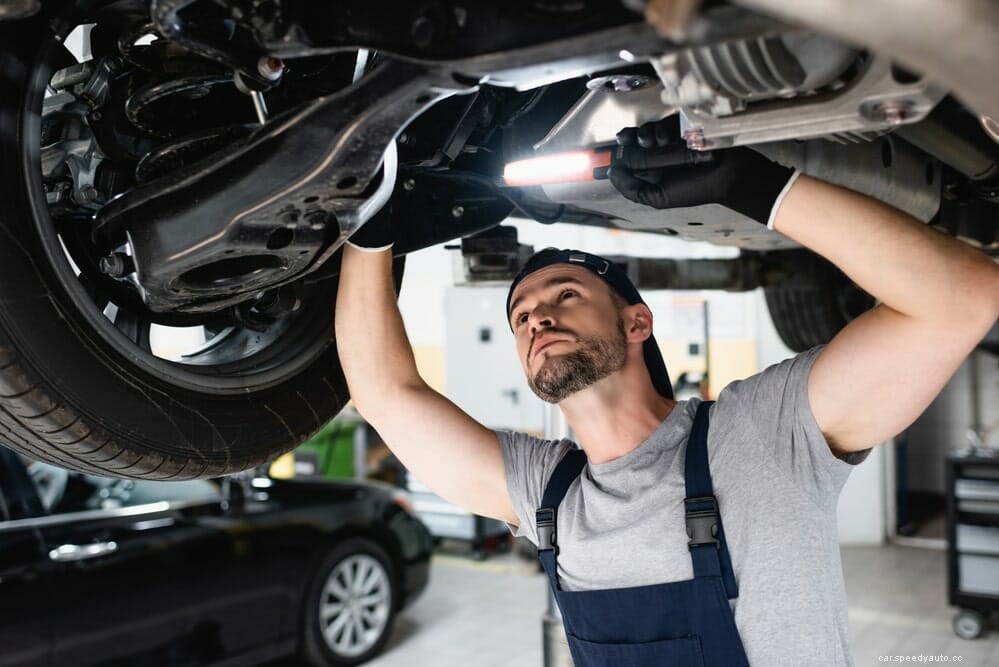
The average pay for auto repair labor is around $80 to $100. So you should expect to pay around $40 to $50 for labor.
Of course, tie rods can be replaced yourself. But you are going to need the right set of tools to do it. To be honest, even though you might be able to do it yourself, it is best if you spare $50 and seek a professional.
One of the reasons he has the tools to make the job easier. And you do not want to make a mistake while replacing tie rods. So the better option is to go to a mechanic.
This brings us to the total cost of replacing a tie rod. So when you look at parts and labor, you should be expecting to spend anywhere from $100 to $350. If you own a luxury car or a performance car, the cost could be higher. Labor charges rarely reach around $150. The average is around $90.
You can always save a few bucks by taking on this project yourself, but it is recommended that you let a professional do this for you.
Here are some of the most common questions regarding bad tie rod symptoms.
Is it necessary to do one? You can omit it, but it is best if you get your tires realigned. Tie rods maintain the steering angles. This means that a tie rod replacement could in fact cause a misalignment. Due to this, it is best if you realign your wheels.
If you choose to omit this procedure, you might have to replace tie rods all over again.
Wheel alignment costs are not that high. If you need your front wheels aligned after a tie rod replacement, it costs around $45 to $55. The cost could vary. If you want a full four-wheel realignment you should expect to pay $110 to $150.
Apart from bad tie rod symptoms, a physical inspection could also let you know when you need a tie rod replacement. Assessing the damage is not that easy, but you can check the alignment. Usually, tie rod damage will result in a misalignment.
Jackup your car and remove both front wheels. Keep your steering dead straight, and check the angle of the wheels.
There is no reason why your tie rods might ever go bad. They tend to last several years. They last longer than the engine in most cases. So you might never need to replace your tie rods.
But there are instances where tie rods get damaged. This is rarely caused by age and wear. Usually, it is some external factor like an accident. If you notice any bad tie rod symptoms, you should get it inspected and replaced if necessary.
You should never ignore the symptoms when something is wrong with your car. This is especially true with a component associated with the steering system of a car.
This includes a tie rod. Even though tie rods are meant to last a lifetime, when they show symptoms of failure, you should get them checked. Ignoring to do so could cause steering failure. Imagine that happening when you are driving at 100 mph.
One of the big factors will be the load you put in your car. If you use your car to haul heavy loads or pull a trailer often, it puts a lot of stress on your tie rods.
This could end up wearing them out faster. This is one of the reasons why tie rods in SUVs, Pickups, trucks, and other heavy vehicles tend to wear out easily. This is because of the added weight they have and the way they are used.
Some other factors like the quality of the road you drive in, repeatedly driving through potholes, and often driving through speed bumps can also damage tie rods.
To put it simply, your car cannot steer without functioning tie rods. It is an important part of your steering system. It is fact the component that delivers the force to the wheels and helps keep both front wheels in sync.
Tie rods have a few components in them. Whenever one of those components is damaged, it turns out to be a tie rod failure. Since tie rods are a part of your steering system, you need to have proper functioning tie rods whenever you drive. The steering wheel is the only thing that allows you to have control over the car.
Thankfully, there are symptoms that tie rods emit when they are not functioning properly. By analyzing these bad tie rod symptoms, you should be able to figure out when you need a tie rod replacement. Most of these symptoms are unique to bad tie rods, so identifying them is not hard.
Once you run into bad tie rod symptoms, it indicates that you have a faulty tie rod or at least a failing one. You should never ignore a tie rod that is not working properly. If you think that a tie rod replacement will end up giving you a huge bill to pay, you are mistaken.
On average tie rod replacements cost between $100 and $300. The price might vary, but it will only set you back a few hundred bucks. Now that you know the safety hazards that come with a failing tie rod, a few hundred bucks for a tie rod replacement doesn’t sound that bad.
