
If you live in the Northeast, it’s inevitable: You’ll have to drive in cold and slippery conditions.
Winter driving requires special precautions. Research from the AAA Foundation for Traffic Safety found that about 46% of crashes involving bad weather take place in the winter. And December through March can be an especially busy time for dead batteries, flat tires and vehicle extractions. (We’re here 24/7 to help!)
As motorists’ most trusted advocate, AAA is here to help keep you and your vehicle safe this winter. Check this guide throughout the season for winter driving tips.
Before hitting the road, you’ll want to make sure your vehicle is up for the challenge ahead. No list of winter driving tips would be complete without mentioning the importance of having a certified repair technician perform a thorough inspection of your vehicle. Find a AAA Approved Auto Repair Facility near you.
You should ask for checks covering each of the following areas.
Have the battery and charging system tested by a trained technician, especially if your vehicle’s battery is more than three years old. Your vehicle will need a fully charged battery to start up during a cold snap.
“Even a good battery might lose up to 50% of its capacity when the temperature drops to zero,” said John Paul, AAA’s Car Doctor and senior traffic safety manager for AAA Northeast. “And even at 32 degrees, it can take up to 30% more power to crank over a cold engine.”
AAA members can request a visit from a AAA roadside technician to test their vehicle battery wherever they are and install replacements if necessary. Members also can visit AAA Approved Auto Repair facilities for battery tests and replacements.
Whether you check or a roadside technician does it for you, be sure that all battery posts are cleared of corrosion and all cable connections are tight.
“Many battery problems can be eliminated by cleaning the corrosion from the battery terminals,” Paul said.
Have your vehicle’s brake system inspected by a certified technician as recommended by your car’s manufacturer. You can typically find these recommendations in your owner’s manual.
A brake inspection is needed if your dashboard brake light is illuminated or you notice pulsing, a steering pull, grinding sounds or other unusual noise when braking.
Check the coolant level in the overflow tank when the engine is cold. If the level is low, add a 50/50 solution of coolant and water to maintain the necessary antifreeze capability.
“A 50/50 mix of antifreeze and water will protect your car’s engine to minus 34 degrees,” Paul said.
You can test the antifreeze protection level with an inexpensive tester available at any auto parts store. Check cooling system hoses for leaks, cracks and loose clamps, too. Any hoses that feel brittle or spongy when squeezed should probably be replaced.
Review your owner’s manual to see if your air filter needs to be replaced. Another way to check is to hold it up to a bright light. If light can be seen through much of the filter, it’s still clean enough to work effectively. If the light is blocked, replace it.
Some filters are made of opaque materials that don’t pass light. Replace these filters per automaker recommendations.
Don’t let a lingering check engine light go undiagnosed, and have a certified repair technician investigate any issues such as hard starting or stalling.
Inspect accessory drive belts for cracks or fraying, but stay mindful of newer serpentine belts, which don’t show obvious signs of wear but should be replaced every 60,000 miles or as recommended by the vehicle manufacturer.
Your vehicle’s exhaust system is important. It carries away carbon monoxide and other harmful gases produced by your vehicle’s engine.
Carbon monoxide is odorless and deadly. Have a certified repair technician check your exhaust system for leaks in order to minimize the chances of carbon monoxide poisoning. If your car is stuck in the snow and you have the engine running, open a window and clear snow away from the exhaust pipe.
Damaged ignition wires, a cracked distributor cap or worn spark plugs can make starting difficult or cause a sudden vehicle breakdown.
“If the check engine light is flashing this indicates an engine misfire that could be a result of a malfunctioning ignition system,” Paul said. “Driving with a flashing check engine light will permanently damage the engine’s catalytic converter, and that’s a very expensive repair.”
Protect your wallet and avoid a headache by getting in front of potential trouble. Have your vehicle’s ignition system inspected by a certified repair technician.
Check the operation of all headlights, taillights, brake lights, turn signals, emergency flashers and backup lights. Replace any burned out bulbs. Dirt and grime on headlight lenses can significantly reduce their effectiveness, and you’ll want your lights working properly to offset diminished visibility caused by winter storms.
“Cloudy headlight lenses can be polished back to like-new condition with specialized kits,” Paul said.
This is a year-round recommendation, but certainly worth attending to with the rest of your winter prep. Always have your oil changed per manufacturer recommendations. You should have your vehicle’s transmission fluid level checked at the same time.
“Synthetic oil is a benefit in every vehicle and will allow for quicker starts in very cold weather,” Paul said.
In areas with heavy winter weather, installing winter tires on all four wheels will provide the best traction. All-season tires work well in light-to-moderate snow conditions provided they have adequate tread depth. Examine tires for tread depth, uneven wearing and cupping. Uneven tire wear can indicate alignment, wheel balance or suspension problems that must be addressed to prevent further tire damage.
Tires with fewer than 4/32 inches of tread will have reduced traction in wet and snowy conditions. To measure tread depth, insert a quarter into a tread groove with the top of Washington’s head facing down. If the top of his head is not visible, your tires have at least 4/32 inches of tread and are fine for continued use. If you can see above the top of Washington’s head, it is time to start shopping for new tires.
“To put it simply, worn tires in wet, slippery conditions are flat-out dangerous to you and other drivers sharing the road. Tires with lower tread depths can’t stop as quickly as those with proper depth,” Paul said. “Having tires in proper condition can easily be the difference between a serious crash, and a collision that never happened.”
In extreme climates, a set of winter snow tires or chains may be a wise investment.
Check tire pressure once a month before driving, when tires are cold. As the average temperature drops, so will tire pressures — typically by 1 pound per square inch for every 10 degrees Fahrenheit.
Proper tire pressure levels can be found in the owner’s manual or on a sticker typically located on the driver’s doorjamb. The number molded into the tire sidewall is not recommended for normal operating condition. This specification is for a tire that is carrying its maximum rated payload.
“Cold weather can turn on tire pressure monitoring lights. Don’t ignore the light; have the tire pressure checked and corrected as necessary,” Paul said.
Fill the windshield washer fluid reservoir with a winter cleaning solution that has antifreeze components.
Said Paul: “Some window washer solution is rated to just 20 degrees. In cold weather, this solution can freeze and damage the washer system. Look for windshield washer fluid that protects well below freezing temperatures.”
Wiper blades should completely clear the glass with each swipe. Replace any blade that leaves streaks or misses spots. Consider installing wiper blades that have a one-piece plastic beam frame or winter blades that wrap the metal frame in a rubber boot. Both designs help prevent snow and ice buildup that can interfere with blade-to-glass contact.
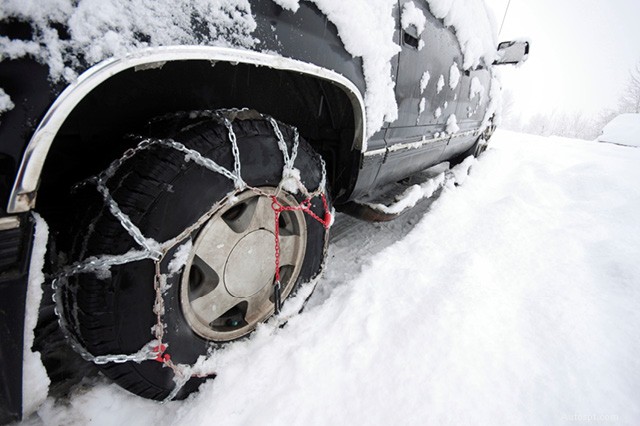
Winter driving is difficult for all motorists, but particularly so for new and improving drivers. Learn to become a lifelong safe driver — in all conditions — with the AAA Defensive Driving Course.
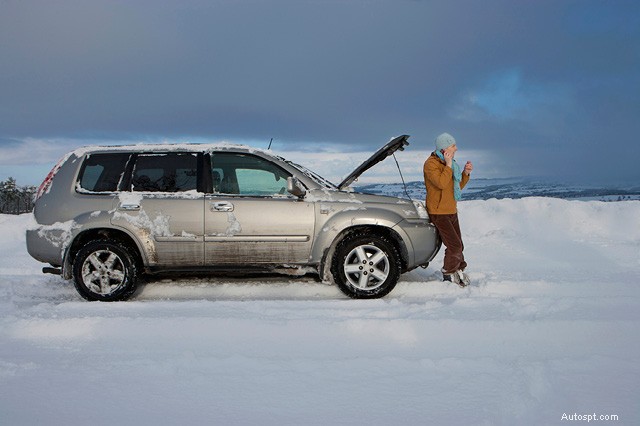
Even if your vehicle is ready for winter and you follow all of the winter driving tips spelled out here, there is a chance you could be stuck with your vehicle for an extended period of time.
Be prepared for such a situation by carrying an emergency road kit with the following items:
If you’re looking for advice on what makes a good winter ride, John Paul and Robert Sinclair Jr., senior manager of public affairs for AAA Northeast, are good people to talk to. They’re both expert test drivers who have first-hand knowledge of how various vehicles stack up with Northeast weather, and they both believe winter performance starts from the ground up.
“A pickup is the ideal winter vehicle for my money,” said Sinclair. Besides the over-the-road prowess, a big roomy pickup is supremely comfortable.”
All-wheel and four-wheel-drive vehicles are helpful, too, especially when vehicles with these features also have higher ground clearance. Still, Paul added, the system doesn’t change physics — driving too fast for winter conditions will surely result in a poor outcome on the road.
As for vehicle weight, driving dynamics is more important to a vehicle’s winter driving prowess than its mass.
“A wallowy, poor handling vehicle in clear weather is going to be a lousy vehicle in bad weather no matter how much it weighs,” Sinclair said. “I’d rather have a light Volkswagen Passat with winter tires than a similarly equipped, much heavier Buick LaCrosse.”
Believe it or not, you already are.
Gasoline blends change with the seasons. The difference involves fuel’s Reid vapor pressure, a measure of how easily fuel evaporates at a given temperature. The more volatile a gasoline, the higher its pressure and the easier it evaporates.
Winter blend fuel has higher pressure because the fuel must be able to evaporate at low temperatures for the engine to operate properly, especially when the engine is cold. If the pressure is too low on a frigid day, the vehicle will be hard to start and once started, will run rough.
Summer blend gasoline has lower pressure. This prevents excessive evaporation when outside temperatures rise. Reducing the volatility of summer gas decreases emissions that can contribute to unhealthy ozone and smog levels. Lower pressure also helps prevent drivability problems such as vapor lock on hot days, especially in older vehicles.
The Environmental Protection Agency says conventional summer-blend gasoline contains 1.7% more energy than winter-blend gas, which is one reason why gas mileage is slightly better in the summer. The summer-blend, however, is also more expensive to produce, which is why gas prices tend to spike a bit at the start of the summer driving season.
The switch between the two fuels happens twice a year, once in the fall to winter blend, and again in the spring, to summer blend.
As a consumer, the main thing to understand is that there are real reasons for the switch from winter to summer blend fuel, even if it results in some pain at the pump.
Even the best winter driving tips aren’t enough to convince some drivers to take their prized vehicles out in the snow. Many store their cars in fall, before the worst weather sets in. Here are some tips to make sure you are doing it the right way.
Your AAA membership covers you with 24/7 roadside assistance. If you need us, request service quickly and easily at AAA.com/GetMoving.
This article has been updated and republished from a previous version.
Last updated on December 19, 2025 by AAA Staff
