
Hearing a whining noise while accelerating is not a good sign. It could indicate a larger problem and can cause a potential road safety hazard. This article will explain why your car is whining when accelerating and 5 quick fixes to solve the problem.
If you find your car making whining noises while accelerating, it is almost always caused by a bad attachment or accessory connected to the engine. Some of the potential causes are:
A very common sign that your vehicle’s alternator is going bad is a high-pitched whining sound. Although, a bad alternator is often accompanied by the battery light coming on. If these two things are happening together, chances are very high that it’s a faulty alternator.
The whining noise might signify that the fluid in the Power Steering Pump (PSP) is too low. If the sound also occurs when turning the (steering) wheel to the side, the problem is likely the PSP.
If your car’s bearings and other rolling parts are faulty, it could affect the transmission of power to other parts of the car, leading to a transmission humming noise when accelerating.
Another cause of your car whining when accelerating could be that the clutch release bearings are worn down. To prevent this, it is recommended that you change the bearings every one-hundred and thirty thousand kilometers.
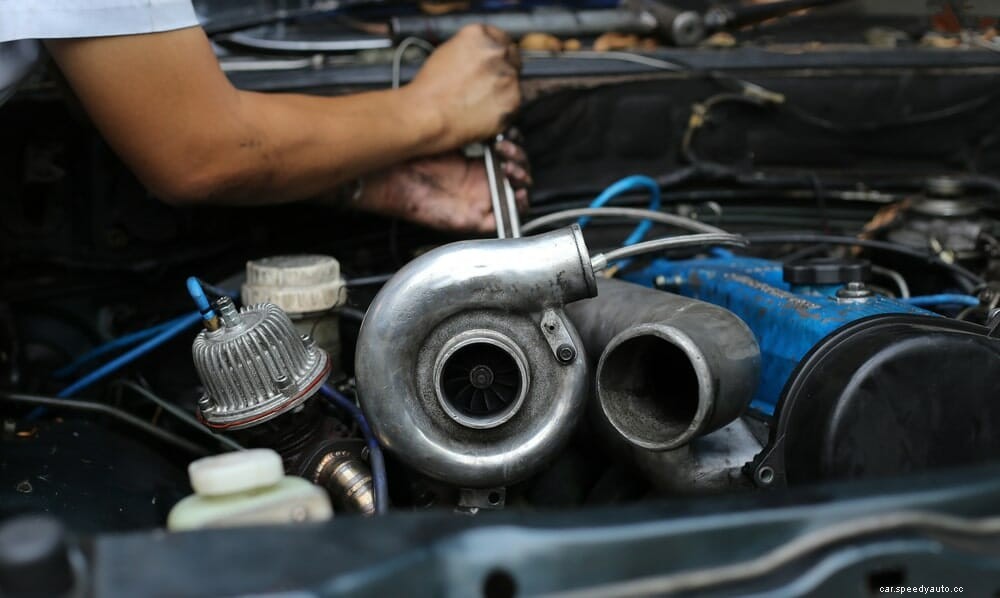
The whining noise heard when accelerating might be caused by the turbo system acting up. This is more easily identified by a whistling sound. It is imperative to take quick action; else you risk blocking your engine.
Another reason why you might hear a loud whine when accelerating your GMC Yukon could be air leaking from the air supply system. The leakages happen when one of the junctions or air hoses has holes.
Another common cause of the GMC Yukon making a humming noise is a faulty water pump. A malfunctioning water pump will give off a whine, although the sound is usually deeper than that given by a defective alternator.
The Yukon’s serpentine Belt uses the crankshaft’s motion to rotate all the other accessories. When the serpentine belt’s grooves wear out and become smooth, reducing its ability to grip the engine’s accessories properly, there will be a loud whining noise when accelerating.
High-pitched noises are caused by engine belts. These belts are made from hard rubber and plastic pulleys. If a pulley is misaligned or seized, it will rub on the edge of the belt, causing the squeaking or chirping.
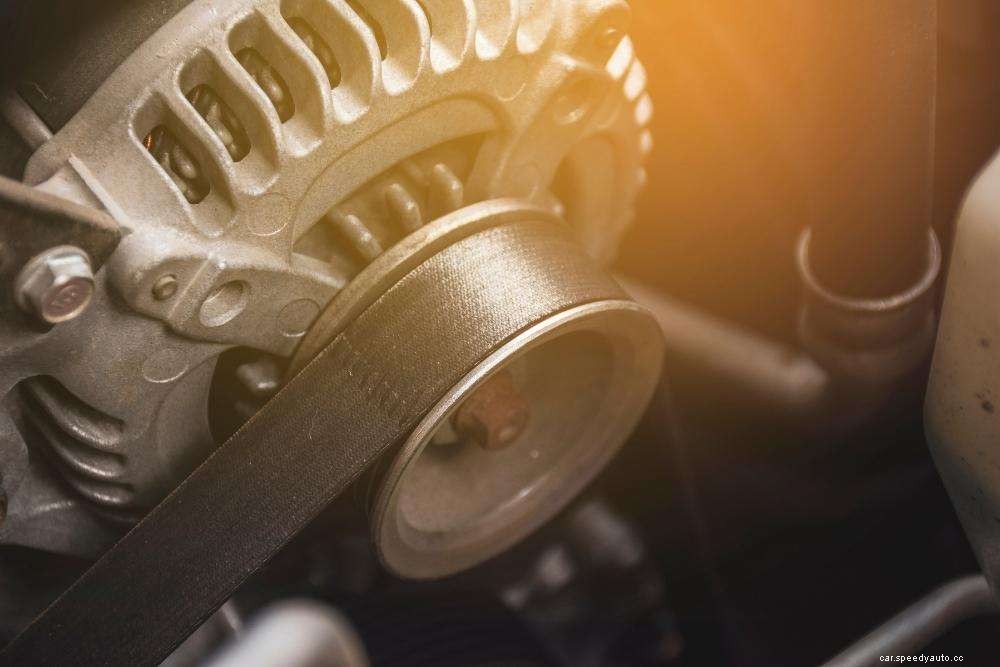
The alternator has several bearings that allow the alternator’s rotor to spin freely. If these bearings are faulty and begin to fail, you will notice a loud whining noise, which will increase as you accelerate or when the car is under a heavy load.
For both manual and automatic transmissions, the main cause of a whining noise when in geat is low transmission fluid. If the fluid is too low, the transmission’s internal components are not lubricated properly, which can lead to further damage.
Over time, your vehicle’s engine belts may wear and begin to stretch. When this happens, as you press the gas pedal and the belt goes from a lower speed to a much higher speed due to the engine accelerating, the belts will make a squealing or whining noise.
Although it may be safe to drive with the squealing belt for a few days or weeks, the belt will eventually be replaced, and to keep you safe, the quicker you repair it, the better.
Diagnosing your car that makes a whining noise when accelerating will give you a good idea of what’s going on and what it will take to fix the problems. Don’t forget to treat the problem as soon as possible to avoid expensive repairs in the future.
You may check out some of these GMC-related articles:
How To Reset Check Engine Light On GMC Sierra
How To Unlock a GMC Sierra Without Keys
How To Reset GM Instrument Cluster
